
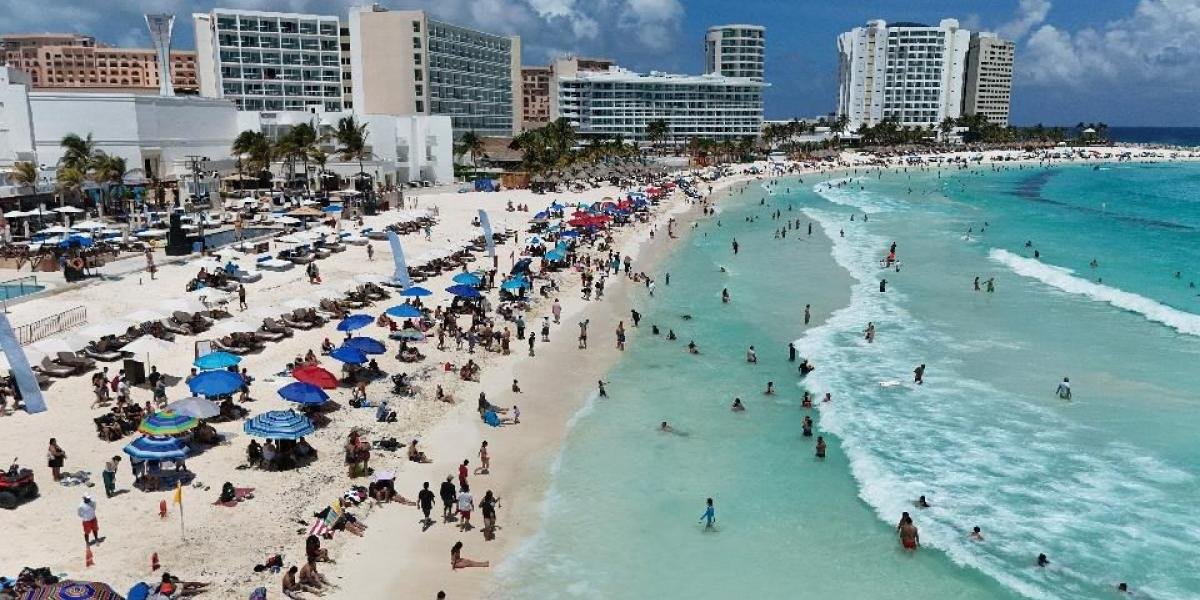
Mexico City — Quintana Roo, Baja California Sur and Mexico City will lead Mexico’s economic recovery in 2026, according to a new report from BBVA Research, with growth fueled by tourism and the 2026 FIFA World Cup.
The report, titled “Situación Sectorial Regional México 26S1,” projects national GDP growth of 1.8% in 2026, a significant improvement from the estimated 0.6% expansion in 2025. Quintana Roo is expected to post the highest growth rate at 5.5%, up from 0.8% in 2025. Baja California Sur follows with a forecast of 3.7%, and Mexico City with 2.7%.
Other major economies are also expected to see gains: Nuevo León at 2%, and both the State of Mexico and Jalisco at 1.8%.
BBVA analysts attribute part of the momentum to activities linked to the 2026 FIFA World Cup, particularly in transportation, tourism and consumption. While the effects will concentrate in metropolitan areas hosting matches, they will also spill over to tourist destinations like Quintana Roo and Baja California Sur, strengthening the services sector.
The services sector was the main pillar of the economy in 2025, growing an average of 1.1% across all states. Mexico City led with 1.8% growth, followed by Puebla, Tlaxcala and Tabasco, each at 1.7%. The sector’s resilience reflected continued expansion in domestic consumption, commerce and transportation despite industrial weakness.
Mexico City accounts for 22% of the national services GDP, followed by the State of Mexico, Nuevo León and Jalisco. Together, these four entities concentrate nearly 47% of the country’s tertiary-sector output.
Industrial slowdown
The report notes a positive outlook from initiatives such as the Plan México and its Polos de Desarrollo Económico del Bienestar (Podecobi), which aim to gradually revive investment, especially in the secondary sector.
In 2025, industrial activity contracted 1.3% nationwide, with nearly all states posting declines. Tabasco and Campeche suffered the steepest drops at 8.5% and 5.3%, respectively, due to lower oil activity and reduced civil construction. Other industrial states such as Coahuila (down 1.3%), Sonora (down 1.1%) and Veracruz (down 1.2%) also saw significant decreases. Only Zacatecas (up 1.2%) and Tamaulipas (up 0.02%) managed marginal growth.
The primary sector posted its best performance since 2012, driven by Zacatecas and Tlaxcala. Meanwhile, export dynamism in electronic equipment in Chihuahua and Jalisco helped offset weakness in other sectors like automotive.
For 2026, most states are expected to improve, with two exceptions: Campeche is forecast to grow just 0.9%, and Tabasco is expected to contract 0.3%. BBVA said these states “continue in a process of economic reconfiguration,” indicating that the boost seen in previous years was temporary.
More Business
- Cancún Airport Transporters Blame ASUR for Steep Fees
- Akumal Halts Turtle Swim Tours Through September
- Mexico’s Treasury Seeks Power to Ban Cash Payments Sector by Sector
- Quintana Roo Civil Protection Warns Against Fireworks Ahead of Independence Day
- Business Leaders Urge Playa del Carmen to Diversify Economy as Tourism Slumps
More Quintana Roo
- Mexico Assigns $110 Million Navy Budget to Fight Sargassum in Quintana Roo
- Quintana Roo to Pilot Child Protection Protocol for Tourism Sector in October
- Sheinbaum Announces 187 Primary Care Clinics and Major Projects in Quintana Roo
- Quintana Roo Records 29,413 Sea Turtle Nests at Season’s Midpoint
- Quintana Roo Reports 1,200 Screwworm Cases as Officials Await Sterile Fly Release
