
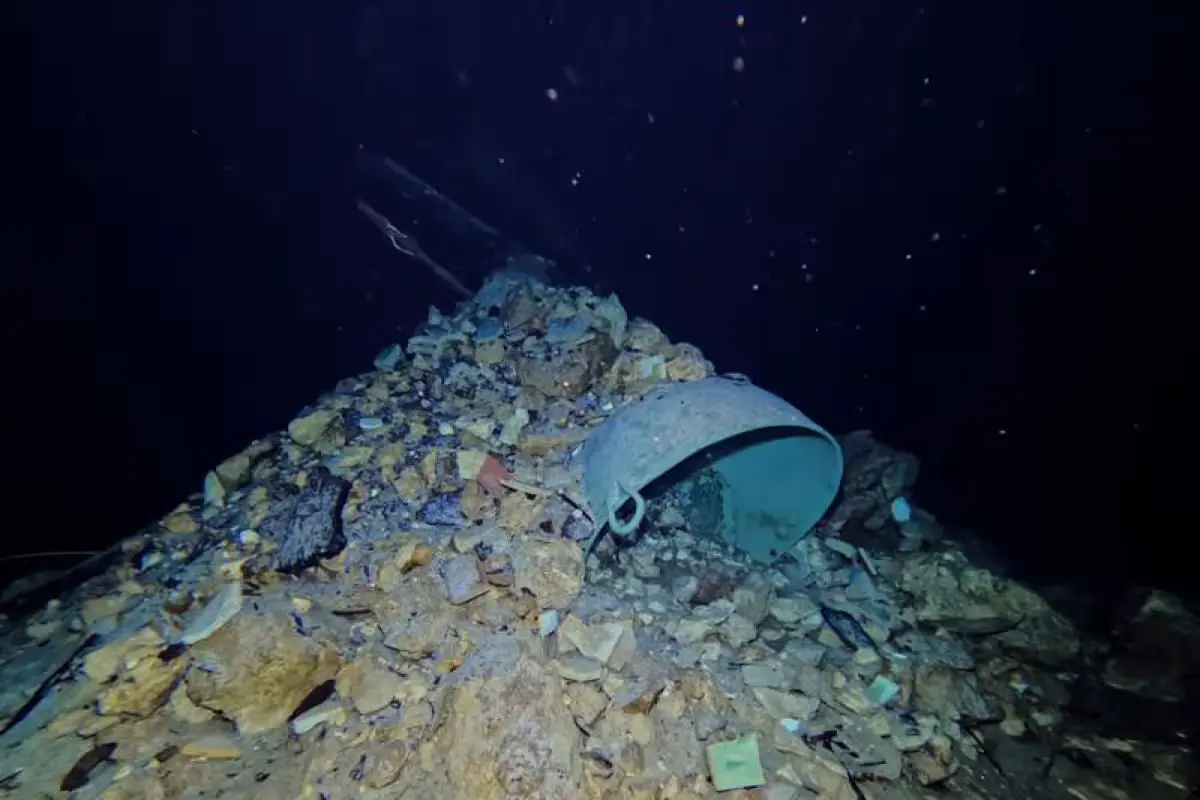
Valladolid, Yucatan — Archaeologists have discovered a remarkable cache of 19th-century weapons, including 153 muskets and an iron cannon, submerged for nearly 180 years in a cenote beneath a colonial convent in Valladolid, Yucatan. The find offers a rare glimpse into the region’s Caste War period but faces immediate threats from unauthorized divers and environmental damage.
The National Institute of Anthropology and History (INAH) announced the discovery after a February 2026 survey of the Sii’s Ja cenote, located under the former San Bernardino de Siena convent. The weapons, preserved in the cold, oxygen-poor waters, appear to have been discarded by Yucatecan army soldiers between 1847 and 1848 as Maya rebel forces advanced during the Caste War.
Archaeologists identified muskets of Spanish and English origin, reflecting the peninsula’s arms supply networks at the time. The cannon, still mounted on its original wooden carriage, is particularly significant—no other underwater archaeological site in Mexico has recorded such an artifact in comparable condition.
Unauthorized Access and Environmental Damage
The INAH team, led by archaeologists Gustavo García García, Sergio Grosjean Abimerhi, and Mauricio Germon Roche, documented alarming signs of intrusion during their survey. They found unauthorized diving lines, collapsed illegal infrastructure like ladders and bridges, and a complete absence of the catfish that once inhabited the cenote, indicating water contamination.
“The introduction of foreign elements and irregular access can endanger the integrity of historical materials and the aquatic ecosystem,” INAH warned in a statement. Sergio Grosjean had previously filed complaints about these risks, which the recent findings confirmed.
The team conducted the first systematic photogrammetric recording of the site, capturing images to create 3D models for analysis without disturbing the artifacts. This technique allows researchers to study the materials in their original context, a key principle of modern archaeology.
Institutional Response and Preservation Plan
Mexican Culture Secretary Claudia Curiel de Icaza emphasized the state’s responsibility to protect cultural heritage, calling the cenote’s contents “living testimonies of our collective memory.” INAH and the Fundación Convento Sisal Valladolid AC have outlined a preservation plan starting with cleanup to remove modern contaminants, followed by a new systematic survey led by Grosjean.
Additionally, artifacts recovered in 2003 and restored by the INAH Yucatan Center will be returned to the San Bernardino de Siena convent for display in its onsite museum. The convent is the peninsula’s second-oldest building.
The Sii’s Ja cenote represents not just an archaeological deposit but a window into one of Yucatan’s most traumatic historical episodes. Preserving it, officials say, is crucial for understanding a story the water has safeguarded for nearly two centuries.
More Environment
- Mexican Army Nears Completion of 16-Kilometer Jungle Road Over Tulum’s Sac Actún Cave System
- Akumal Halts Turtle Swim Tours Through September
- Mexico Assigns $110 Million Navy Budget to Fight Sargassum in Quintana Roo
- Mérida Opens First Green Corridor to Fight Climate Change
- El Niño Keeps Atlantic Hurricane-Free, Setting Record for Latest First Storm in Decades
