
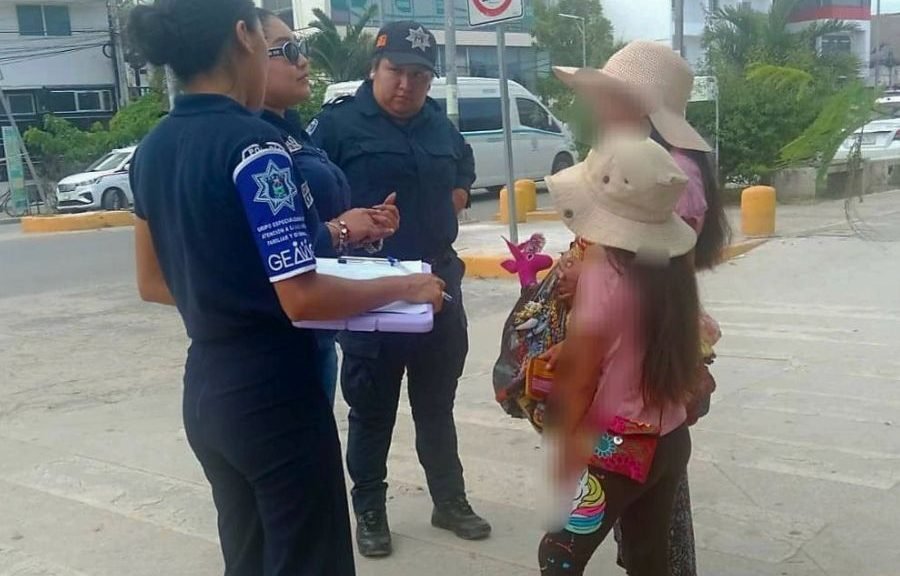
Tulum, Quintana Roo — The sight of children and teenagers selling products, cleaning windshields, or accompanying adults in commercial activities on the streets of Tulum is neither isolated nor new. Behind these everyday scenes, local authorities have begun to identify patterns pointing to a more complex problem: possible cases of child labor exploitation and even risks linked to major crimes such as human trafficking.
Over the past month, the municipal DIF (System for Integral Family Development) documented at least 20 cases of minors working in public spaces. While the number may seem limited, it reflects a phenomenon that tends to intensify during peak tourist seasons, according to DIF director Adriana Cazales Durán. The trend became more evident during the Easter holiday period, when economic activity and visitor numbers increase significantly.
The situations vary. In some cases, children accompany adults in informal work, which at first glance might appear as family support. However, in other contexts, authorities have detected adolescents working under conditions that could constitute labor exploitation. This distinction forces officials to analyze each case individually, avoiding generalizations and prioritizing the protection of children’s rights.
The complexity lies in the fine line between family collaboration and rights violations. Not all cases involve a crime, but they do represent a focus of attention, especially when risk factors, recurrence, or the possible involvement of third parties benefiting economically from the minors’ work are identified.
To address the situation, DIF has coordinated with the Specialized Group for Attention to Family and Gender Violence (GEAVYG), which participates in field operations aimed at detecting and referring vulnerable minors. These actions seek not only to remove children from risky contexts but also to understand their environment and the reasons that lead them to be on the streets.
The operations implemented in recent weeks have had two clear lines of action: raising awareness among parents or guardians about the physical, emotional, and legal risks of involving minors in street labor, and identifying recurrent cases or those with signs of greater severity, where institutional intervention becomes stricter.
When a minor is found to be in conditions that threaten their integrity or rights, the protocol includes temporary shelter by specialized personnel. This measure aims to guarantee immediate safety and open the door to deeper investigations to determine whether exploitation, negligence, or any crime exists.
In some of the most sensitive cases, authorities have already filed formal complaints with competent bodies, marking a shift from observation and social assistance to possible judicialization of situations that warrant it.
Tulum’s tourism context plays a key role in this dynamic. The constant influx of visitors generates economic opportunities that, in some cases, end up involving minors. This reality poses an additional challenge for authorities, who must balance economic activity with the protection of vulnerable groups.
Although the actions taken have allowed detection and assistance in some cases, child labor on public streets remains an evolving issue. Authorities recognize it as a multifactorial problem involving economic, social, and family conditions. The challenge lies not only in removing minors from the streets but also in addressing the root causes that place them in that situation. Surveillance, prevention, and inter-institutional coordination are emerging as key tools to prevent these numbers from continuing to rise in one of Mexico’s most important tourist destinations.
More Crime
- Cancún Airport Transporters Blame ASUR for Steep Fees
- Five to Face Trial in Tulum Funeral Home Equipment Theft
- Quintana Roo Civil Protection Warns Against Fireworks Ahead of Independence Day
- Rising Crime Reports in Quintana Roo Signal Greater Trust, Official Says
- Armed Men Try to Abduct Woman on Cozumel; She Escapes on Her Motorcycle
More Tulum
- Mexican Army Nears Completion of 16-Kilometer Jungle Road Over Tulum’s Sac Actún Cave System
- Advocates Urge Quintana Roo Governor to Expand Xcacel-Xcacelito Turtle Sanctuary
- Three Arrested in Tulum After Taxi Driver Beaten and Robbed for Refusing Extra Passengers
- Tren Maya Archaeological Finds Won’t Be Displayed in Chetumal, INAH Says
- Tulum Hotels Stay Open Through Renovations Ahead of High Season, Union Says
