
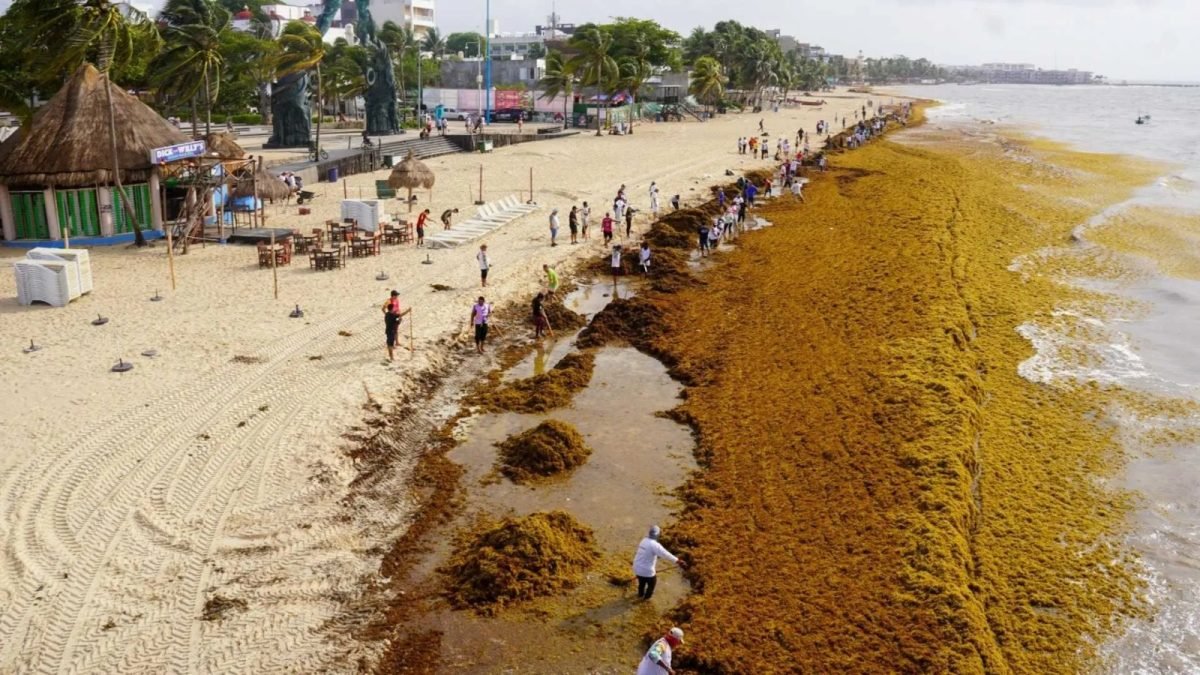
Cancún, Quintana Roo — A massive sargasso bloom has intensified along the coast of Quintana Roo in recent days, blanketing wide stretches of beach in Cancún, Playa del Carmen and Mahahual. Tourists and residents report an unusually persistent presence of the macroalgae, which scientists say could make 2026 one of the most intense seasons on record.
Beyond the visual and economic impact, the main concern is the release of toxic gases as the sargasso decomposes. Hydrogen sulfide and ammonia can cause eye and skin irritation, headaches, dizziness and even fainting in people exposed for prolonged periods.
In response, the National Polytechnic Institute (IPN) has deployed a network of sensors at strategic points including Cancún, Playa del Carmen, Akumal and Mahahual. The sensors measure gas concentrations in real time and can issue early warnings to protect public health. Officials say the system may restrict access to certain areas when levels exceed safe limits.
Recent studies have documented symptoms among coastal workers and residents near heavily affected beaches, raising health alerts. The sargasso also blocks sunlight, reduces oxygen in the water and disrupts marine ecosystems, damaging coral and seagrass beds.
Authorities, scientists and the tourism industry agree that sargasso is no longer a temporary phenomenon but a structural problem requiring urgent action to protect both human health and one of Mexico’s top tourist destinations.
More Cancun
- Cancún Airport Transporters Blame ASUR for Steep Fees
- Cancún Installs More Than 100 Traffic Signs Across the City
- Profeco to Inspect Businesses Across Mexico During Independence Day Festivities
- Cancún Commuters Face Waits of Up to Three Hours on Crumbling Public Transport
- Rising Crime Reports in Quintana Roo Signal Greater Trust, Official Says
More Playa del Carmen
- Business Leaders Urge Playa del Carmen to Diversify Economy as Tourism Slumps
- Playa del Carmen Inaugurates Plaza Punto Sur Under Public-Private Alliance
- Mayakoba Resorts Accused of Illegally Withholding Up to 35% of Worker Tips
- Cenotes in Playa del Carmen Face Contamination Risk From Poor Sanitary Infrastructure
- GPS Leads Police to Rental Car Reported Stolen in Cancún; Two Arrested in Playa del Carmen
