
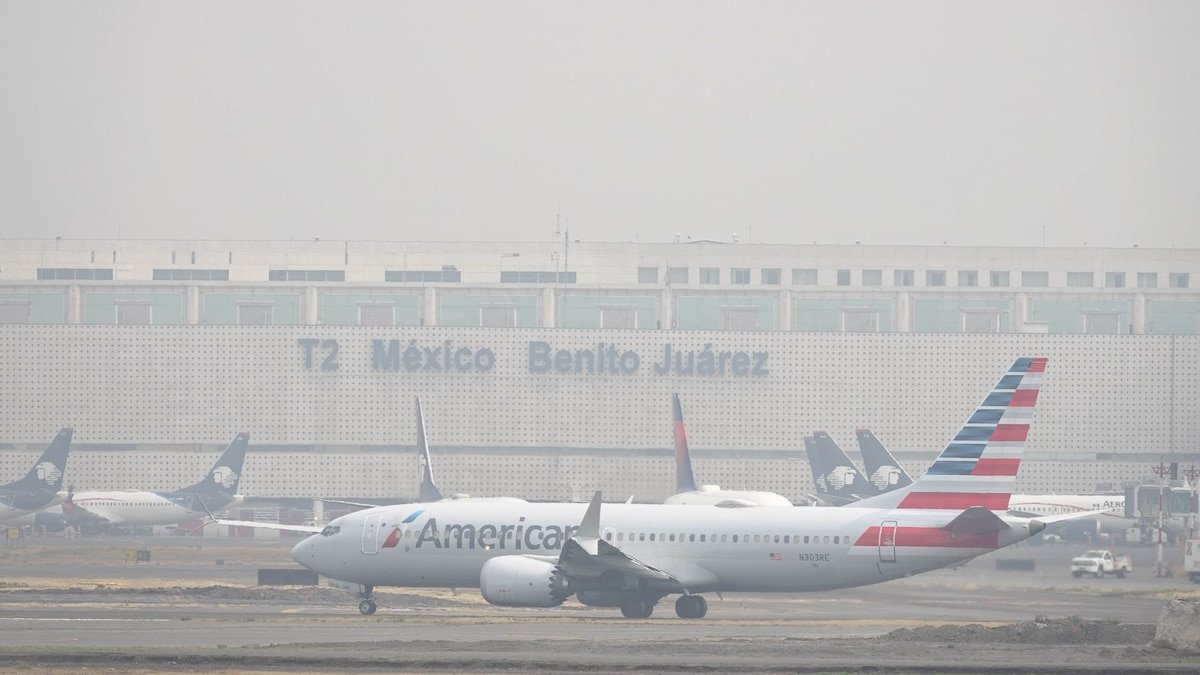
Mexico City — Surging global jet fuel prices, local violence, and weaker demand are pushing US airlines to cut flights to Mexico, with seat capacity dropping 10% for the May-July period, according to airline data.
All US carriers except Southwest have reduced seat offerings to Cancun for the upcoming months, even as the period includes the start of the World Cup in North America and the summer season, said aviation analyst Fabricio Cojuc.
Delta Air Lines, one of the world’s largest carriers, announced cuts to Cancun, Los Cabos, Mexico City, and Puerto Vallarta. The airline cited both the doubling of jet fuel prices and a drop in demand due to violence.
“The only thing that has really been affecting is tourism in Mexico, as we’ve said, but we reduced that capacity very quickly after the events (of violence), and that capacity will remain low for the foreseeable future,” said Joe Esposito, Delta’s chief commercial officer, on a call with analysts. “We saw a slight weakness in Mexican tourism due to the incidents in Puerto Vallarta, and we have taken capacity measures there.”
Low-cost carrier Spirit also cut flights to Cancun.
Cancun airport is the Mexican terminal most affected by the reductions, Cojuc said. The cuts will likely spill over to other airports, including Mexico City’s Benito Juarez International Airport (AICM).
“What worries us most is that for the next three months, we are seeing a contraction at Cancun airport of around 10% in seat-miles, largely explained by the withdrawal of capacity by US airlines,” Cojuc said.
On the domestic front, Aeromexico and Volaris are following the industry trend: cutting capacity in low-demand or low-profitability markets, increasing it in high-margin routes (mainly to the US and Europe), and raising ticket and ancillary service prices.
Domestic seat-miles are expected to rise 2% on average for May-July, with Aeromexico and Volaris showing flat growth. Viva Aerobus, however, will see a 1-3% decline.
The varying outlooks reflect different expansion plans: Viva Aerobus has been aggressive in recent years, while Volaris has managed constant capacity adjustments due to Pratt & Whitney engine inspections grounding some aircraft. Aeromexico has been the most consistent, with controlled capacity growth focused on international markets, which generate 70% of its revenue.
Despite static supply, the domestic market is expected to perform better, with double-digit fare increases due to higher fuel costs and World Cup-driven demand.
“We see better performance in the domestic market than in the international one. Although US demand was weak in the first quarter, this is offset by greater dynamism in the industrial market of Monterrey,” said Grupo Aeroportuario del Centro Norte in its analyst call.
Mexico City’s AICM is expected to see 2% more seat-miles from May to July, despite Delta’s cuts on the Los Angeles route. Monterrey and Guadalajara airports are forecast to grow 10% on average over the same period.
More National News
- Mexico’s Treasury Seeks Power to Ban Cash Payments Sector by Sector
- Isaac Del Toro Wins Montreal Grand Prix in Canadian Classic Debut
- El Niño Keeps Atlantic Hurricane-Free, Setting Record for Latest First Storm in Decades
- Tren Maya Spends Eight Times More Than It Earns, Lawmaker Says
- Latinus Audio: Businessman Says He Gave Money to Marina del Pilar’s Campaign
