
Vida y Esperanza, Quintana Roo — In the depths of Mexico’s Maya jungle, bright white lights shine improbably amid the wild landscape: a maintenance center for a multibillion-dollar railway. But just on the other side of the perimeter fence, a village remains cut off from the power grid.
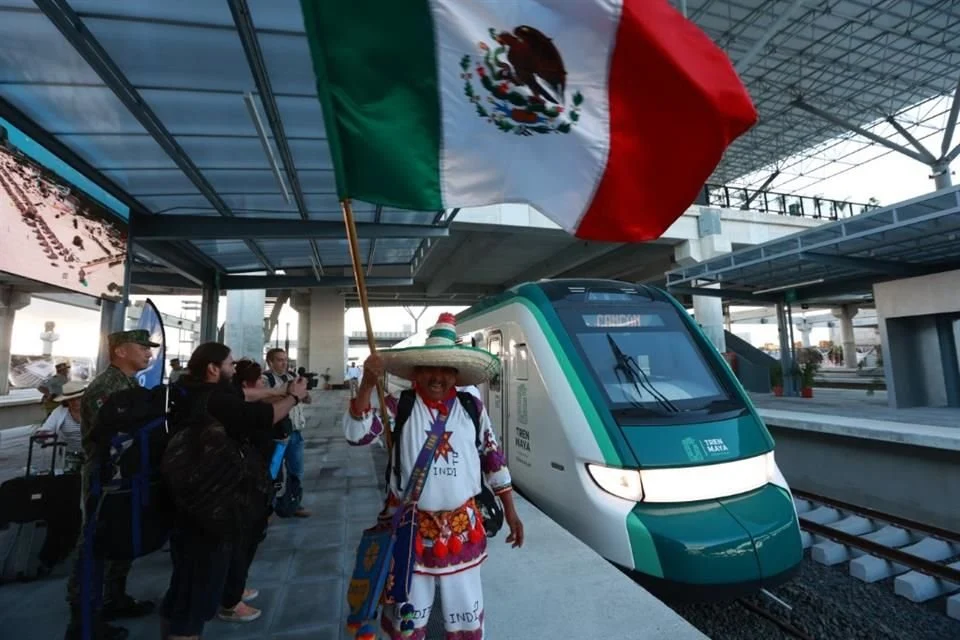
Mexico’s Maya Train, a roughly 1,500-kilometer railway project, was designed to spur development in the impoverished south by improving infrastructure and boosting tourism. Two years after its inauguration, however, it is struggling. Ticket sales cover only a fraction of operating costs, and hotels built along the route remain mostly empty.
Meanwhile, despite government promises, local communities near the line say they have seen few benefits. A Reuters analysis of census data and interviews with dozens of residents along the route found that poverty remains entrenched and well-paying jobs are scarce.
In Vida y Esperanza, steps from a railway maintenance depot, residents had hoped the train would bring change. “It’s not like we’re asking for too much,” said Mary Sandra Peraza, a 30-year-old mother of four. Power lines installed for the train pass almost directly over her home, but she relies on a rented solar panel and generator for her family’s electricity.
Before dawn, Peraza cooks breakfast on a propane burner in a small outdoor kitchen. The village’s only primary school sits next to the depot but has no grid connection for fans, computers, or even stable lighting. Its teacher, Lidia Patricia Chan, has spent years trying to get electricity connected. Authorities told her it cannot be installed until the land under the school has formal title deeds — a common bureaucratic hurdle in rural communal plots. She had hoped the mega-project would change that.
In Quintana Roo, where Vida y Esperanza is located, the proportion of households with electricity actually fell slightly during the railway’s construction period, according to official data, even as new substations were built to power the line.
Former President Andrés Manuel López Obrador promoted the Maya Train — a circular route connecting cities and archaeological sites on the Yucatan Peninsula — as a way to bring development to Indigenous Maya communities and extend tourism beyond beach resorts like Cancun. But that development has not materialized, government data shows.
Although federal spending on the train sparked a historic 13.2% economic growth spike in Quintana Roo in 2023, that boost proved temporary and construction-related. The state suffered a 9.7% contraction in the first nine months of 2025, according to the latest figures from INEGI, the national statistics agency. Quintana Roo reduced unemployment and expanded formal hiring, but about 60% of workers in Yucatan remain in informal jobs without legal or social security protections.
While governments have promised for decades that development would bring opportunities, many community activists say instead that their forests have been fragmented, communal lands eroded, and traditions undermined. Legal challenges to the train by environmental groups and Indigenous communities ultimately failed as the government pushed the project through under national security exemptions.
For many Maya people, the land the train traverses is a sacred heritage, fundamental to their identity and linking them to their ancestors. “I feel outraged by the way things were done … because they didn’t take us into account,” said Eliseo Ek, 45, an Indigenous activist from the community of Nicolas Bravo in Quintana Roo.
In Xpujil, a town near the railway line and the Calakmul Biosphere Reserve in Campeche, Nicolas Moreno, a 50-year-old beekeeper and farmer, opens a tap inside his modest concrete home. Nothing comes out. López Obrador promised to address the town’s chronic water shortage when he inaugurated the Adolfo Lopez Mateos-Xpujil aqueduct in January 2024. “How do we build a great work like the Maya Train and not bring water?” he asked during a public event. But according to Moreno, the taps remain dry. “It was just talk,” he said, referring to the former president’s promises.
Meanwhile, the train has struggled to attract expected interest. Conceived as a seamless rail link between Cancun and other top tourist destinations, legal challenges, environmental route changes, and terrain limitations pushed key sections inland, leaving many stations far from urban centers and airports, making it less practical for visitors. Reuters visited three stations in November 2025, all virtually empty. On a weekday afternoon trip between Bacalar and Chetumal, fewer than 40 of the 230 seats were occupied.
López Obrador once said the train would carry millions of people annually once completed, a figure that has since been revised to 1.2 million. At the same time, the project’s budget has ballooned from $7 billion to more than $25 billion, and last year’s revenue covered less than 13% of operating costs.
The train route also spawned a chain of six Maya Train hotels. One, located in the Calakmul reserve and surrounded by jungle, features two pools and modern amenities. According to a front desk employee, on a November night it was only 20% occupied. Government data analyzed by Reuters shows those properties recorded average monthly occupancy rates between 5% and 24% for most of last year.
More Lifestyle
- Leonardo Aguilar to Headline Free Cozumel Concert for Grito de Independencia 2026
- Mexico’s Treasury Seeks Power to Ban Cash Payments Sector by Sector
- Mérida Opens First Green Corridor to Fight Climate Change
- Isaac Del Toro Wins Montreal Grand Prix in Canadian Classic Debut
- El Niño Keeps Atlantic Hurricane-Free, Setting Record for Latest First Storm in Decades
More Quintana Roo
- Mexico Assigns $110 Million Navy Budget to Fight Sargassum in Quintana Roo
- Quintana Roo Civil Protection Warns Against Fireworks Ahead of Independence Day
- Quintana Roo to Pilot Child Protection Protocol for Tourism Sector in October
- Sheinbaum Announces 187 Primary Care Clinics and Major Projects in Quintana Roo
- Quintana Roo Records 29,413 Sea Turtle Nests at Season’s Midpoint
