
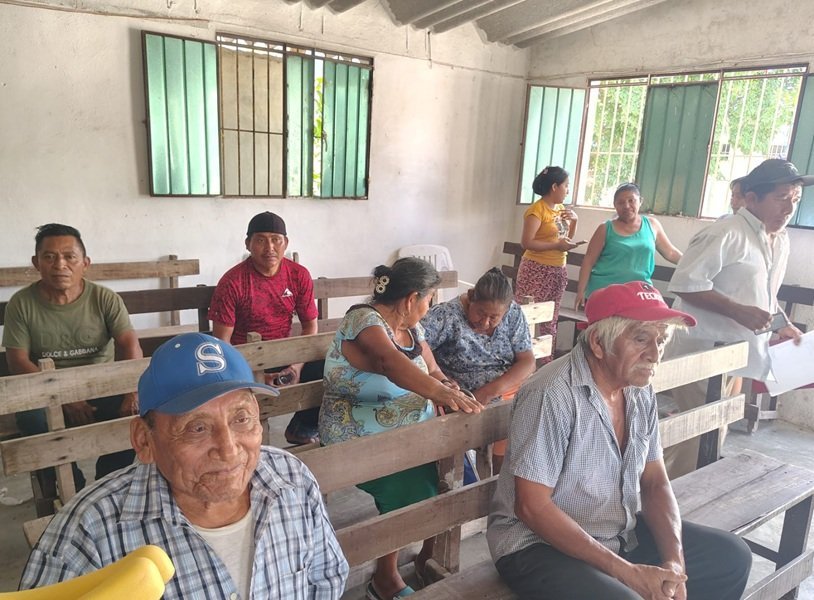
Cancún, Quintana Roo — Maya communities across Mexico’s Yucatan Peninsula will decide through a popular consultation whether Grupo Xcaret can continue using Maya cultural symbols in its shows and decorations, with over 1,000 communities set to participate in the historic vote.
Alfredo Caamal Huchin, an intercultural legal consultant, stated that the compensation Grupo Xcaret must provide to Maya communities for exploiting and benefiting from their culture will be subject to this consultation. Only through this process will it be determined if the consortium can use Maya symbols.
According to Caamal Huchin, the issue does not fall under the jurisdiction of the Supreme Maya Council, generals, or priests of Maya ceremonial centers, but rather all communities in the country’s Maya region, primarily located in the Yucatan Peninsula. This follows a ruling by Mexico’s Supreme Court of Justice of the Nation (SCJN).
After the suspension of the Sacred Maya Journey, related to cultural heritage by Grupo Xcaret, and the SCJN’s resolution, the Maya community is preparing for this historic consultation process.
“What is under analysis here, and what we want recognized and understood not only by Xcaret but by all tourism companies, is that our indigenous communities, particularly the Maya, all 1,021 of them… have the right to self-determination and, of course, to prior, free, and informed consultation regarding the protection of our cultural heritage,” Caamal Huchin explained.
According to data from the National Institute of Indigenous Peoples, the action plan covers 1,021 communities distributed across Quintana Roo, Yucatán, and Campeche states. This will directly impact over 1.1 million inhabitants with the goal of protecting biocultural heritage, transforming it from a gracious concession by companies into an enforceable right structured under existing institutional frameworks.
In Quintana Roo specifically, 26 community assemblies are planned. To achieve this objective, an initial informative phase has been designed, including 16 strategic meetings in key municipalities such as Felipe Carrillo Puerto, José María Morelos, Lázaro Cárdenas, Bacalar, and Othón P. Blanco.
These assemblies are not mere administrative procedures but spaces where each community must appoint representatives and technical advisors to validate any future agreements with the private sector or government agencies.
Caamal Huchin reiterated that the intention of Maya leaders and advisors is not to halt economic development but to transform the current hierarchical relationship into one of commercial partners. Communities would have direct participation that could range from 2% to 10% of benefits, allocated to social projects such as scholarships for young professionals.
This new arrangement requires companies to understand that cultural heritage has spiritual and ancestral value that cannot simply be purchased.
“This is not just any assembly, not just any agreement to be made. Practically speaking, it is the materialization of the feeling, the consent of our communities—that is, of our own life that will be put there,” he emphasized.
More Business
- Canaco-Servytur Seeks Tax Incentives for Sargassum Management in Quintana Roo
- Cancún’s Protected Natural Areas See Tourism Slump, With 600,000 Visitors Expected in 2026
- Bamboo Growers From 13 Mexican States Form National Association
- Quintana Roo Delivers Equipment to 77 Small Businesses Under Transforma Tu Negocio Program
- Cancún Bets on Health Tourism With New Forum
More Playa del Carmen
- Two Suspected Drug Dealers Arrested in Playa del Carmen
- Teen Pianist Amir Akil Makes Debut in Playa del Carmen With ‘Fractales del Viento’
- Up to 20 Sanctioned Offenders a Day Perform Community Service in Playa del Carmen
- Online Escort Ruse Ends in Attempted Robbery in Playa del Carmen
- Internet Installer Dies After Touching High-Voltage Cables in Playa del Carmen
