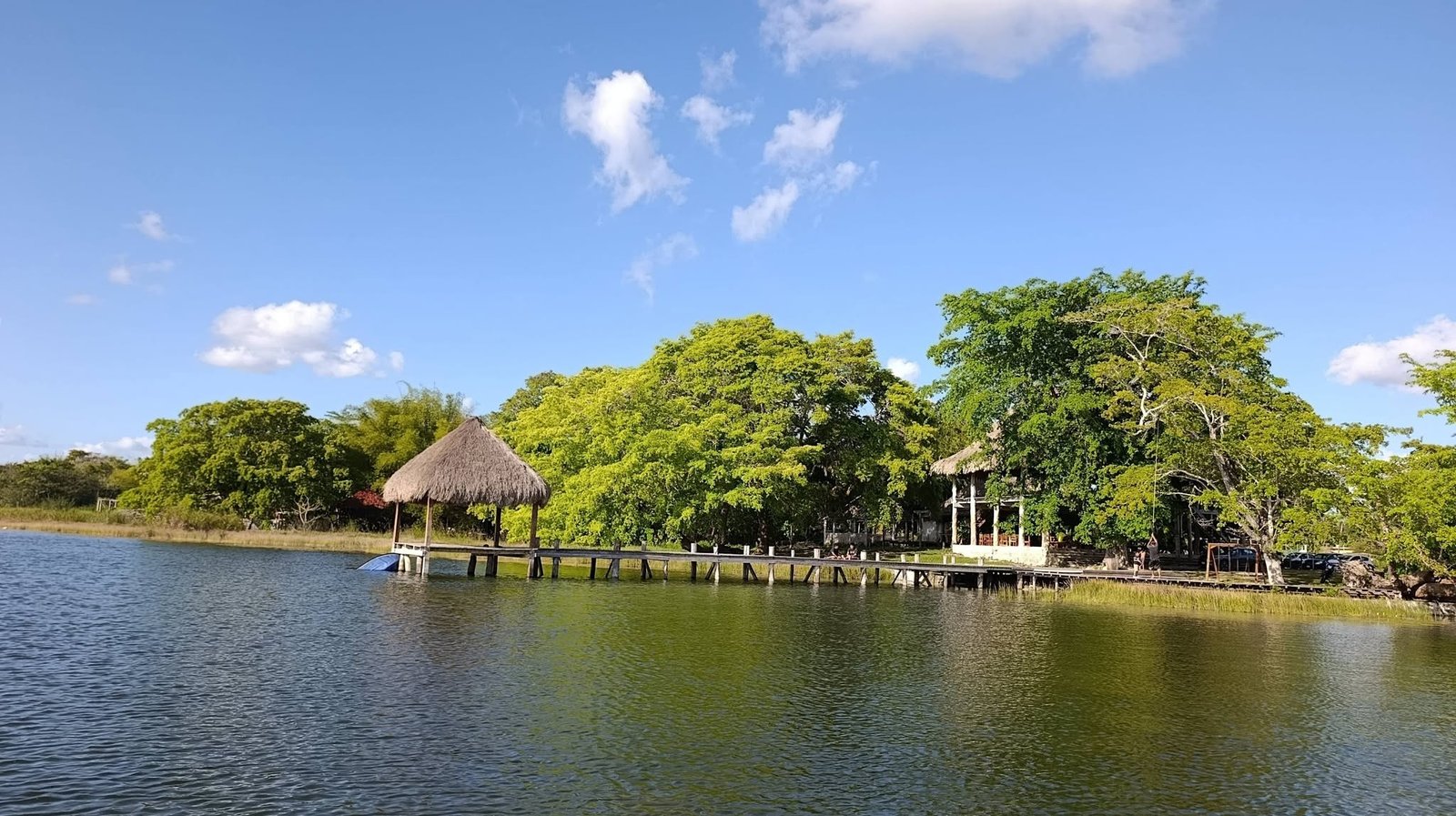
Felipe Carrillo Puerto, Quintana Roo — A man was hospitalized with serious injuries Sunday evening following an apparent crocodile attack near the lagoon in Noh Bec, southwest of Felipe Carrillo Puerto.
Emergency dispatchers received a report that a person had been injured by a reptile near the lagoon. Red Cross paramedics responding from Felipe Carrillo Puerto were met along the route by municipal police assigned to Noh Bec, who guided them to the victim.
Paramedics treated the man at the scene before taking him to the Hospital General de Felipe Carrillo Puerto, where he was admitted to the emergency department.
Authorities had not released his name or a detailed medical update as of Monday. They also had not established exactly how the encounter occurred, including whether the man was fishing, swimming or standing near the water when he was injured.
The animal involved had not been formally identified, making this an apparent crocodile attack pending further investigation.
Several recent attacks have involved people near the water
The Noh Bec incident is the latest in a series of crocodile encounters reported across Quintana Roo.
In March, a fisherman in the Maya community of Chan Santa Cruz, also in Felipe Carrillo Puerto, was bitten on the arm after the movement of caught fish reportedly attracted a crocodile. People nearby helped free him, and he was taken for medical treatment.
On May 12, a 75-year-old French tourist was bitten on his arms and legs by Panchito, the crocodile long associated with Casa Cenote, also known as Cenote Manatí, between Akumal and Tulum. He was hospitalized and reported to be out of danger.
Panchito had frequently been photographed swimming near visitors, and his apparent tolerance of people had become part of the cenote’s identity. The attack challenged the assumption that a familiar wild animal is necessarily a safe one.
Tulum officials subsequently began considering tighter restrictions on swimming, diving and close-contact activities in places where crocodiles are regularly present. Authorities said Panchito would remain in his natural habitat, placing responsibility on people and tourism operators to maintain a safe distance.
In September 2025, a 31-year-old visitor from Texas was injured near Nichupté Lagoon in Cancún’s Hotel Zone after moving closer to a crocodile to take a photograph. The animal lunged and bit him, causing injuries that were reported as non-life-threatening.
Pets are particularly vulnerable. In October 2025, a Belgian Malinois named Max was fatally injured by a crocodile near the shoreline of Chetumal Bay.
Cozumel guide sanctioned for attracting a crocodile with bait
The danger of teaching crocodiles to associate people with food came under renewed scrutiny in Cozumel just days before the Noh Bec incident.
A tourist guide at Punta Sur Eco Beach Park was recorded using a bone tied to a fishing rod to draw a crocodile toward a boat in Laguna Colombia. A foreign visitor shared images of the close encounter on social media, prompting criticism from environmentalists and animal-welfare advocates.
Park director Jesús Benavides Andrade said the guide was identified and sanctioned. He will also be required to complete a course in responsible environmental practices.
The administration said it did not know why the guide staged the encounter. Online claims that it was done to generate a larger tip have not been confirmed.
Laguna Colombia reportedly supports more than 200 crocodiles and is one of Cozumel’s most important wildlife-observation areas. Bringing an animal close to tourists for photographs not only creates an immediate danger; repeated feeding or baiting can alter the animal’s behavior and make future encounters less predictable.
A crocodile conditioned to approach boats or people may continue doing so after the tourist who encouraged the behavior has left. The risk is then passed to other visitors, guides and park workers.
The incident is especially troubling given that a 72-year-old American visitor was seriously injured by a crocodile while swimming off Cozumel in April. The animal bit his arm and pulled him underwater before he managed to escape. He required approximately six hours of surgery to repair a damaged artery and severed tendons.
Crocodiles live throughout Quintana Roo
Quintana Roo is home to both Morelet’s crocodiles and American crocodiles. They inhabit freshwater and brackish environments, including lagoons, mangroves, wetlands, estuaries, cenotes and coastal channels.
Their habitat overlaps with some of the state’s busiest tourism and residential areas. The Nichupté lagoon system borders Cancún’s Hotel Zone, while crocodiles are also found around Bacalar, Chetumal Bay, Mahahual and inland communities in the Maya Zone.
Recent sightings demonstrate how broad that overlap can be. An adult crocodile was seen in a busy section of Bacalar Lagoon in January, while sargassum-removal workers in Mahahual encountered one moving through accumulated seaweed in July.
A sighting does not mean an attack is imminent. However, crocodiles can remain almost completely hidden beneath the surface, particularly in murky water or around mangrove vegetation. The absence of a visible animal or warning sign does not mean a lagoon, cenote or coastal area is safe.
Fishing and feeding can increase the danger
People fishing from lagoon banks face particular risks. Splashing fish, bait and discarded remains can attract crocodiles to the same location where someone is standing.
Fish should never be cleaned at the water’s edge in known crocodile habitat, and scraps should not be thrown into the water near fishing, swimming or boat-launch areas.
Deliberately feeding or baiting crocodiles presents a broader public-safety problem. It can reduce their natural caution and teach them to approach boats, docks and people in expectation of food.
The Cozumel case demonstrates why wildlife encounters should never be staged for photographs, entertainment or tips. A crocodile that approaches on command has not become tame. It has learned that getting close to people may produce a reward.
How to reduce the risk
Residents and visitors can greatly reduce the likelihood of a dangerous encounter by following a few basic precautions:
- Swim only in designated areas where entry is permitted by authorities or an established operator.
- Stay well back from the shoreline. Official crocodile-safety programs recommend maintaining a minimum distance of five meters, or about 16 feet, in known crocodile habitat.
- Exercise particular caution at dusk, dawn and night, when crocodiles can be more difficult to see.
- Never approach, feed or bait a crocodile for a photograph or video.
- Do not participate in a tour that encourages guides or visitors to attract wildlife with food.
- Keep children close to an adult and away from lagoon banks, low docks and mangrove edges.
- Keep dogs leashed and several meters from the water. Do not allow pets to swim or drink from natural waterways in crocodile habitat.
- Never leave fish scraps, bait or other food beside the water.
- Avoid crouching, washing equipment or reaching into the water from the bank.
- Take warning signs seriously, even when other people appear to ignore them.
These precautions are consistent with official guidance used in other regions where people routinely share waterways with crocodiles.
Anyone who sees a crocodile near a heavily used public area should move away and report it through 911. People should not attempt to feed, frighten, capture or relocate the animal themselves.
Crocodile attacks remain unusual, but the recent cases share a clear pattern: the greatest danger is at the water’s edge, particularly when people approach wildlife, enter known habitat or introduce food and fishing activity.
The Noh Bec case remains under investigation. Whatever the precise circumstances, it is another reminder that crocodile awareness is not limited to visitors in Cancún or Tulum. It is equally important for families, fishermen, tourism operators and pet owners throughout Quintana Roo.
More Community
- Supreme Court Reopens Mahahual Case Against Royal Caribbean
- Quintana Roo Governor Invites Families to First Janal Pixán Festival in Calderitas
- Senate to Review Legality of IMSS Changes to Modality 40 Pension Scheme
- Quintana Roo Seeks Geographic Indication to Protect Melipona Honey
- Quintana Roo Prosecutor’s Office Releases Seized Playa del Carmen Property, Leaving Two Dogs Locked Inside for Three Days
More Zona Maya
- Man Sentenced to 108 Years for Raping and Sexually Abusing His Three Stepdaughters
- Artists Plan Night Festival to Revive Mayan Legends in José María Morelos
- Quintana Roo Youth Institute Seeks 13 Million Peso Budget Boost for Scholarships
- Five Ejidos Seek Alliance to Protect Chichankanab Lagoon in José María Morelos
- Maya Frog and Toad Shell Pendants May Reveal Ancient Trade Routes