
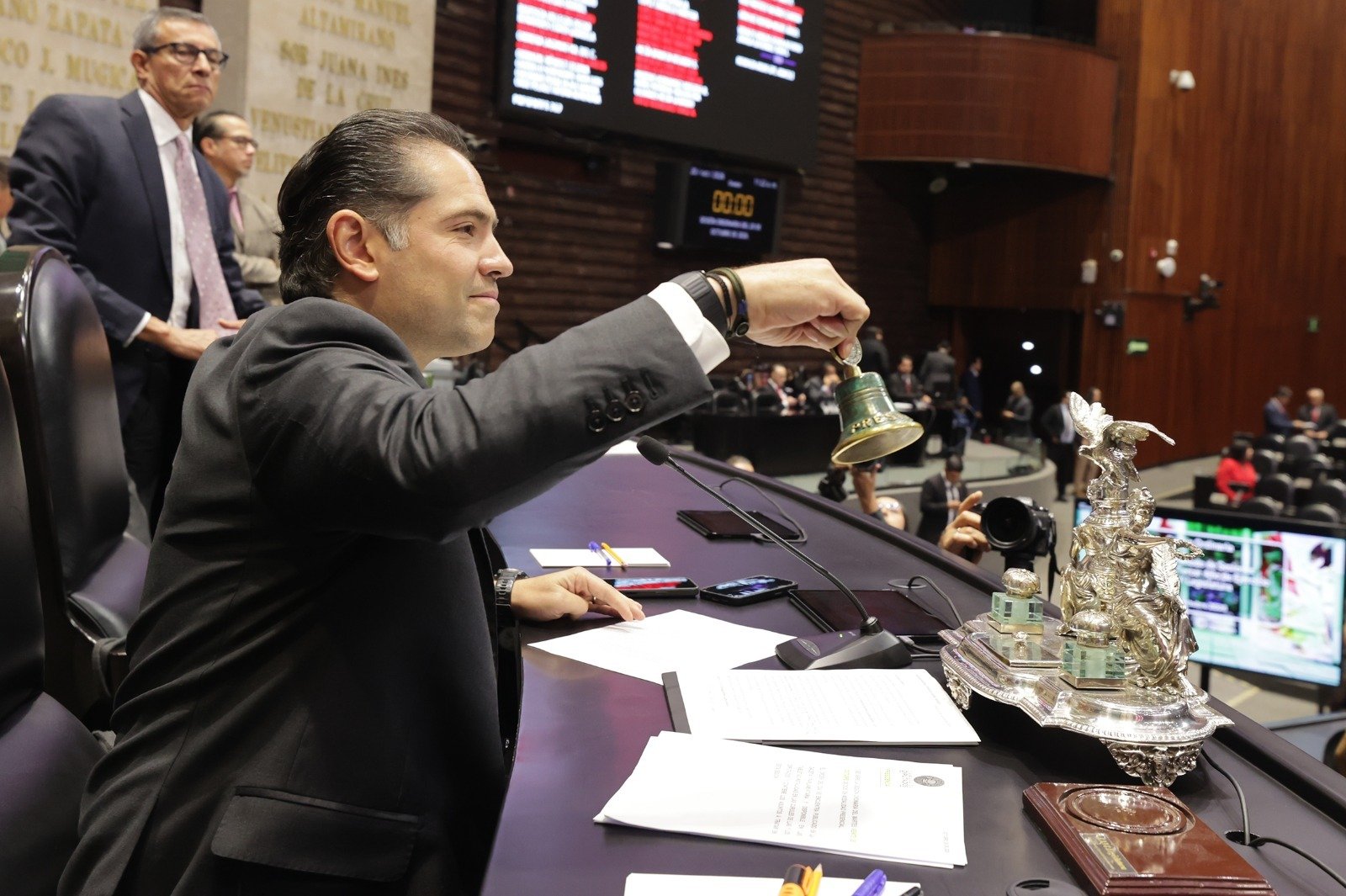
Mexico City — Mexico’s Chamber of Deputies gave general approval on Wednesday to a reform of the Federal Penal Code and the Federal Industrial Property Protection Law that opponents have dubbed the “Anti-Meme Law,” warning it could chill satire, political cartoons and journalism.
The measure passed with 312 votes in favor, 119 against and no abstentions. It was promoted by President Claudia Sheinbaum and had already cleared the Senate.
The reform sets penalties for anyone who uses, reproduces or imitates the graphic identity, emblems, logos, web domains or official documents of public institutions for the purpose of deception and to commit a crime. It provides for prison terms of one to five years and fines of 1,000 to 10,000 Unidades de Medida y Actualización (UMA), an inflation-indexed unit used to calculate penalties in Mexico.
Opposition Seeks Protections for Satire and Cartoons
Although the text does not explicitly mention memes, opposition lawmakers branded it the “Anti-Meme Law” and argued that its wording could put satire, parody, political caricature and reporting at risk.
During the debate, legislators from the PAN, PRI and Citizens’ Movement parties objected that the bill contains no explicit exception protecting such content. PAN Deputy Paulina Rubio proposed adding a specific safeguard to prevent the new provisions from being used against cartoonists, journalists, caricaturists or meme creators.
Morena lawmakers rejected the claim that the reform targets memes or expressions of political criticism. They said its purpose is to update the legal framework to fight piracy, counterfeiting and the fraudulent use of the identity of public institutions.
According to the bill, simply using a government logo would not be enough to constitute a crime. The use must fall under the conditions set out in the reform, particularly when there is a commercial purpose, an intent to mislead about official origin and an intention to commit an illegal act.
The general approval came amid protests from opposition legislators, who set up banners and memes in the session hall to question the scope of the reform and accuse the ruling majority of opening the door to possible restrictions on freedom of expression.
With the lower house’s approval, the bill now continues through the legislative process. The debate has once again placed at the center of national discussion the boundary between protecting institutional identity and preserving the right to criticize, satirize and engage in political expression online.
More Government
- Senate to Review Legality of IMSS Changes to Modality 40 Pension Scheme
- Mexico Blocks Shipment of Six Archaeological Artifacts Bound for Britain at Mexico City Airport
- Quintana Roo Prosecutor’s Office Releases Seized Playa del Carmen Property, Leaving Two Dogs Locked Inside for Three Days
- IMSS Raises Wage Increase to 8% After Workers Reject Initial Offer
- Playa del Carmen Parking Meter Operator Playaparq Ignores City Notices Over Broken Machines
