
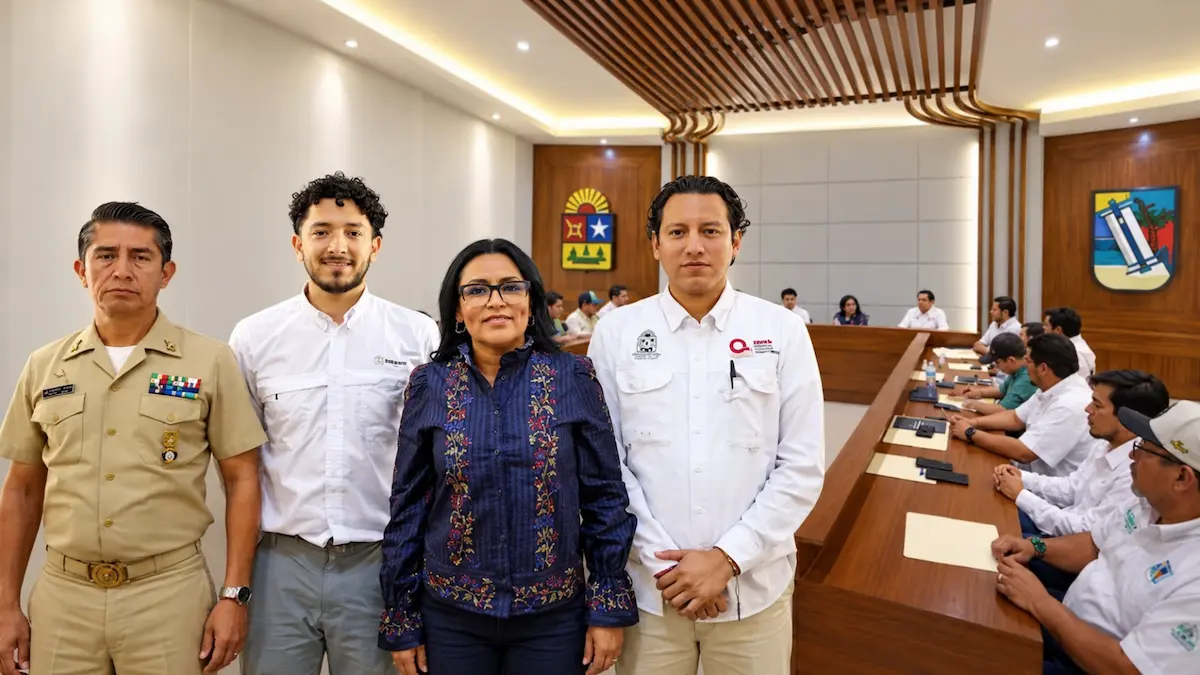
Puerto Morelos, Quintana Roo — Municipal, state and federal authorities have established the new Sargassum Attention Cabinet of Puerto Morelos, a coordinating body that will identify priority beaches, schedule machinery and define routes for transporting sargassum, among other tasks. The cabinet will meet weekly until December 10, 2026, to review progress and follow up on operational protocols.
The organization was created in the City Hall’s council chamber during a meeting led by Mayor Blanca Merari Tziu Muñoz, with participation from municipal, state and federal authorities. Its purpose is to organize coastal cleanup and promote circular economy alternatives related to the use of macroalgae; among the areas to be coordinated are beach cleanups, machinery, transportation routes and circular economy alternatives.
During the session, the mayor highlighted coordination among the public, private and academic sectors. The operational agenda includes establishing transfer sites and safe routes for transporting the collected material.
State Reports 154,000 Tons Collected; Puerto Morelos Accounts for 22,000
Presenting the sargassum management strategy for Puerto Morelos and Quintana Roo, Brandon Mex Martínez, representative of state Secretary of the Environment Óscar Rebora Aguilera, reported that 154,000 tons have been collected in the state. Of that total, 22,000 tons correspond to Puerto Morelos, about 14.3% of the state total.
The official noted that actions linked to the Mara Lezama government’s strategy are monitored by 12 satellites as part of coordinated monitoring of the macroalgae. The care plan includes coastal areas of Cancun, Puerto Morelos, Playa del Carmen, Tulum and Mahahual, with coordinated actions for collecting and handling the material.
Fonatur Outlines Reporting and Verification Mechanisms
On behalf of the National Fund for Tourism Development (Fonatur), Luis Martínez Vega, head of office, explained the technical scope and mechanisms for standardizing reports. He also described the establishment of verifications of environmental management and the evaluation of volumes collected on the different coastal fronts.
Navy Reports 25,000 Tons Extracted Directly in Open Waters
Rear Admiral Topiltzin Flores Jaramillo, coordinator of the Sargassum Response Strategy of the Secretariat of the Navy (Semar), reported that inter-institutional work with the Secretariat of the Environment allowed for a doubling of direct maritime extraction, reaching 25,000 tons in open waters.
Participating agencies will maintain weekly reviews of progress through verifiable reports, with the purpose of continuing coastal cleanup and monitoring operational and environmental measures.
More Environment
- Quintana Roo Seeks Geographic Indication to Protect Melipona Honey
- Dengue Cases in Quintana Roo Jump 152 Percent
- Quintana Roo Hoteliers Push Regenerative Tourism Amid Beach Access Disputes
- Greenpeace Finds Contamination at 17 Yucatán Wells and Cenotes as Maya Communities Demand Action
- Quintana Roo Tops 152,000 Metric Tons of Sargassum as Playa del Carmen and Cancún Lead
More Puerto Morelos
- Puerto Morelos Mayor Says Cancún Mansion Raided by Federal Agents Was ‘Lent’ to Her
- Alleged Owner of Cancún Home Rented by Puerto Morelos Mayor Linked to Ultramar Fraud Case
- Free Mammograms Offered in Three Quintana Roo Municipalities
- Puerto Morelos Mayor Denies Detention After Federal Search of Rented Home
- Quintana Roo Names Winners of 2026 State Craft and Embroidery Prizes
