
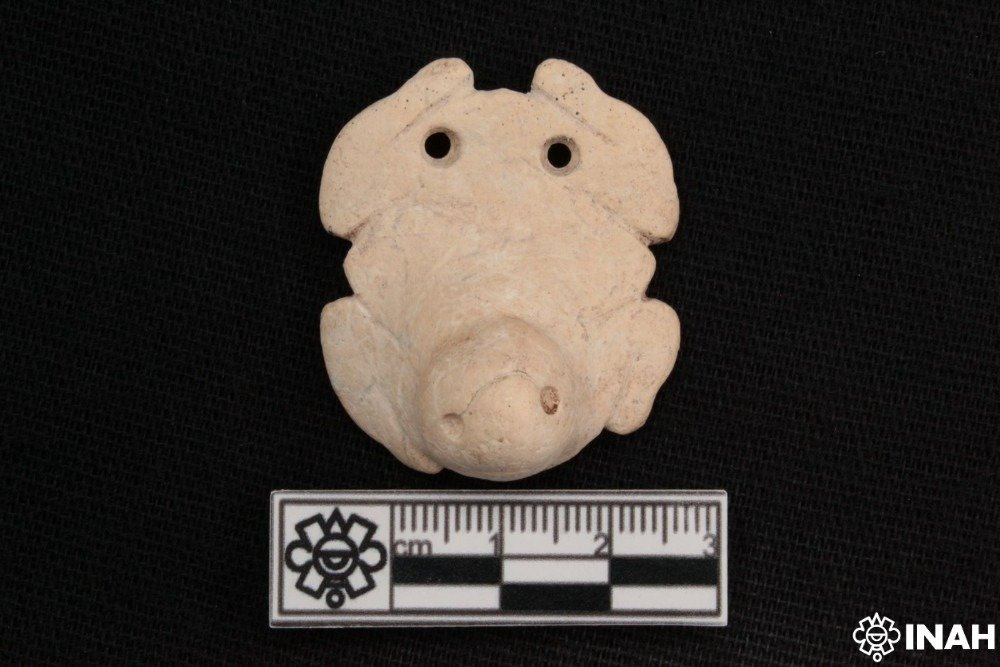
Chetumal, Quintana Roo — An analysis of 14 carved shell artifacts stored in Chetumal is opening new lines of research into the craftsmanship of the ancient Maya and the meaning they attached to frogs and toads.
The pieces — polished, stylized depictions of frogs and toads carved from shell and measuring between 2 and 4 centimeters — were recovered from funerary contexts at several archaeological sites in Campeche and Yucatán during salvage work carried out by the Tren Maya project. They are now held at the project’s Zooarchaeology Laboratory in Chetumal, the capital of Quintana Roo.
The artifacts come from the sites of Sacamuy, Dzitbalché, Xiol, Kimbilá and Kanab. Researchers say the collection, the most diverse assemblage of mollusk-shell material proposed for study to date, could deepen understanding of manufacturing techniques and shed light on how resources were distributed across the Maya region and how long these traditions endured.
Deities of Water and Emissaries of Rain
“This finding invites a reevaluation of the exchange networks and the worldview of the communities that inhabited the region, leaving the door open for new analyses that add to knowledge about the presence of animal-shaped pendants, particularly of frogs and toads, in this area,” said María Elodia Acevedo Chin, an archaeologist with the Tren Maya project’s Zooarchaeology Laboratory.
Acevedo Chin said the Maya regarded frogs and toads as deities of water and emissaries of rain, as well as beings tied to the underworld and to rebirth.
“Consistent with their biological characteristics, they were venerated and represented in fertility rites and ceremonies, in sacrifices and in agriculture. These objects therefore had not only aesthetic value — they embodied the sacred bond between humans, nature and the spiritual world,” she said.
The archaeologist added that ethnographic research could help trace how those beliefs persisted over time and how they connect to the traditions of ethnic groups still living in the region.
More Culture
- Cancún Opens Registration for Janal Pixan 2026 Catrina and Altar Contests
- Tulum’s Mureco Museum Adds 53 Archaeological Pieces From Across Mesoamerica
- Tulum Fishing Cooperative Seeks Funding to Modernize Its Facilities
- Mérida Jazz Festival 2026: 40 Artists, Free Shows, Tourism Boost
- FPMC Opens Txepo’s Art + Architecture Dreamscape in Cozumel
More Zona Maya
- Ten Rural Communities in Quintana Roo Form Community Conservation Territories
- Fonatur Doubles Maya Ka’an Budget to 20 Million Pesos
- Farmer Warns of Difficult Corn Season Ahead in José María Morelos
- Maya Women in Quintana Roo Turn Ancestral Knowledge Into Thriving Cooperative
- Quintana Roo Opens 2026 Poetry Contest for Indigenous and Afro-Mexican Girls
