
Mexico City — The United States has publicly acknowledged Mexico’s progress in combating drug trafficking, highlighting a key area of cooperation amid broader bilateral tensions. U.S. Ambassador to Mexico Ronald Johnson emphasized the results of security and public health collaboration, particularly in reducing overdose deaths in the United States.
In a social media message, the diplomat stated that “progress is clear,” while noting that efforts must continue against the persistent problem of synthetic drug trafficking, including fentanyl.
Historic Drop in Overdose Deaths
The core of the U.S. recognition stems from preliminary data from the Centers for Disease Control and Prevention (CDC), which indicates a 35% reduction in overdose deaths by late 2025 compared to the peak recorded in 2023.
Johnson summarized the bilateral strategy’s logic, stating: “Dismantling cartels, together with cooperation with Mexico, saves lives and strengthens our shared security.”
This decline occurred during the first year of President Donald Trump’s new term, whose administration has emphasized strengthening policies against illicit drug trafficking.
Operational Strikes Against Sinaloa Cartel Associates
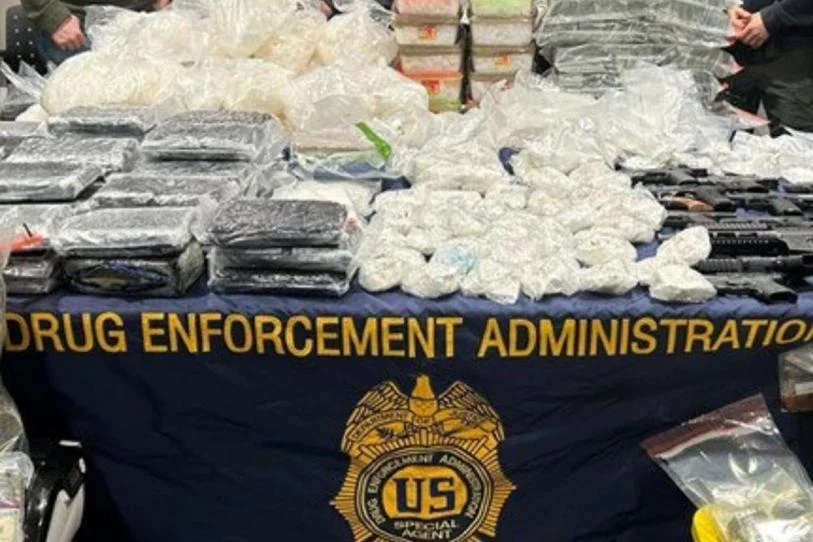
Alongside the diplomatic statements, the U.S. Department of Justice reported the arrest of four individuals allegedly linked to the Sinaloa Cartel, charged with trafficking fentanyl, methamphetamines, and firearms.
According to a formal indictment issued by a federal grand jury, the detainees face 29 charges related to large-scale drug distribution and possession of so-called “ghost guns”—firearms without serial numbers.
Those arrested include José Luis Salazar-Cruz, Alfonso Salazar, José Manuel Salazar, and Jorge Humberto Salazar, all identified as members of the same family network involved in illicit trafficking. U.S. authorities noted that the operation is part of a broader strategy to dismantle transnational criminal structures.
Mexico-U.S. Cooperation
Ambassador Johnson’s message reinforces a narrative that has gained ground in recent years: shared responsibility in fighting drug trafficking. Collaboration between Mexico and the United States has expanded beyond interdiction to include shared intelligence, financial tracking, and coordinated actions on both sides of the border.
In this context, cooperation is viewed not only as a security tool but also as a public health mechanism, directly impacting the reduction of synthetic drug use and associated mortality.
“While there is still work to be done, progress is clear,” Johnson reiterated, emphasizing that current results must be consolidated through sustained policies.
Strategic Implications
The U.S. recognition comes at a time when bilateral relations face tensions in other areas, including trade, migration, and border security. However, combating drug trafficking remains one of the few areas of strategic alignment.
From an international positioning perspective, such statements strengthen Mexico’s image as a key player in containing drug trafficking to the United States. Simultaneously, they reinforce the narrative that the fentanyl problem requires a shared, not unilateral, response.
More Crime
- Cancún Airport Transporters Blame ASUR for Steep Fees
- Five to Face Trial in Tulum Funeral Home Equipment Theft
- Quintana Roo Civil Protection Warns Against Fireworks Ahead of Independence Day
- Rising Crime Reports in Quintana Roo Signal Greater Trust, Official Says
- Armed Men Try to Abduct Woman on Cozumel; She Escapes on Her Motorcycle
