
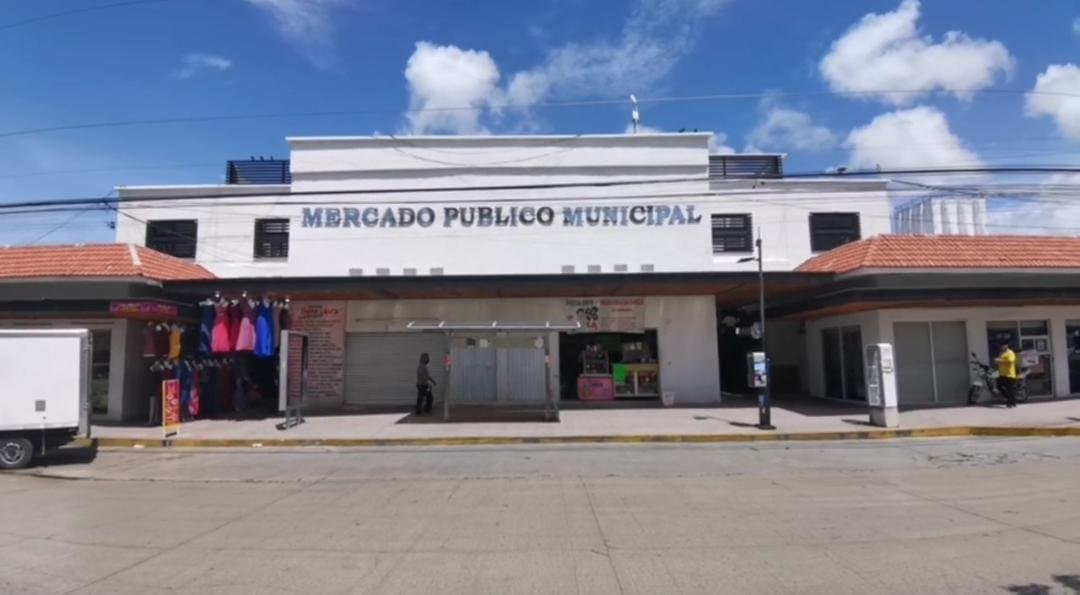
Playa del Carmen, Quintana Roo — Municipal authorities have announced plans to rehabilitate and regularize the city’s public markets, beginning with the Diana Laura Riojas market in the Luis Donaldo Colosio neighborhood. The move comes after a recent diagnostic review revealed widespread underutilization, infrastructure deficiencies, and administrative irregularities across these spaces.
According to Estefanía Hernández, Secretary of Urban Development and Investment Attraction, the Colosio market is operating far below capacity. Of its more than 100 stalls, 77 are currently closed, while approximately 30 are being subleased—an arrangement that falls outside the original concession structure. The building’s second floor has remained closed for years.
Officials described the upper level as being in critical condition, citing the presence of dead animals, lack of potable water, and unsanitary conditions that render the space unfit for commercial use. Before any reopening can take place, authorities say the area will require a comprehensive cleanup, restoration of basic services, and technical evaluation of the structure.
The municipality’s recovery plan is centered on three priorities: restoring order among vendors, improving sanitation, and increasing security. Hernández stated that the goal is to reactivate all stalls and return the market to full operation, though no timeline has been announced.
The situation at Diana Laura Riojas reflects broader challenges facing municipal markets in Playa del Carmen. Despite the city’s size and rapid growth, it lacks a consolidated public market system comparable to those found in other Mexican cities, where mercados serve as central hubs for fresh food, local commerce, and daily life.
One of the few established municipal-style markets in the city is the Mercado Playa del Carmen, located near Avenida 30 and Calle 8 Norte. The market hosts a mix of small food vendors, produce stalls, and basic goods, but operates on a relatively small scale and has not developed into a major commercial or cultural anchor.
In practice, much of Playa del Carmen’s market activity takes place outside formal municipal structures. Temporary street markets, or tianguis, operate in neighborhoods such as Colosio and Villas del Sol, offering fresh produce, prepared foods, clothing, and household items. These informal markets tend to be more active and better attended than fixed municipal facilities, though they lack permanent infrastructure.
Privately operated alternatives have also filled part of the gap. Businesses such as DAC Playa del Carmen function as hybrid grocery markets, offering fresh produce, prepared foods, and specialty items. However, these establishments cater to a different segment of the population and do not serve the same role as traditional public markets.
Urban development patterns have contributed to the current landscape. Playa del Carmen’s rapid expansion over the past two decades has prioritized residential and tourism-related construction, often without parallel investment in public market infrastructure. At the same time, rising land values—particularly in central areas—have made it more difficult to sustain low-margin, vendor-based marketplaces.
Administrative factors have also played a role. Issues such as stall abandonment, informal subleasing, and inconsistent enforcement of concession agreements have affected occupancy rates and long-term viability in municipal markets. In addition, deficiencies in maintenance, including water supply, waste management, and security, have discouraged vendor participation.
Changing consumer habits further complicate the outlook. Supermarkets, convenience stores, and delivery services have altered purchasing patterns, reducing reliance on traditional daily markets among some segments of the population.
The rehabilitation of the Diana Laura Riojas market is being positioned as a first step toward addressing these structural issues. Officials have indicated that the effort will include not only physical improvements but also administrative regularization intended to ensure that stalls are occupied and operated in accordance with municipal guidelines.
If successful, the project could provide a model for revitalizing other underperforming market spaces in the city. More broadly, it represents an attempt to reestablish municipal markets as functional components of Playa del Carmen’s urban infrastructure—serving both local residents and, potentially, visitors seeking a more traditional market experience.
For now, authorities acknowledge that significant work remains before that vision can be realized.
The popular market’s upper floor has been closed since previous administrations, and Hernández outlined a three-point plan for its revival: order, cleanliness, and security. She emphasized the goal of reopening all stalls in the building.
Hernández revealed that the abandoned second floor contains dead animals and unsuitable conditions for a market, requiring a thorough cleanup. She also noted the lack of potable water service in that section, adding that officials will assess technical requirements for repairs before reopening.
More Business
- Mexico Clears Sonora of Foot-and-Mouth Disease, Exports Resume
- AI and New Travel Trends to Headline AFEET Trends 2026 Summit in Cancún
- Tulum Pivots to Luxury as Airlines Cut Flights, Occupancy Drops
- Yucatan Preps for Winter Season With More Flights From Canada
- Activists Protest Pig Mega-Farms in Yucatán, Demand Crackdown on Pollution
More Playa del Carmen
- Car With Two Children Overturns at Paamul Curve on Highway 307
- Playa del Carmen Opens Nominations for Elvia Carrillo Puerto Award Honoring Outstanding Women
- CFE and Playa del Carmen to Review Plan for Submarine Power Line to Cozumel
- American Says Stolen Truck Was Resold in Playa del Carmen With Forged Paperwork
- State Adult Education Institute to Open Branch in Villas del Sol
