
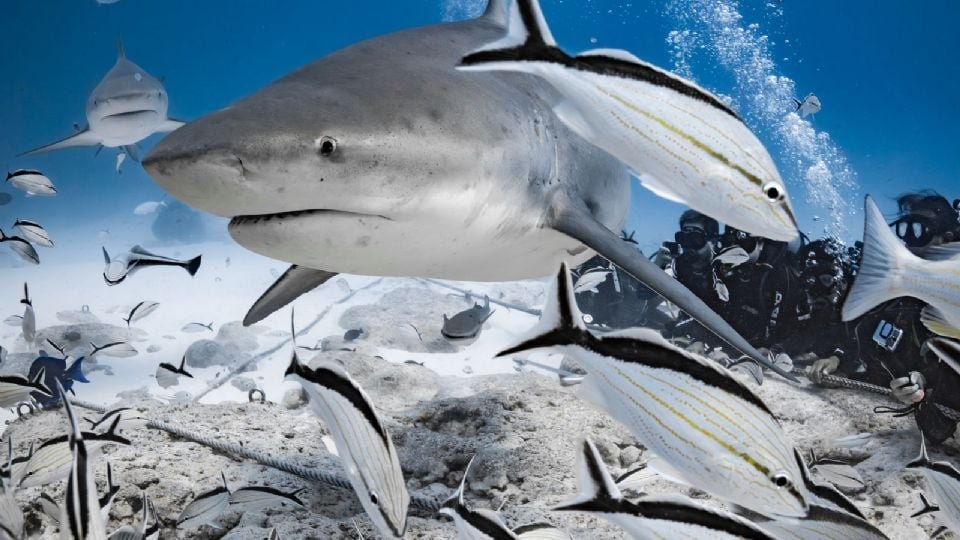
Cancún, Quintana Roo — A growing conservation effort in the Mexican Caribbean is showing measurable results, with an estimated 30,000 sharks saved over the past four years through a shift from fishing to sustainable tourism.
The initiative, led by Saving Our Sharks in collaboration with local fishing cooperatives like Kab Xok (“Shark World”), is part of a broader effort to reframe sharks not as a resource to extract, but as one worth far more alive than caught. For decades, shark fishing—both legal and illegal—has contributed to severe population declines worldwide. According to the organization, roughly 100 million sharks are killed each year globally, driven largely by demand for fins, meat, and bycatch in industrial fishing.
Here in Quintana Roo, that pressure has historically impacted several key species found along the Mesoamerican Reef system, the second-largest coral reef in the world. The region is home to a diverse range of sharks, including bull sharks, silky sharks, nurse sharks, Caribbean reef sharks, and occasional hammerheads. Each plays a critical role in maintaining the balance of marine ecosystems, particularly as apex or near-apex predators that help regulate fish populations and reef health.
One of the most visible examples of this shift toward conservation is the rise of shark ecotourism—particularly the seasonal bull shark dives off Playa del Carmen. Every winter, typically from November through March, female bull sharks migrate to the warmer, shallow waters along the coast. What was once a little-known natural phenomenon has become a globally recognized diving experience, drawing enthusiasts from around the world.
These dives, when conducted responsibly, generate significant income for local operators and, importantly, for former fishermen who now work as guides, spotters, and conservation advocates. Strict protocols are in place: divers remain on the seabed under supervision, interactions are controlled, and feeding practices are regulated to minimize behavioral disruption. The result is a model where a single shark can generate far more economic value through tourism over its lifetime than it ever could through fishing.
Kab Xok has built on this model with its “Shark Safari” snorkeling experiences near Isla Mujeres, offering visitors a chance to observe species like silky sharks in open water. These tours are designed not only to provide income but to educate participants on shark behavior, conservation challenges, and the importance of marine protection. For many visitors, it’s their first time seeing sharks in the wild—an experience that often shifts perceptions from fear to fascination.
The economic impact is tangible. Since 2022, shark fishing in Isla Mujeres has reportedly dropped by 80%, with 32 local families directly benefiting from training and scholarship programs that help transition them into tourism-based roles. These fishermen, now referred to as “Masters of the Sea,” are actively involved in monitoring shark populations and protecting designated marine areas that now span more than 242,000 hectares.
Melodie Treviño, director of Saving Our Sharks, says the long-term vision goes beyond localized success. Plans are underway to establish a large-scale shark and ray sanctuary in the Mexican Caribbean by 2030, along with the country’s first fisherman-managed shark sanctuary. These protected areas would safeguard critical habitats, support population recovery, and formalize the role of local communities in conservation management.
There are also ongoing efforts to designate a new Protected Natural Area specifically for sharks in the region. If approved, it would add another layer of legal protection in a marine environment already facing pressure from coastal development, climate change, and illegal fishing practices.
Education remains a core part of the strategy. Through outreach campaigns tied to National Shark Month each July, the organization reaches an estimated 3.5 million people annually. The message is straightforward: sharks are not the threat they’re often made out to be. In reality, shark attacks are extremely rare, while the loss of sharks has far-reaching consequences for ocean health.
What’s happening in Quintana Roo is increasingly being looked at as a case study in how conservation and economic incentives can align. By giving sharks a clear, sustainable value within the tourism economy, local communities are finding practical reasons to protect them.
For a region so closely tied to the health of its waters, that shift may prove critical—not just for sharks, but for the future of the entire coastal ecosystem.
More Environment
- Cancún to Open Glass Collection Center as Part of Circular Economy Push
- Cave Divers Push to Revive Jacinto Pat Museum in Tulum to Showcase Caves and Underground Rivers
- Snakes Account for Nearly Half of Cancún’s Wildlife Reports, Firefighters Say
- Screwworm Still Dominates Playa del Carmen Vet Visits Despite Falling Cases
- Playa del Carmen Mayor Leads Coastal Cleanup With More Than 2,000 Volunteers
More Quintana Roo
- Caribbean Hoteliers Ask Mexico to Earmark 28% of Non-Resident Fee for Tourism Promotion
- Belize Tightens Río Hondo Border Patrols, Presses Mexico on Maya Train Extension
- Women’s Groups Demand Purge of Quintana Roo Police Forces Over Abuse and Criminal Ties
- Aquaponics Congress in Riviera Maya Takes Aim at Quintana Roo’s Food Dependence
- Quintana Roo Human Rights Commission Closes 930 Complaints With Only 13 Recommendations
