
Playa del Carmen, Quintana Roo — One of the Riviera Maya’s most recognizable cultural events is off the calendar for 2026.
Grupo Xcaret has announced the cancellation of the upcoming Travesía Sagrada Maya (Sacred Mayan Journey) following a recent ruling by Mexico’s Suprema Corte de Justicia de la Nación. The decision comes after the court ordered the company to stop using Mayan symbolism in its promotional materials.
According to Xcaret, moving forward with the event under those conditions could be interpreted as noncompliance with the court’s mandate. Rather than risk that, the company has opted to cancel the 2026 edition entirely. Whether the event will return in the future remains unclear.
The cancellation affects 333 canoeros who had already been preparing for the annual crossing.
A Modern Reenactment of an Ancient Journey
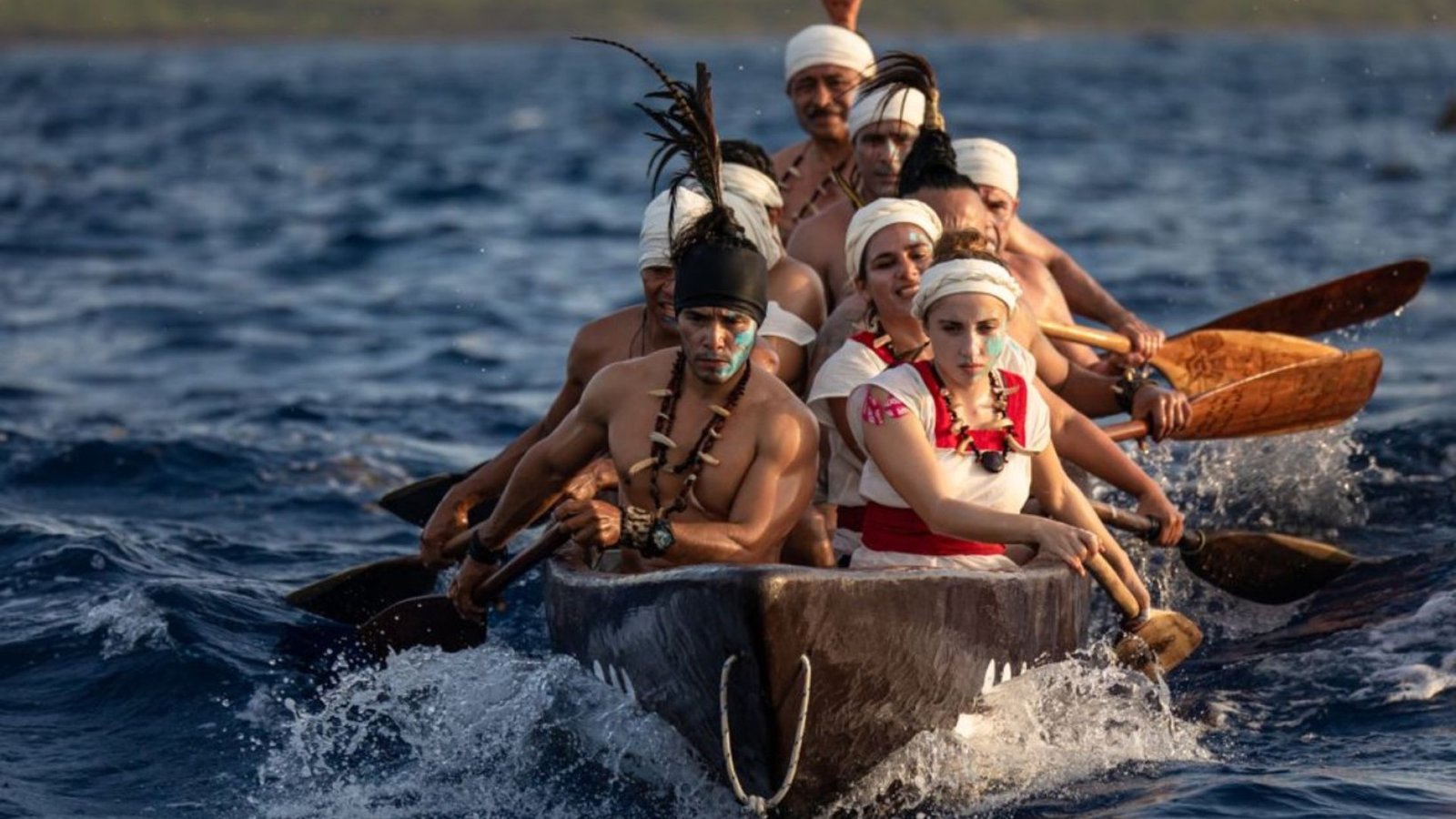
For nearly two decades, the Travesía Sagrada Maya has recreated a pre-Hispanic pilgrimage believed to have been carried out by ancient Maya communities. Participants paddle traditional-style canoes from the mainland—historically from the port of Polé, near present-day Xcaret Park—to the island of Cozumel.
The journey honors Ixchel, the Maya goddess associated with fertility, the moon, and healing, whose sanctuary on Cozumel was once one of the most important pilgrimage sites in the region. Historical accounts suggest that women in particular would travel to the island to seek guidance, blessings, and protection.
Since its revival by Grupo Xcaret in 2007, the event has grown into a large-scale production involving months of physical training, cultural workshops, and ceremonial preparation for participants. The crossing itself, which spans approximately 30 kilometers across the Cozumel Channel, is both physically demanding and symbolically significant.
For spectators, it has become a visually striking event—canoes cutting across turquoise waters, accompanied by ceremonies, music, and performances on both shores.
But despite its popularity, the event has long walked a fine line between cultural celebration and commercial production.
A Broader Debate Over Cultural Ownership
The cancellation highlights a growing and often uncomfortable conversation happening across Mexico: who has the right to represent Indigenous culture—and who benefits from it.
In recent years, Indigenous communities, cultural organizations, and legal advocates have increasingly challenged the commercial use of traditional symbols, attire, language, and ceremonies without direct community control or consent. This debate has extended beyond tourism into fashion, media, and branding, but high-profile tourism experiences have become a focal point.
Mexico has been strengthening its legal framework around the protection of Indigenous cultural heritage. Legislative efforts in recent years have aimed to recognize Indigenous communities as rightful holders of their cultural expressions, requiring consultation or authorization for their use—particularly in commercial contexts.
While full details of the Supreme Court’s ruling in this case have not been widely published in accessible summaries, the implications are clear: the use of Mayan imagery, narratives, and ceremonial elements—especially in ticketed, large-scale tourism events—is now under greater legal and ethical scrutiny.
What It Means for the Riviera Maya
The loss of the Travesía Sagrada Maya leaves a noticeable gap in the region’s cultural calendar. The event has served not only as a cultural showcase but also as a major promotional anchor for the Riviera Maya, drawing visitors during a shoulder season period and reinforcing the area’s connection to its pre-Hispanic past.
For local participants, the impact is more personal. The canoeros train for months, often returning year after year, forming a dedicated community around the event. For some, participation is framed as both a physical challenge and a cultural experience, even as broader questions about authenticity and representation persist.
The cancellation also raises practical questions for the tourism sector. Grupo Xcaret has built a significant portion of its brand around immersive cultural experiences, and the Travesía has been one of its most distinctive offerings.
Looking ahead, several possibilities are being discussed within the industry:
- Whether Xcaret will adapt the event to comply with new legal parameters, potentially by removing or modifying the use of protected symbolism
- Whether Indigenous Maya communities might take on a more central or leading role in shaping future iterations
- And whether similar rulings could affect other cultural productions across the Riviera Maya and beyond
More broadly, the decision may signal a shift in how cultural tourism is developed in Mexico—moving toward models that prioritize collaboration, consent, and shared benefit with Indigenous communities.
For now, one thing is certain. A tradition that blended history, performance, and tourism has been paused—caught at the intersection of culture, commerce, and the law.
More Cozumel
- Mexican Caribbean Has Lost More Than 70% of Its Corals, UNAM Scientist Warns
- Cozumel to Get First Direct Flight From Europe With New Milan Route
- Cozumel Festival Honors Day of the Dead With Light, Dance and Memory
- Sinkhole Opens Beside Pool at Occidental Cozumel, Injuring Four Tourists
- Fitch Assigns AA+ Credit Rating to Cozumel’s Banobras Debt
More Playa del Carmen
- Félix the Dog Rescued from Seized Villamar Home
- Two Women Arrested on Drug Dealing Charges in Playa del Carmen
- Prosecutors Seek Public’s Help to Find 24-Year-Old Missing Man in Playa del Carmen
- Facade Chunks Fall Onto Playa del Carmen’s Quinta Avenida, Prompting Closure
- Playa del Carmen New Urban Development Plan Approval Slated for Early 2027
