
Los Mochis, Sinaloa — The United States is preparing a broad anti-corruption campaign targeting Mexican officials suspected of ties to organized crime, a move that could include federal charges against politicians, according to sources familiar with the bilateral relationship.
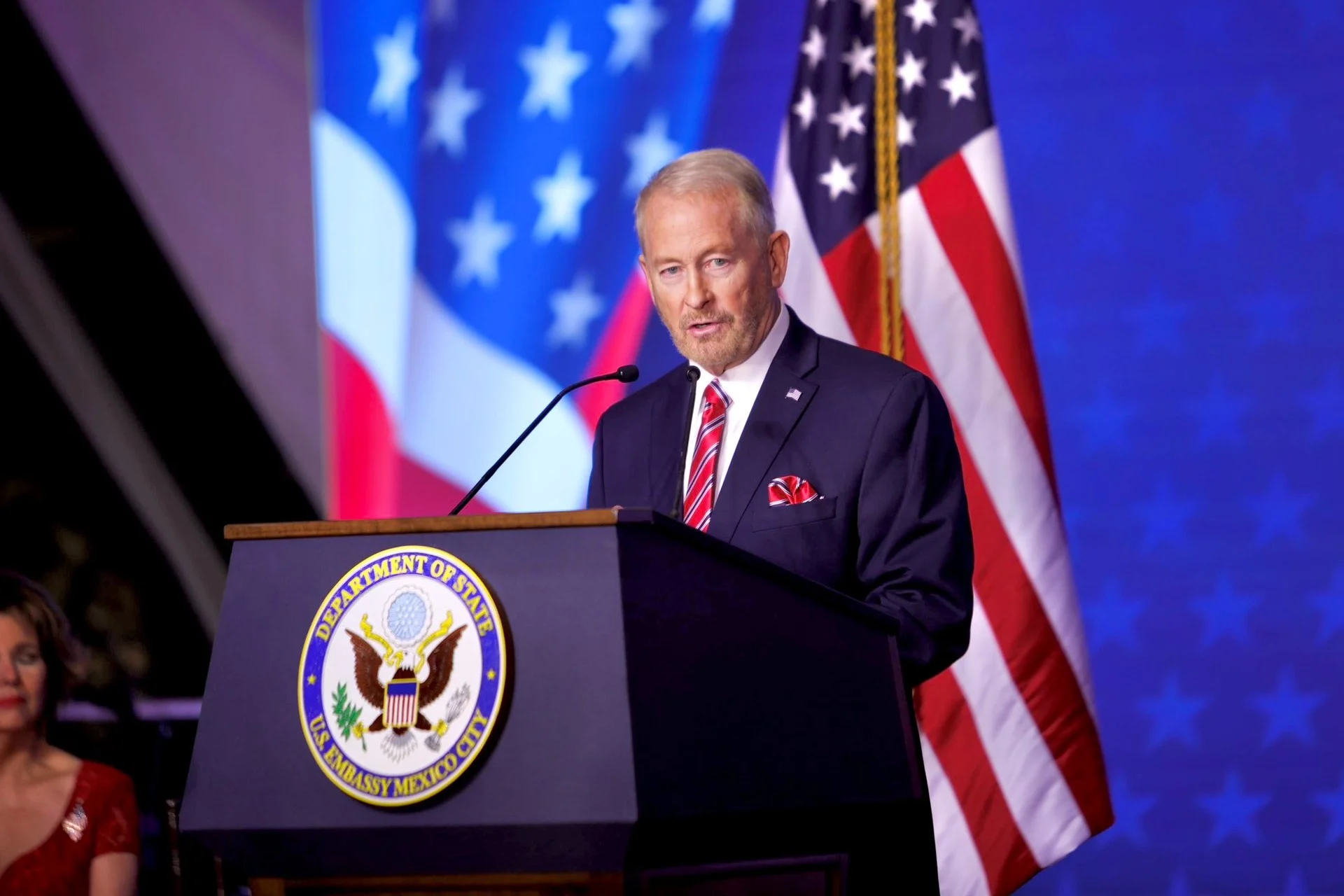
US Ambassador to Mexico Ronald Johnson signaled the initiative during what was billed as a routine ceremony last week in Sinaloa: the inauguration of a $1 billion methanol plant near Los Mochis, one of the largest recent US private investments in Mexico.
After praising the Pacifico Mexinol project, Johnson pivoted to corruption, a sensitive topic in Mexico.
“Corruption not only slows progress, it distorts it. It increases costs, weakens competition, and erodes the trust that markets depend on,” Johnson said. “It is a direct obstacle to growth, equity, opportunity, and the long-term success of projects like this.”
The ambassador warned that Mexico must address its epidemic of corrupt governance — from street-level police to mayors, governors, and federal legislators on cartel payrolls — if leaders want to ensure the country’s financial stability. He made clear that Washington would pursue allegedly corrupt Mexican politicians.
“Investment is like water,” Johnson said. “It flows when conditions are right and dries up when they are not.”
The US-Mexico trade pact “requires our governments to criminalize bribery and corruption and to enforce codes of conduct for public officials,” he added. “We may soon see significant action on this front. So stay tuned.”
The campaign is expected to go beyond traditional visa revocations for those suspected of collusion with cartels. This time, the offensive could include federal indictments against Mexican politicians, including members of the ruling Morena party, which was founded on an anti-corruption platform, sources said.
US prosecutors could draw on a deep pool of potential informants, including dozens of former cartel members in US custody, such as the sons of Joaquín “El Chapo” Guzmán, who are believed eager to cooperate against former accomplices, including corrupt politicians and police.
Johnson chose Sinaloa — the home base of the Sinaloa cartel, one of the world’s most notorious drug trafficking organizations — to deliver his message. The cartel has long greased the wheels of corruption with bribes, and hundreds, perhaps thousands, of politicians and law enforcement officials are on its payroll, experts say.
The warning that Washington will no longer accept business as usual was a stark message for President Claudia Sheinbaum, a longtime academic and US-trained scientist widely seen as free of corruption. But the same cannot be said of her dominant Morena bloc, in Sinaloa and across the country.
Sheinbaum, known for her deft handling of President Donald Trump, must walk a tightrope between appeasing Trump and resisting pressure from her Morena political base — especially if prominent politicians are swept up in a US-driven anti-corruption whirlwind.
The State Department has already revoked visas for several Morena lawmakers, including the governor of Baja California. Among those whose US visas have been revoked, sources said, is Sinaloa Governor Rubén Rocha Moya, a Morena stalwart who has repeatedly denied ties to cartels. His visa was canceled last year.
The septuagenarian governor has survived various political scandals, Mexican observers say, thanks to his long friendship with former President Andrés Manuel López Obrador, Sheinbaum’s predecessor and mentor. Rocha Moya is one of many high-ranking politicians considered protected by their relationship with López Obrador.
Among the main threats to Rocha Moya’s political survival was the outrage over the 2024 shooting death of his former main political rival, Héctor Melesio Cuén Ojeda, a former congressman and university rector. The crime remains unsolved. Federal prosecutors concluded that the state investigation was a sham, citing inconsistencies including a fake video staged by state investigators to conceal where, when, and how the victim was killed. The resulting uproar forced the resignation of Sinaloa’s attorney general, but Rocha Moya remained in office despite calls for his resignation. He has denied any link to Cuén Ojeda’s death.
On Thursday, Rocha Moya was scheduled to speak alongside Johnson at the inauguration. But before the ambassador arrived, protesters gathered at the venue denouncing the governor, who had already arrived, as “corrupt.” Rocha Moya told protesters, “I’m on your side,” and said he would stay to talk with them instead of attending the ceremony, which was moved to a hotel conference room in Los Mochis. There, Johnson delivered his remarks in both Spanish and English.
More Crime
- Cancún Airport Transporters Blame ASUR for Steep Fees
- Five to Face Trial in Tulum Funeral Home Equipment Theft
- Quintana Roo Civil Protection Warns Against Fireworks Ahead of Independence Day
- Rising Crime Reports in Quintana Roo Signal Greater Trust, Official Says
- Armed Men Try to Abduct Woman on Cozumel; She Escapes on Her Motorcycle
