
Cancun, Quintana Roo — The May 3 feast of the Holy Cross remains a vibrant tradition in Quintana Roo, blending deep-rooted Maya customs with Catholicism. The cross is venerated as the patron of the Cancun-Chetumal Diocese and of construction workers.
The devotion centers on the historic Speaking Cross (Santa Cruz) in the Maya zone of Felipe Carrillo Puerto, as well as the Cedral tradition in Cozumel. These practices trace their origins to the Caste War of the Yucatan Peninsula (1847–1901), when the Speaking Cross became a symbol of Maya resistance and identity.
Today, the Cancun-Chetumal Diocese includes seven churches named Santa Cruz: the cathedral in Cancun (diocesan seat), parishes in Felipe Carrillo Puerto and Chetumal, a quasi-parish in Playa del Carmen, two churches in Cancun, and a chapel in Cozumel’s Cedral.
Key Sites of Devotion
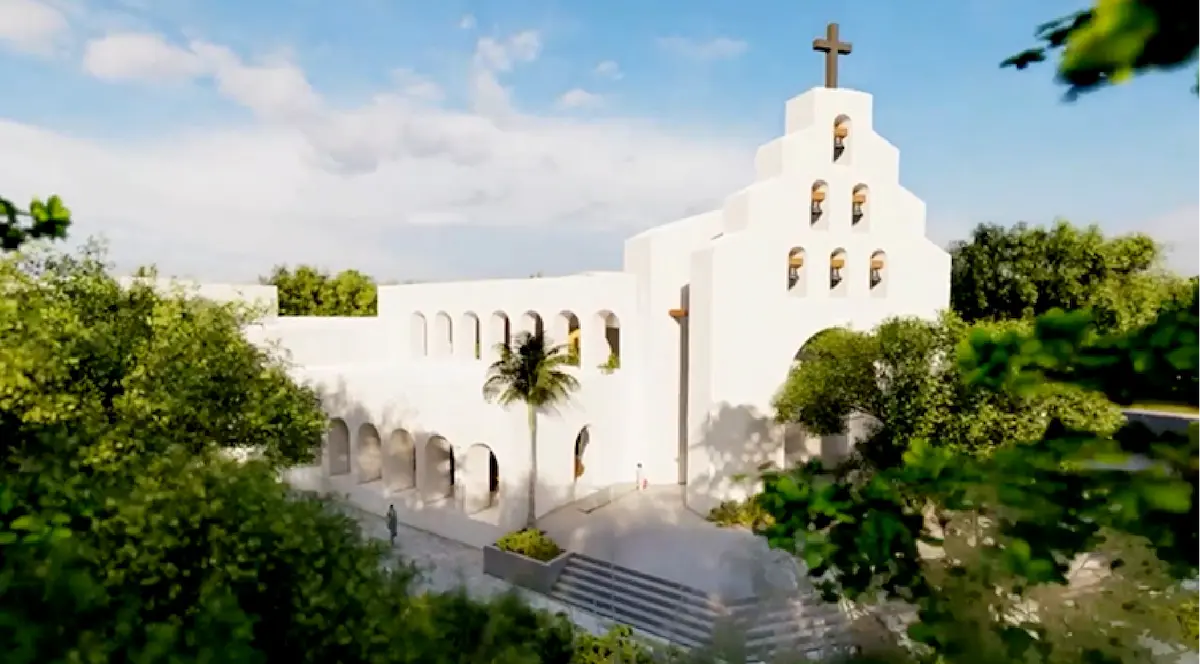
- Cathedral of the Holy Cross and the Most Holy Trinity, Cancun: Construction began in 2002, with planning as the episcopal seat dating to 1998. A new building in the city’s green belt will feature a 25-meter atrium cross.
- Santa Cruz Parish, Felipe Carrillo Puerto: Built in 1856 in the heart of the Chan Santa Cruz Maya zone during the Caste War, it is the sanctuary of the Speaking Cross.
- Santa Cruz Parish, Chetumal: Constructed in 1981, it celebrates its 45th anniversary in 2026.
- Santa Cruz Quasi-Parish, Playa del Carmen: Started around 2019 as a modest palapa beside a cenote; a larger temple is under construction.
- Santa Cruz Parish, Cancun: Catechesis and Mass were held under a palapa from 1980; the parish was formally established in 1983.
- Three Crosses Quasi-Parish, Cancun: Began in 2007 with a small group of women and a minister in a green area of the Paseos Kabah subdivision. Known locally as the Stone Church or Church of the Crosses.
- Santa Cruz Chapel, Cozumel: A commemorative chapel marking 500 years since the first Mass celebrated on May 3, 1518.
A Living Syncretism
The tradition in Cozumel dates to 1848, when Don Casimiro Cardenas fled the Caste War and brought a wooden cross to the island, establishing the Cedral tradition. The island, known in Maya as Cuzamil (land of swallows), was renamed Santa Cruz by Spanish explorer Juan de Grijalva in 1518.
Felipe Carrillo Puerto was founded in 1850 as Noj Kaaj Santa Cruz Xbalam Naj (Great Town of the Holy Cross, House of the Jaguar), serving as the sacred capital of the Maya resistance. The Speaking Cross was said to speak to the Maya through ventriloquist Manuel Nahuat, a belief structured by leader Jose Maria Barrera to unite the insurgents.
The Caste War lasted more than 50 years. In 1901, federal forces took the city, which was renamed Felipe Carrillo Puerto in 1934 after the socialist governor of Yucatan. Today, the Maya Santa Cruz Xbalam Naj Museum preserves the history and cosmology of this period.
During the novena leading up to May 3, prayers are offered for each deanery of the diocese. For the Maya zone, the Holy Cross remains the principal devotion in Quintana Roo.
More Lifestyle
- Leonardo Aguilar to Headline Free Cozumel Concert for Grito de Independencia 2026
- Mexico’s Treasury Seeks Power to Ban Cash Payments Sector by Sector
- Mérida Opens First Green Corridor to Fight Climate Change
- Isaac Del Toro Wins Montreal Grand Prix in Canadian Classic Debut
- El Niño Keeps Atlantic Hurricane-Free, Setting Record for Latest First Storm in Decades
More Quintana Roo
- Mexico Assigns $110 Million Navy Budget to Fight Sargassum in Quintana Roo
- Quintana Roo Civil Protection Warns Against Fireworks Ahead of Independence Day
- Quintana Roo to Pilot Child Protection Protocol for Tourism Sector in October
- Sheinbaum Announces 187 Primary Care Clinics and Major Projects in Quintana Roo
- Quintana Roo Records 29,413 Sea Turtle Nests at Season’s Midpoint
