
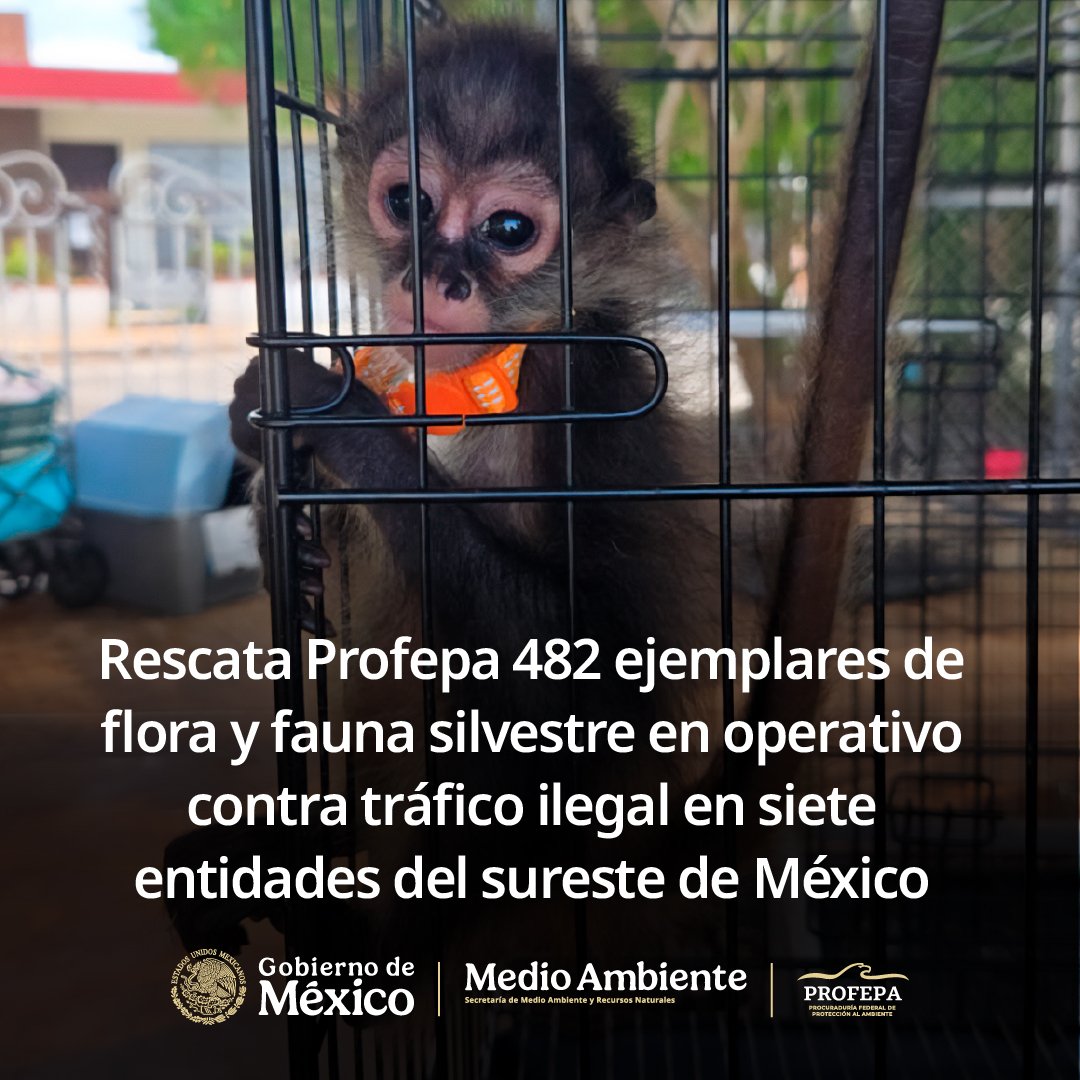
Mexico City — Mexico’s Federal Environmental Protection Agency (Profepa) has carried out a special inspection and surveillance operation across seven states in the country’s southeast, seizing multiple specimens of wild animals threatened by illegal trade.
The strategic deployment was launched at the start of the breeding season for native species, a period when local wildlife is more vulnerable to illicit capture by trafficking networks.
Deployment in Seven States
Inspections focused on strategic highway checkpoints, collection centers, and traditional markets in the following states:
- Chiapas
- Oaxaca
- Quintana Roo
- Yucatán
- Campeche
- Veracruz
- Tabasco
Protection of Vulnerable Species
During the interventions, federal inspectors concentrated on protecting psittacine birds (parrots, macaws, and parakeets), primates, and native reptiles — the species in highest demand on the black market during this time of year.
Rescued animals received immediate veterinary medical evaluation to determine their health. Those in optimal condition were released into their natural habitats, while injured or dependent individuals were transferred to Wildlife Management Units (UMAs).
Profepa reminded the public that extracting, collecting, and selling wildlife without proper authorization is a federal crime punishable by prison sentences and severe fines under Mexican environmental law.
More Crime
- Assault Survivor Robert González Praises Eugenio Derbez’s ‘El juicio’ in Emotional Message
- Vehicle Theft in Quintana Roo Falls 24% as Motorcycles Account for 77% of Cases
- Mexico Tourism Boom Accelerates Digital Shift, Raising Security Stakes
- Mothers of Missing Children Ask Quintana Roo to Display Their Faces on Public Transport
- Playa del Carmen Residents Demand Action After Molotov Attack on Taxi Union
More Quintana Roo
- New Quintana Roo Press Group Leader Calls for Consensus Journalist Protection Law
- UQRoo Cancún Union Workers Allege Rigged Election, Demand Full Rerun
- Quintana Roo Artisans Win Dedicated Law to Protect and Promote Their Craft
- Mundo Maya Nations Agree on Multi-Destination Tourism Route
- Quintana Roo Expands Distance University Program to 500 Students in Nine Municipalities
