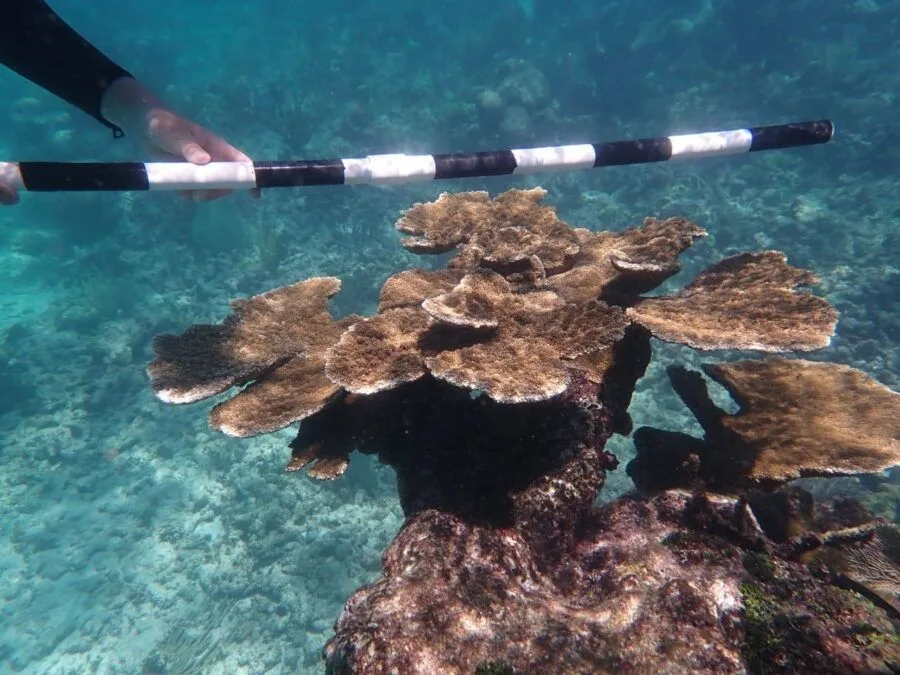
Paamul, Quintana Roo — Valentina Müller, a dive instructor and marine conservationist, has spent years watching the Caribbean’s coral reefs deteriorate. What scientists have long warned about is now unfolding before her eyes: bleaching, fragmentation, and death at an unprecedented rate. Her response was to found Coral Print, the organization behind Coral Park, a project that aims to create an underwater sanctuary combining ecological restoration, regenerative tourism, and community involvement.
The Caribbean has lost nearly half of its hard coral cover since 1980 — a 48% decline documented by over 300 scientists in a study by the Global Coral Reef Monitoring Network (GCRMN). The primary cause is climate change, which triggers marine heatwaves that turn toxic the microalgae that feed and color coral. Without these algae, coral bleaches and, if untreated, dies.
In 2023 and 2024, Caribbean reefs experienced the most destructive thermal stress ever recorded, with a 16.9% drop in coral cover in just one year. A GCRMN researcher described diving in Puerto Morelos, Mexico, and seeing a desolate scene: completely white, dying coral where decades earlier there had been a vibrant ecosystem with lobsters, turtles, sharks, and hundreds of fish species.
As coral disappears, macroalgae take over. Since 1980, their cover has increased by 85% in the Caribbean, partly because overfishing has eliminated the herbivorous fish that once controlled them. The result is a degraded ecosystem moving further from its original balance. Although reefs cover less than 1% of the seafloor, they support at least 25% of all known marine species.
How Coral Park Works
Coral Print monitors a reef in Paamul that currently bears the pressure of daily tourism. Coral Park aims to restore its health by giving it space to recover through two simultaneous lines of work.
The first is active restoration: coral nurseries where damaged or vulnerable fragments grow under controlled conditions until they are resilient enough to be transplanted to the natural reef. The second is the construction of an artistic artificial reef — an underwater structure designed to be visually appealing, providing new habitat for marine life and attracting divers to a photogenic, sustainable site. This redistributes tourist pressure, steering visitors away from the fragile natural reef toward a space designed to withstand their presence.
The model deliberately seeks collaboration. Local beach clubs and boat excursions gain a unique attraction; schools participate in marine education programs; and community members become Coral Park Guardians — ten people trained to plant corals, monitor nurseries, and guide visitors through the restoration experience.
Müller calls this regenerative tourism: visitors not only observe the ocean but actively participate in its care, leaving the ecosystem in better condition than they found it.
Timeline and Funding Needs
Coral Park is in its first year of operation, the most fragile stage of any conservation project, when costs are real but revenue is not yet sufficient. To keep young corals alive, pay fair wages to the local team, sustain operations, and cover permits, the project needs approximately 120,000 Mexican pesos per month. It is being funded through a GoFundMe campaign titled “Help us Restore Coral Reefs in Paamul Mexico – Coral Park.”
The plan for the coming months is as follows: during the summer, when sea temperatures are highest, the most vulnerable corals will remain protected in the lab while guardians receive intensive training and design the artificial reef structures. In September, when the ocean cools, the hardiest corals will be moved to marine nurseries.
The funding goal for this first phase aims to bridge the gap until the regenerative tourism model can sustain restoration on its own.
More Environment
- Cave Divers Find Ancient Animal Bones in Yucatán Cave
- Pre-Hispanic Bee House Unearthed in Tulum Sheds Light on Ancient Maya Homesteads
- Cozumel Crocodile Sightings Rise With Rains and Habitat Changes, Biologist Says
- Quintana Roo Whale Shark Season Closes With Up to 400 Sightings
- Mara Lezama Unveils Quintana Roo Sustainable Tourism Master Plan Through 2050