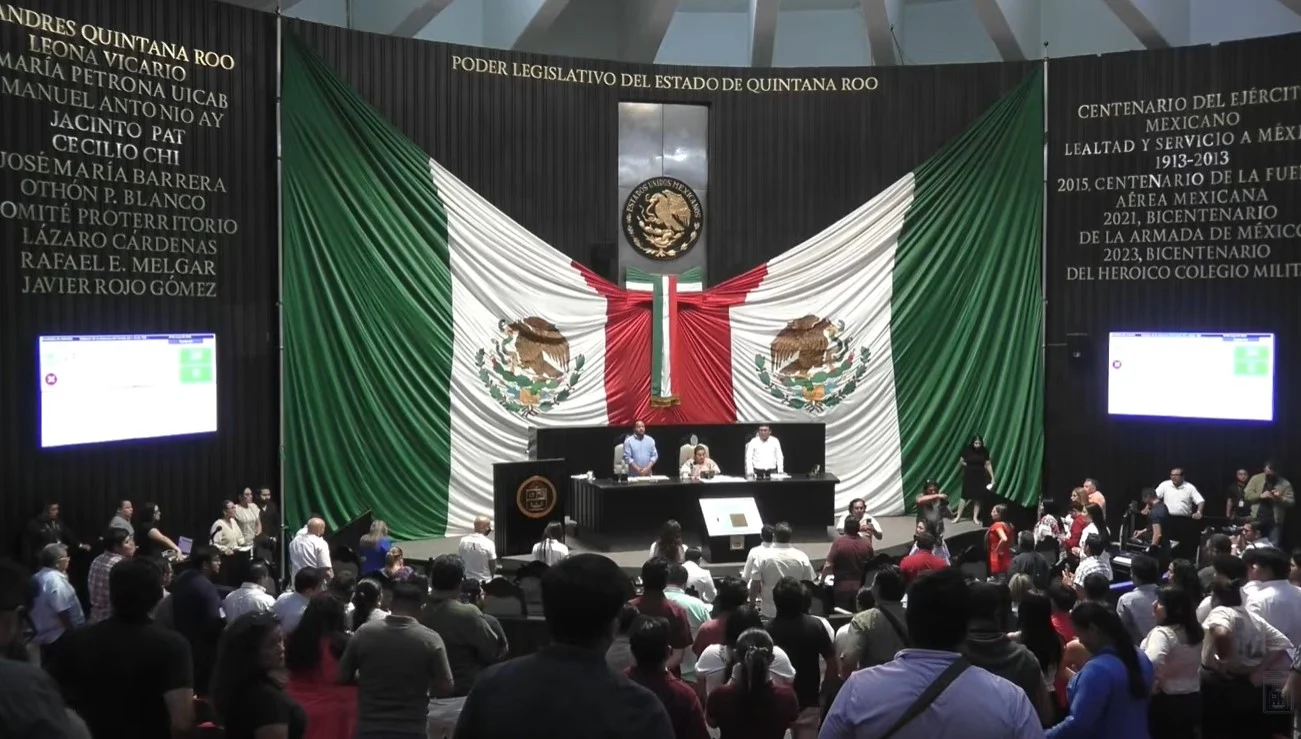
Chetumal, Quintana Roo — The XVIII Legislature of Quintana Roo approved Wednesday the declaration setting the phased implementation of the National Code of Civil and Family Procedures in the state.
The code will first take effect June 1 in the judicial districts of Chetumal and Cancún. It will be rolled out September 7 in Playa del Carmen and November 9 in the judicial districts of Bacalar, Felipe Carrillo Puerto, José María Morelos, Tulum, Cozumel, Kantunilkín and Isla Mujeres.
Implementation is designed to be progressive and includes reorganizing institutions to operate the new oral and digital justice model. The schedule is divided into four stages:
- First stage: civil actions and related proceedings, including cases eligible for oral special lease proceedings, oral special mortgage proceedings, claims for condominium fees under Article 43 of the state’s Condominium Property Law, contract performance actions, adverse possession claims, replevin actions, voluntary jurisdiction requests to preserve evidence, and interdicts over possession, new construction and dangerous structures.
- Second stage: family matters currently handled under the low-litigation oral family procedure.
- Third stage: high-litigation oral family procedure cases.
- Fourth stage: other disputes, especially those still processed under the traditional procedure.
No fixed dates were established for the second, third and fourth stages. According to the declaration’s fourth transitional article, the gradual incorporation of cases in those stages will be announced through amendments to the declaration. Implementation of those stages will follow a review of the quantitative and qualitative behavior of the court system, allowing the transition to manage the learning curve and gradually adopt measures for balanced distribution of cases. The full transition must still be completed by April 1, 2027, the federal deadline for the code to be in effect nationwide.
The new code brings significant procedural changes, including a stronger focus on oral hearings, the use of digital case files, electronic filing and notifications, video-conference hearings, electronic signatures and online case consultation. It also aims to simplify procedures by reducing the number of steps, concentrating hearings, eliminating unnecessary formalities, resolving incidental matters during the main hearing where possible, and promoting alternative dispute resolution.
Judges gain greater authority to steer proceedings and prevent delays, while the code incorporates human rights protections such as effective access to justice, procedural equality, safeguards for vulnerable groups, the best interests of children and adolescents, and gender perspective in family cases.
Under the transitional rules, the declaration takes effect the day after its publication in the state’s official gazette. Cases already filed under the local civil procedure code will continue under that code, but litigants may jointly ask to shift the case to the national code if the case falls within an active implementation stage and the change is legally possible under the federal decree. As the national code goes into force in each judicial district, the state civil procedure code is abrogated for the matters covered in that stage.
More Courts
- Quintana Roo Lawmaker Proposes Mandatory Child Support Registry Check Before Marriage
- Xcaret Says It Will Abide by Any Supreme Court Ruling on Use of Maya Culture
- Roberto Borge’s Return to Prison Hinges on Oct. 27 Hearing
- Cancún Raid Uncovers Arsenal of Rifles, Handguns and 1,000 Rounds at Suspected Safe House
- Quintana Roo Environment Agency Accepts Federal Ruling in Alux 33 Case
More Playa del Carmen
- Playa del Carmen Health Center in Villas del Sol to Close Two Days for Maintenance
- Mara Lezama Delivers 288 Infonavit Homes in Puerto Aventuras as Quintana Roo Targets 76,000
- Playa del Carmen Bars New Developments Without Electrical Investment, Mayor Says
- Student Hospitalized After Alleged Drug Intoxication at Playa del Carmen Middle School
- Selvame MX Calls HAZUL Project With Artificial Beach a ‘Fantasy’ in Playa del Carmen