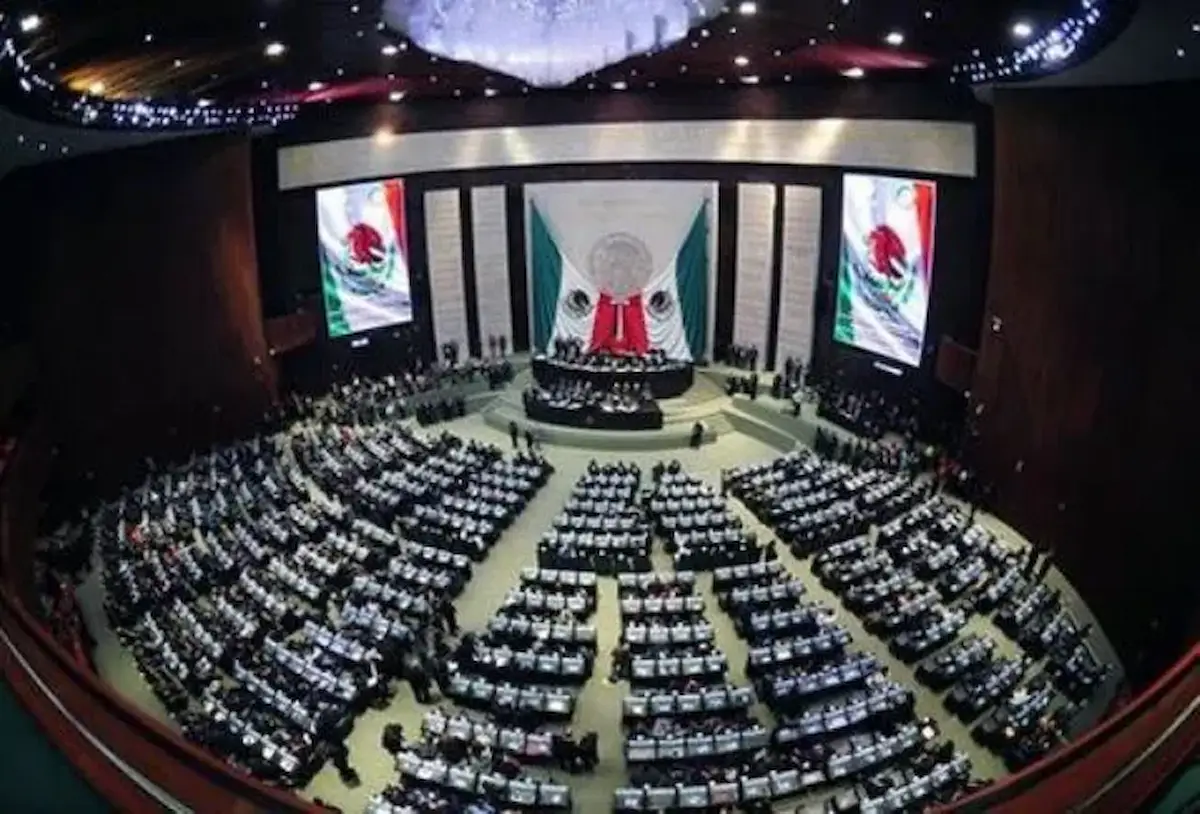
Mexico City — Mexico’s Chamber of Deputies approved the 2027 Federal Law of Rights, which updates the fees the state charges for services and the use of public assets, and sent the measure to the Senate for its legislative review.
Deputies approved the bill in general by a vote of 329 in favor and 117 against. A second, article-by-article vote drew 339 in favor, 113 against and one abstention, leaving the text as drafted by the relevant committee.
Among the main changes is a 17.8 percent increase in the fee paid by foreign visitors who enter Mexico without permission to carry out paid activities, which would be set at 1,158 pesos. The proposal also directs the revenue collected under that category to three agencies: 57 percent to the Defense Ministry, 15 percent to the National Migration Institute and the remaining 28 percent to the Treasury.
Other adjustments include a 10 percent increase in fees for the use of airspace, a single rate of 1,639.80 pesos for ordinary visas, and an increase from 1.25 percent to 3 percent in the charge levied on railway concessionaires with more than 15 years of operation.
By contrast, the measure would cut some radio spectrum fees by 12 percent and update the rates that apply to certain coastal zones.
It also includes a relief measure for visitors to protected natural areas: exemptions from fees on Sundays for Mexicans and foreign residents entering sites that contain museums, monuments or archaeological zones.
Presenting the proposal, Carol Antonio Altamirano, chairman of the Finance and Public Credit Committee, said the changes aim to align charges with the real cost of public services, eliminate unjustified differences between equivalent procedures and make the rules for paying fees clearer.
During the debate, Morena deputy Luis Humberto Fernández Fuentes highlighted the reductions in some radio spectrum fees and the harmonization of ordinary visa rates. On the higher cost of documents, he argued that other countries have also raised their tariffs and noted that tourist arrivals in Mexico have grown 4.5 percent.
PAN coordinator José Elías Lixa Abimerhi warned that raising charges for foreign visitors could make travel more expensive and hurt tourism. He also questioned the level of debt contemplated in the broader economic package and said insecurity in some states, combined with higher costs to visit the country, is weighing on tourism activity.
Deputy Cindy Winkler Trujillo of the Green Party (PVEM) backed the update, saying it helps modernize the tax framework, improve public services and strengthen the state’s financial capacity. She said the revenue must be managed responsibly, transparently and with a social purpose.
For the Labor Party (PT), deputy Luis Armando Díaz said the fees are neither consumption nor payroll taxes but payments made by those who use state goods and services such as the radio spectrum, railways, airspace and national waters. He said the charges are tied to the use of public resources.
PRI deputy Yerico Abramo Masso criticized the changes for not including enough benefits for mining communities. He said that while fees tied to mining activity are being updated, insufficient resources are being directed to help communities deal with the labor and environmental effects of extraction.
Citizens’ Movement deputy Patricia Flores Elizondo questioned why a large share of the revenue from the foreign visitor fee is earmarked for the Defense Ministry while tourist destinations face pressing needs. She cited the problem of sargassum, which affects ecosystems, beaches, businesses and jobs, and called for a public explanation of how the funds will be allocated.
More Tourism
- Mexican Caribbean Courts Convention Business at Las Vegas Trade Show
- Heavy Rains to Soak Quintana Roo as Unstable Weather Moves In
- Semarnat Approves Artificial Reefs and Sand Relocation for Akumal Hotel
- Tulum’s Mureco Museum Adds 53 Archaeological Pieces From Across Mesoamerica
- Air France Marks 15 Years of Paris-Cancún Flights