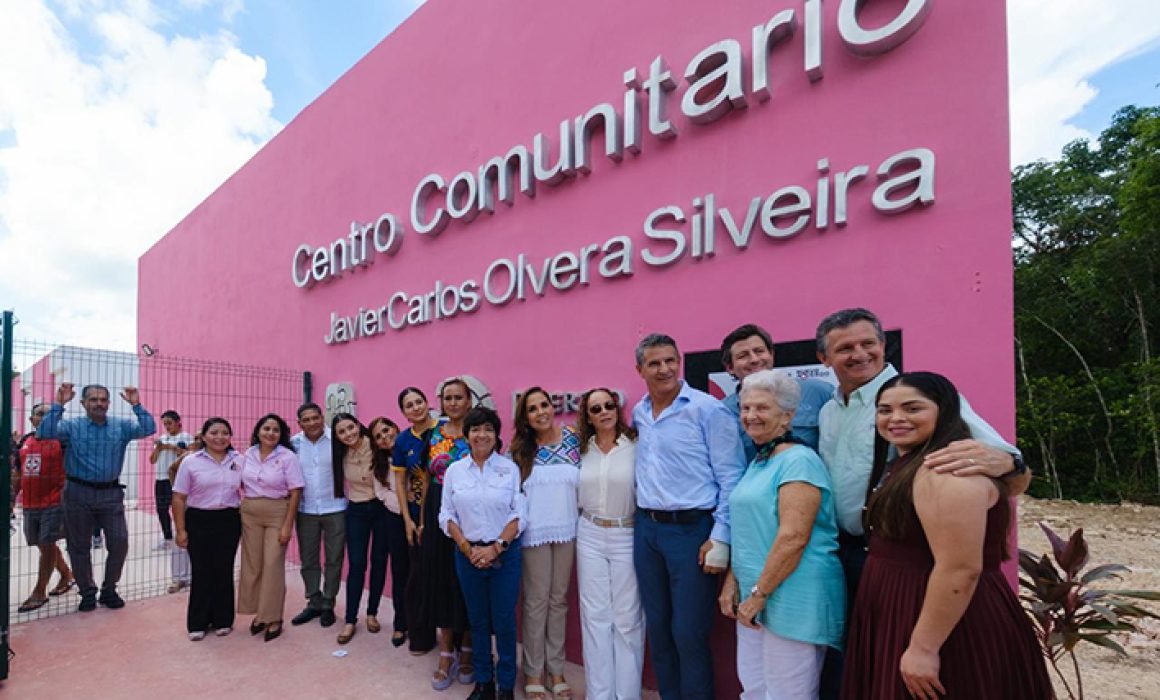
Puerto Aventuras, Quintana Roo — Governor Mara Lezama Espinosa led the handover of 288 Infonavit homes at the Puerto Maya development in Puerto Aventuras on Wednesday, announcing that Quintana Roo has expanded its housing program from an initial projection of 8,000 units to 52,000, with the goal of reaching as many as 76,000 to meet the state’s growing demand.
Lezama said the 288 families received keys to homes equipped with basic services, including electricity, as part of a coordinated effort between Mexico’s federal government, the Infonavit housing fund and the state administration to widen access to affordable housing.
The governor highlighted that one of the program’s most significant features is bringing young people into the housing market, a group that has historically struggled to buy property because of rising real estate prices and tough financing conditions.
Among the beneficiaries, she cited a 24-year-old who received his first home, a couple married for 26 years, and Dulce and José, who are expecting a daughter and will be able to bring her home to their new house.
“Every home, every key you see is a story — a 24-year-old who now has his home, a couple married 26 years who now have theirs,” the governor said, describing the program’s social impact.
Beyond the new houses, Lezama pointed to mortgage restructuring and debt-reduction schemes, known as quitas, that ease the financial burden on beneficiaries who have spent years making payments without clearing their loans.
As an example, she described a borrower who originally took out a 200,000-peso loan and, after 22 years of payments totaling roughly 600,000 pesos, still faced a balance of 100,000 pesos.
She credited Infonavit Director General Octavio Romero Oropeza and President Claudia Sheinbaum Pardo for backing higher housing construction targets in Quintana Roo.
The governor said the state’s rapid growth is one of the main challenges to guaranteeing access to land and housing, driven by a steady influx of people drawn by jobs in the tourism industry.
She said work is already underway to secure territorial reserves so construction of new developments can continue in 2027, and left open the possibility of expanding the number of homes allocated to the state.
“Where it isn’t completed, perhaps in another state, Quintana Roo’s doors are open,” she said, arguing the state has both the capacity and the need for more housing investment.
She pointed to Quintana Roo’s economic momentum — powered by 12 international tourist destinations, three development hubs and projects tied to its financial and technology district — as factors that will keep driving housing demand.
Lezama’s schedule in Puerto Aventuras also included the inauguration of the first phase of the Centro Comunitario Puerto Maya, located on the avenue of the same name between Chicozapote street and Eje de la Luna avenue.
She was later due in Cancún to lead the handover of 400 property deeds under the Property Welfare Regularization Program at 5:30 p.m. at the Malecón Tajamar.
Asked about ongoing work at the Auditorio del Bienestar, the governor said the venue will be renamed but declined to give further details.
“I have surprises coming soon at the auditorium, you’ll see — it will no longer be the Auditorio del Bienestar, and I’ll tell you what it will be called,” she said.
More Development
- Semarnat Approves Artificial Reefs and Sand Relocation for Akumal Hotel
- Chetumal Plans 836 Million Pesos in Stormwater Works to Curb Flooding
- Fonatur Doubles Maya Ka’an Budget to 20 Million Pesos
- Study Finds Cancún’s Laguna Manatí Mangrove Could Qualify for Carbon Credits
- Quintana Roo Hands Property Titles to 460 Families in Cancún After Decades of Irregular Settlement
More Playa del Carmen
- Playa del Carmen Health Center in Villas del Sol to Close Two Days for Maintenance
- Playa del Carmen Bars New Developments Without Electrical Investment, Mayor Says
- Student Hospitalized After Alleged Drug Intoxication at Playa del Carmen Middle School
- Selvame MX Calls HAZUL Project With Artificial Beach a ‘Fantasy’ in Playa del Carmen
- Quintana Roo Reviews Mobi Transit System for Accessibility in Cancún and Playa del Carmen