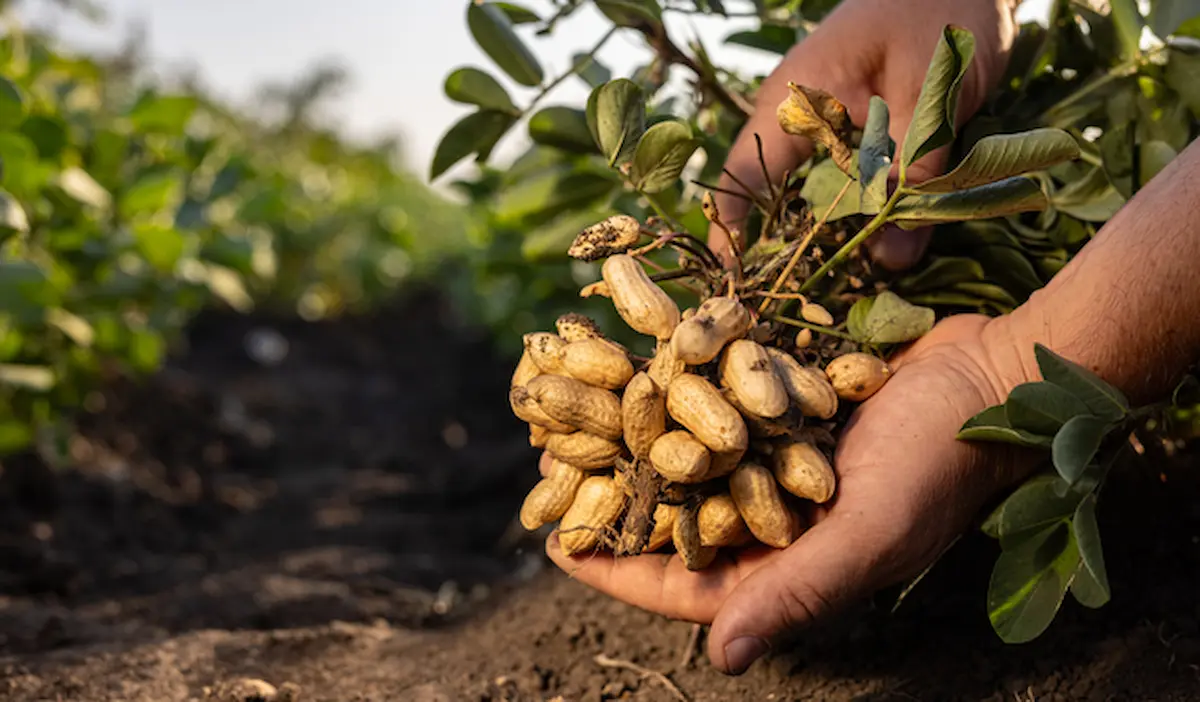
Mexico's national peanut production grew 23.3 percent year-on-year at the close of 2025, rising from 70,228 tons to 86,555 tons, according to the Ministry of Agriculture and Rural Development (AGRICULTURA).
In the context of World Peanut Day, AGRICULTURA said the increase has a positive impact on the rural sector's economy. The value of the harvest reached 1.347 billion pesos, an increase of 27.6 percent compared with 2024, according to data from the Agri-Food and Fisheries Information Service (SIAP).
The result strengthens income and quality of life in rural areas, in line with the commitment of President Claudia Sheinbaum Pardo to promote the well-being of farming families.
Chihuahua, Sinaloa and Chiapas accounted for 56.6 percent of the national harvest in 2025, whose value reached 1.347 billion pesos, also driven by a higher yield per hectare.
Leading Producing States
At the close of the 2025 production cycle, Mexico had 24 peanut-producing states participating. Chihuahua led the national harvest with 19,367 tons, followed by Sinaloa with 16,359 tons and Chiapas with 13,282 tons.
Together, these three states contributed 49,008 tons, equivalent to 56.6 percent of national production, AGRICULTURA reported.
Yield Improvement
Another positive indicator was the average yield per hectare, which increased by 18.3 percent during the same period. It rose from 1.75 to 2.07 tons per hectare as a result of producers' efforts and the technical support they received in the field.
Crop Characteristics and Agricultural Role
The peanut, or Arachis hypogaea, is a legume native to South America and cultivated in Mexico since pre-Hispanic times. It maintains a strategic role in various agricultural regions, particularly in rainfed areas.
Among its agronomic virtues are its high adaptability to soils with limited fertility and its resistance to irregular rainfall conditions, a quality that makes it a highly profitable and resilient alternative to the challenge of climate change.
Furthermore, as a legume, the plant naturally fixes atmospheric nitrogen in the soil through symbiosis with microorganisms. This helps nourish the soil, improve its structure and reduce the use of chemical fertilizers. Its integration into crop rotation schemes promotes long-term, sustainable and agroecological production systems.
Nutritional and Market Importance
In the food sector, peanuts represent an accessible source of nutrition by providing proteins, healthy fats, vitamins and minerals essential for the diet of Mexicans.
Its versatility allows it to be consumed fresh, roasted, salted or as a snack, in addition to being a key raw material for the production of oils, edible butters and supplies for the cosmetic industry.
Due to its agronomic, nutritional and market properties, peanut cultivation is an engine of regional development that diversifies agricultural production, generates added value and contributes to food self-sufficiency in the country.
More Business
- Uber Driver Murdered in Cancun’s La Joya: What We Know
- Mexican Caribbean Courts Convention Business at Las Vegas Trade Show
- Air France Marks 15 Years of Paris-Cancún Flights
- Tulum Fishing Cooperative Seeks Funding to Modernize Its Facilities
- Playa del Carmen Bars New Developments Without Electrical Investment, Mayor Says