
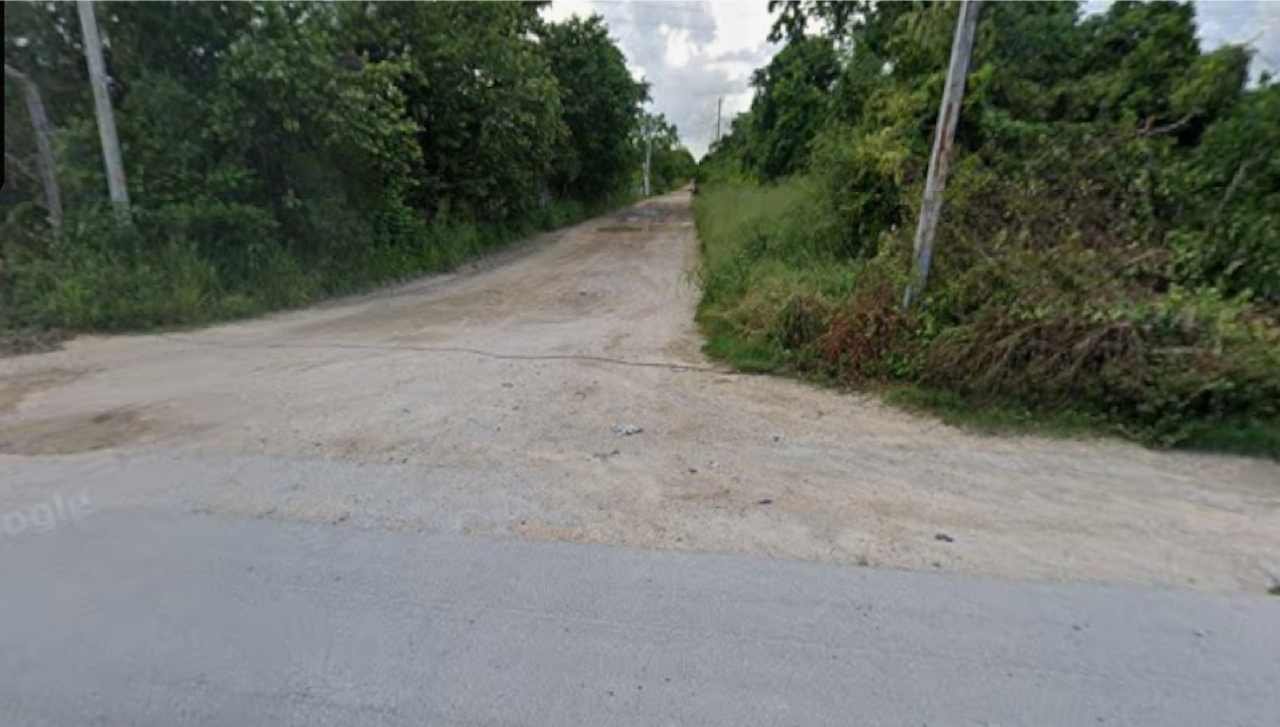
Playa del Carmen, Quintana Roo — Federal authorities are reviewing a proposal to build a road connecting the rural community of Campesinos Unidos to Federal Highway 307 near Playa del Carmen, the environmental agency confirmed.
The Environmental Impact and Risk Directorate (DGIRA) said the study for the project is under analysis, although the final resolution has not yet been posted on its website. The project was submitted by Mexico’s Secretariat of Infrastructure, Communications and Transportation (SICT) to obtain an environmental impact statement.
The planned road would run from kilometer 0+000 to kilometer 10+000, a total of 10 kilometers (about 6.2 miles), with a 7-meter-wide roadway featuring two 3.5-meter lanes. The junction with Highway 307 would be located opposite Tres Ríos, roughly one kilometer from the surveillance booth at the northern exit of Playa del Carmen.
According to the project documents, the existing road is in poor condition. It consists of a thin stone layer over a transition layer of clayey silt with gravel and small fragments, interspersed with areas of high-plasticity clay across much of the route. The remainder is slightly altered limestone with varying degrees of fracturing. The current width ranges from 3.5 to 4 meters.
The new road would benefit several nearby rural communities, including Nuevo Noh-Bec, Colonia El Recuerdo, Los Faisanes, Flores 1, Cenote El Mariposario, Cenote Cocom, and the “Rey de Reyes” Adventist camp, among others. The municipality currently maintains unpaved farm-access roads to Santa Cecilia, Campesinos Unidos, Xul-ha, and connector routes such as Cristo Rey–Nuevo Noh-Bec and Nuevo Noh-Bec–Campesinos Unidos. These dirt roads are in poor condition, slow travel, and cause wear on transport and cargo vehicles, with conditions worsening during rainy spells.
For construction, SICT plans to source fill material from three nearby stone quarries — El Pitayo, El Caracol 2, and Gorsa — and will request the corresponding permits if those sites are used. The project is estimated to cost between 75 million and 100 million pesos, funded from the federal budget over two years.
More Development
- Sheinbaum Announces More Gas and Power Grid Upgrades for Quintana Roo
- Quintana Roo Plans 4.4 Billion Peso Wind Farm in Othón P. Blanco
- Cozumel Prison Expands Capacity by More Than 50% With 80 New Spaces
- Yucatan Debuts Southeast Mexico’s First Cyclotron for Precision Oncology
- Cancún Shuts Down Two Gated Developments for Selling Lots Without Permits
More Playa del Carmen
- Sheinbaum Acknowledges Little Progress in Talks With Vulcan Over Calica
- Fitch Downgrades, Then Upgrades Playa del Carmen Credit Rating Over Missed Payment
- Playa del Carmen Traffic Police Run No Operations Targeting Bike Lane Violations
- Playa del Carmen Merchants Pin Hopes on Buen Fin, Winter Season to Salvage Weak Year
- Scooter Users Demand Say in Playa del Carmen Micromobility Rules
