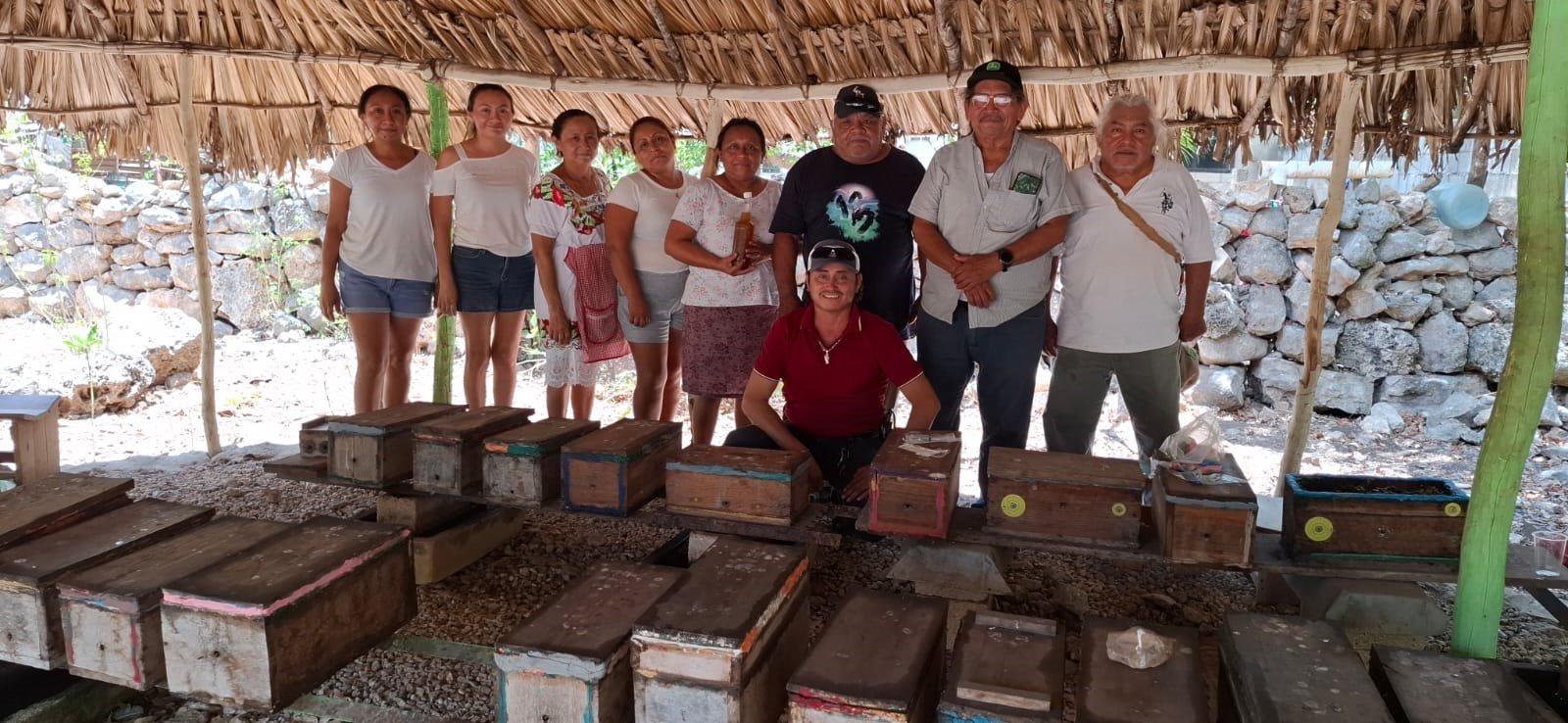
Felipe Carrillo Puerto, Quintana Roo — Federal agriculture and rural development agencies are teaming up with local producers to conserve the melipona bee, a native insect that has been woven into the history, culture, and daily life of communities in southeastern Mexico for centuries.
Through the National Institute of Forestry, Agricultural and Livestock Research (INIFAP), the technical arm of the Secretariat of Agriculture and Rural Development, in collaboration with the National Forestry Commission (CONAFOR), the government is developing technology and knowledge-transfer projects to bring tools and technical support to rural communities.
The work is taking place in the heart of the Maya jungle, where the Xunán kab (Melipona beecheii) lives. This native stingless bee, whose name means “lady bee” in the Maya language, is now at the center of a regional initiative to conserve biodiversity and generate new economic opportunities for rural communities through meliponiculture.
During a recent visit, researchers worked alongside local beekeepers on breeding and management techniques for stingless bees. The practice dates back to pre-Hispanic times and is now reemerging as a sustainable alternative for achieving food sovereignty and preserving Mexico’s biocultural heritage.
One of the flagship projects, “Native bees with productive potential in agroforestry systems,” aims to establish community meliponaries near agroforestry areas, promoting proper management of these species and supporting their conservation.
The sites are dominated by Xunán kab colonies, considered the most culturally and economically important species in the Mexican southeast, along with other native species such as Nannotrigona perilampoides, Scaptotrigona pectoralis, and Fraiseomelitta nigra. This diversity is essential, as each species visits different flowers, collectively pollinating a wider variety of plants and strengthening the balance of ecosystems.
Bees pollinate more than 70 percent of the world’s agricultural crops and help ensure the production of most of our food, officials noted.
More Business
- Sheinbaum Announces More Gas and Power Grid Upgrades for Quintana Roo
- Sheinbaum Acknowledges Little Progress in Talks With Vulcan Over Calica
- Fitch Downgrades, Then Upgrades Playa del Carmen Credit Rating Over Missed Payment
- Riviera Maya Hotel Occupancy Plunges to 36% in October 2026
- Quintana Roo Hoteliers Say DNR Hike Favors Punta Cana Over Cancún
More Zona Maya
- Quintana Roo Opens 2026 Poetry Contest for Indigenous and Afro-Mexican Girls
- Drought Damages Farmland in Felipe Carrillo Puerto as Quintana Roo Assesses Losses
- Aluxes Endure in the Beliefs of Maya Communities in Quintana Roo
- Search Operation for Missing People Deployed in Felipe Carrillo Puerto
- Mothers of Missing Children Ask Quintana Roo to Display Their Faces on Public Transport