
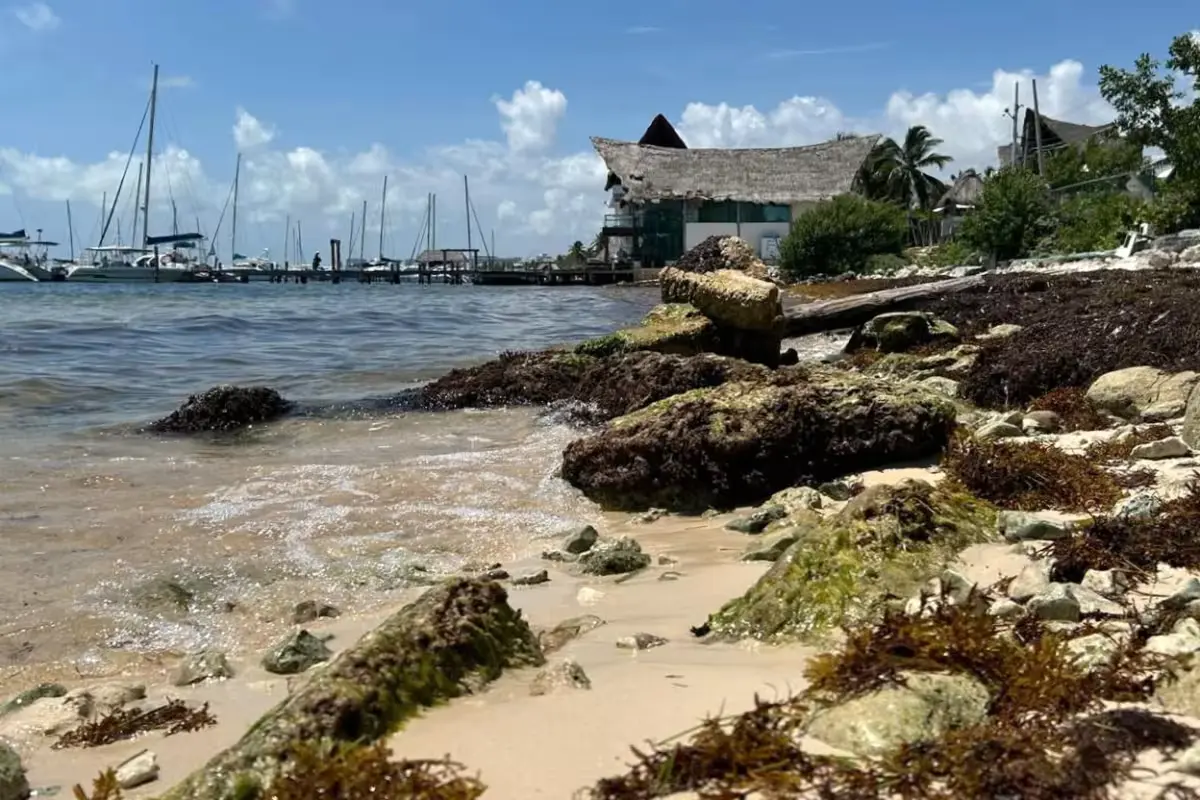
Puerto Juárez, Quintana Roo — Property owners in Puerto Juárez say coastal erosion has cut real estate values by at least 30 percent and is threatening to wipe out the area’s only public beach, Playa del Niño.
The sea has already swallowed large stretches of the federal maritime-terrestrial zone, known as Zofemat, and the strip of sand in front of local restaurants has nearly disappeared, according to residents.
Locals in the Hopelchén residential development say the shoreline has receded roughly 20 meters over the past 15 years, with about 1.5 meters lost in the last year alone. Many Mexican and foreign owners bought apartments for winter vacations and are now watching the water creep toward their buildings.
“It’s intense erosion. We never thought the sea would take over so much space in so little time,” said Marcia and Philip, two property owners.
Natural and human forces at work
Coastal erosion occurs naturally when the ocean removes more sand than it deposits. But researchers at UNAM’s Institute of Marine Sciences and Limnology say human activity has accelerated the process in recent decades, especially in tourism hubs such as Cancún, Playa del Carmen, and Tulum.
The construction of hotels, homes, and roads on natural dunes has stripped away the sediment reserves that beaches need to regenerate. Poorly designed piers, jetties, and breakwaters can alter sea currents, causing sand to accumulate in one spot while eroding another. Sand extraction for beach restoration projects also reduces the total volume of sediment available along the coast, experts said.
If the trend continues, Playa del Niño — a shallow, family-friendly beach that is the easiest for Cancún residents to reach — could disappear. The damage could also spread along the coast toward Punta Sam.
More Development
- Sheinbaum Announces More Gas and Power Grid Upgrades for Quintana Roo
- Quintana Roo Plans 4.4 Billion Peso Wind Farm in Othón P. Blanco
- Cozumel Prison Expands Capacity by More Than 50% With 80 New Spaces
- Yucatan Debuts Southeast Mexico’s First Cyclotron for Precision Oncology
- Cancún Shuts Down Two Gated Developments for Selling Lots Without Permits
More Cancun
- Five Men Sentenced To Up To 50 Years For Killings In Cancún And Felipe Carrillo Puerto
- Two Women Rescued From Human Trafficking in Cancún Search Warrants
- Cancún Restaurant Sector Welcomes Extended Hours in Hotel Zone
- Man Who Posed as Inspector to Extort Cancún Merchant Ordered Held Two Years
- 272 OXXO Stores in Cancún Join ‘Purple Points’ Safety Network
