
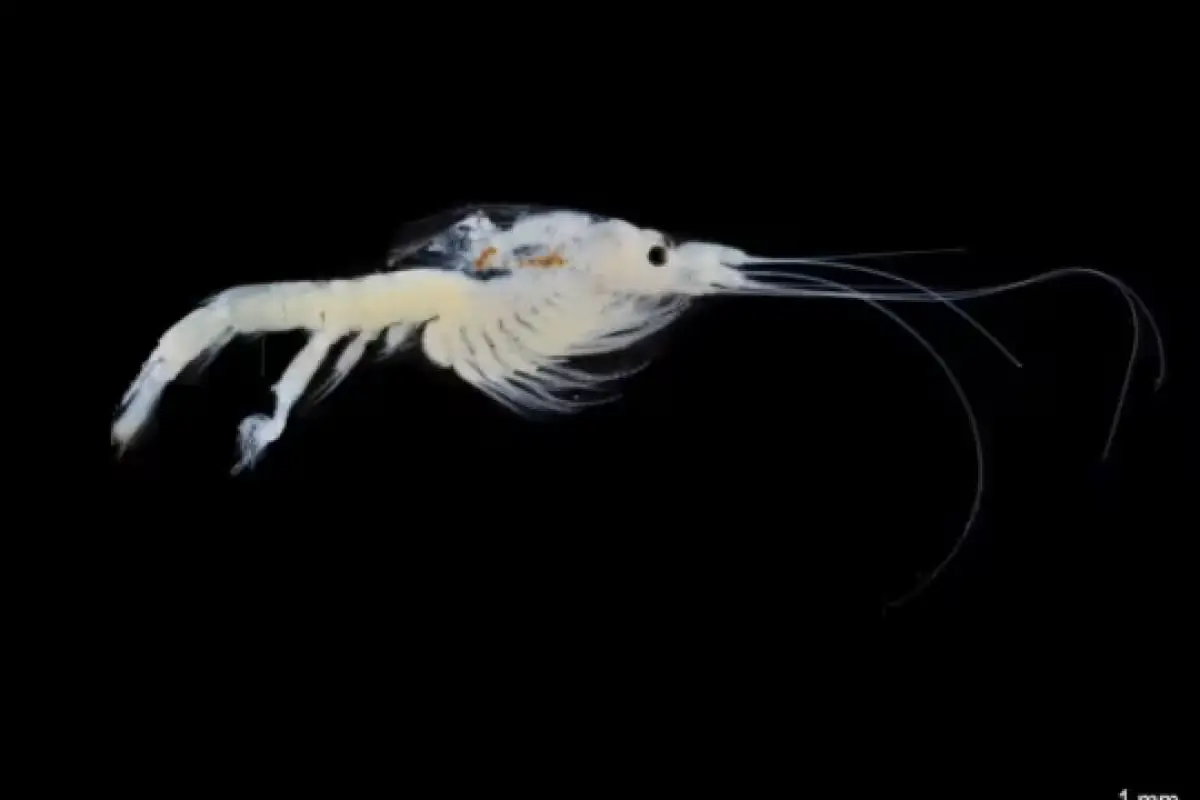
Chetumal, Quintana Roo — A new aquatic species, identified as Mayamysis bacalarensis, has been discovered in the Bacalar Lagoon, expanding scientific knowledge of biodiversity in southern Quintana Roo and marking the first record of a mysid in this freshwater lagoon system.
The research was led by Manuel Elías Gutiérrez, a researcher at El Colegio de la Frontera Sur, and Diana Estela González Trejo, a student at the National Technological Institute of Mexico. The study focused on zooplankton organisms in the region.
According to the specialists, the newly discovered species belongs to the mysid group — small zooplankton organisms that inhabit aquatic ecosystems such as oceans, bays, estuaries, and some continental water bodies.
The researchers noted that zooplankton remains one of the least studied groups in aquatic ecosystems, and many species still lack formal scientific descriptions. Among the better-known zooplankton groups are rotifers, cladocerans, and copepods, but mysids have received less scientific attention due to their small size, which ranges from 2 to 80 millimeters in length.
The new species was named Mayamysis bacalarensis and has so far only been found in Bacalar Lagoon and the northern part of Chetumal Bay.
The discovery is significant because there were no previous documented records of mysids in this freshwater lagoon system in the southern part of the state. Bacalar Lagoon is considered the largest freshwater lake on the Yucatan Peninsula and the second largest in Mexico, stretching approximately 50 kilometers in length with an average depth of about nine meters.
To collect the organisms, the researchers used unconventional sampling methods, primarily light traps. This technique allows them to capture zooplankton species without altering their natural behavior or causing them to evade the trawling systems commonly used in aquatic research.
The scientists explained that mysids have environmental and scientific importance because they serve as bioindicators of water quality and are part of aquatic food chains. Currently, more than 90 percent of the 1,235 known mysid species inhabit marine ecosystems, where they are commonly known as krill — a primary food source for various whale species. In contrast, mysids in freshwater or brackish ecosystems are considered rare.
Before this discovery, the only records of such organisms on the Yucatan Peninsula came from underground cenotes.
More Bacalar
- INAH Opens Inquiry Into Bacalar Official Who Filmed at Restricted Maya Pyramid
- Quintana Roo Crews Clear 70,000 Liters of Water in Bacalar and Chetumal After Heavy Rains
- Heavy Rains Flood Streets and Homes Across Quintana Roo, Cutting Power and Commerce
- Bacalar Hoteliers Push for More Flights at Chetumal Airport as Tulum Routes Shrink
- Bacalar Aims to Show the World Its Appeal Goes Beyond the Lagoon
