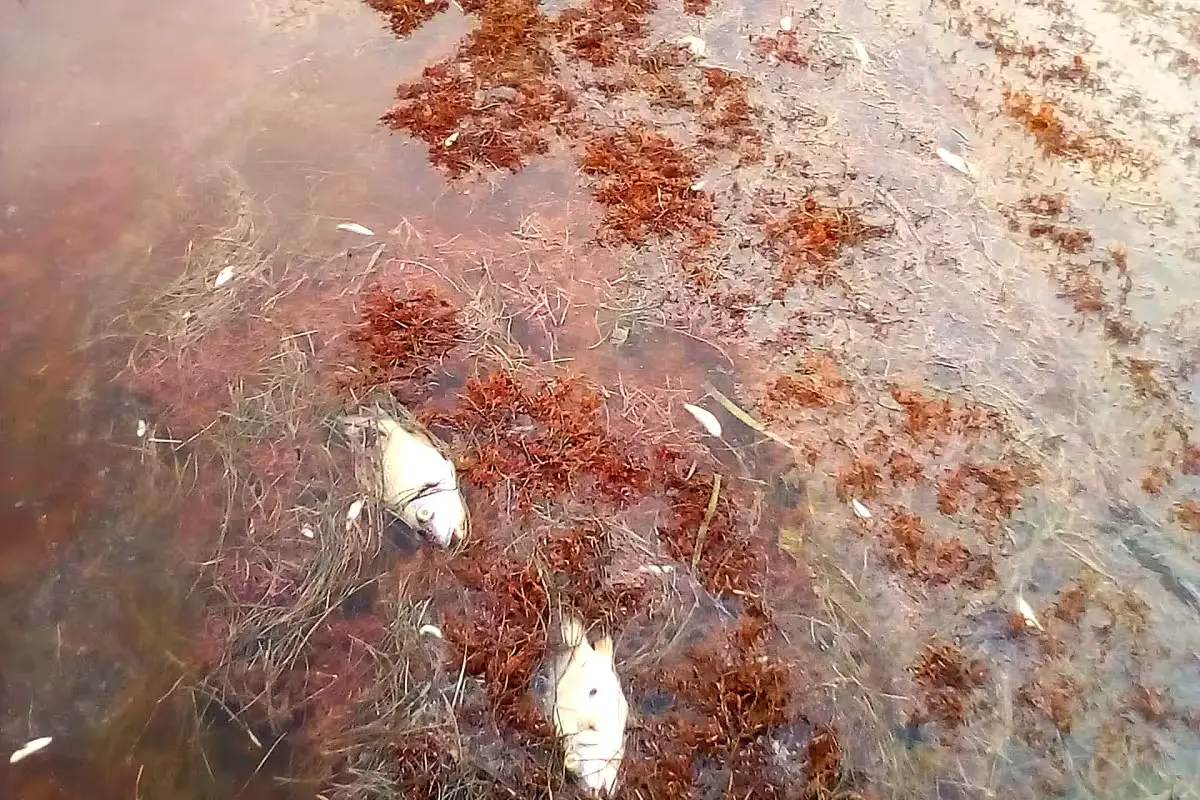
Xcalak, Quintana Roo — A massive influx of sargasso has triggered an environmental crisis in the coastal community of Xcalak, killing hundreds of marine animals and alarming residents and tourism operators who are calling for urgent government intervention.
In recent days, the shoreline has become littered with dead fish, crustaceans, and other marine life trapped in thick layers of the brown algae. Experts say the decomposing sargasso depletes oxygen from the water — a process known as anoxia — and releases toxic hydrogen sulfide gas, turning once-healthy habitats into death zones.
Local fishermen and tourism workers report that the stench from the rotting algae is driving away visitors, while boats remain stranded because the dense sargasso makes navigation and fishing impossible.
Community brigades have been manually removing the algae with rakes and wheelbarrows, but the sargasso is arriving faster than they can handle. Residents warn that the buildup threatens the Mesoamerican Barrier Reef System, the world’s second-largest coral reef.
According to specialists, the algae’s decomposition alters water nutrients, promoting microalgae that block sunlight essential for coral survival. The community is demanding heavy machinery, sargasso-collecting boats, and additional personnel to address the emergency.
More Costa Maya
- Mahahual Hosts Nearly 100 Birdwatchers for 12th Regional Pajareada
- Royal Caribbean Collects 997 Tons of Sargassum in Mahahual
- Power and Water Outages to Hit Mahahual and Xcalak This Weekend
- Xcalak Fishermen Help Track Reef Fish Larvae in Chetumal Bay
- Coastal Dune Loss Weakens Natural Defenses in Quintana Roo