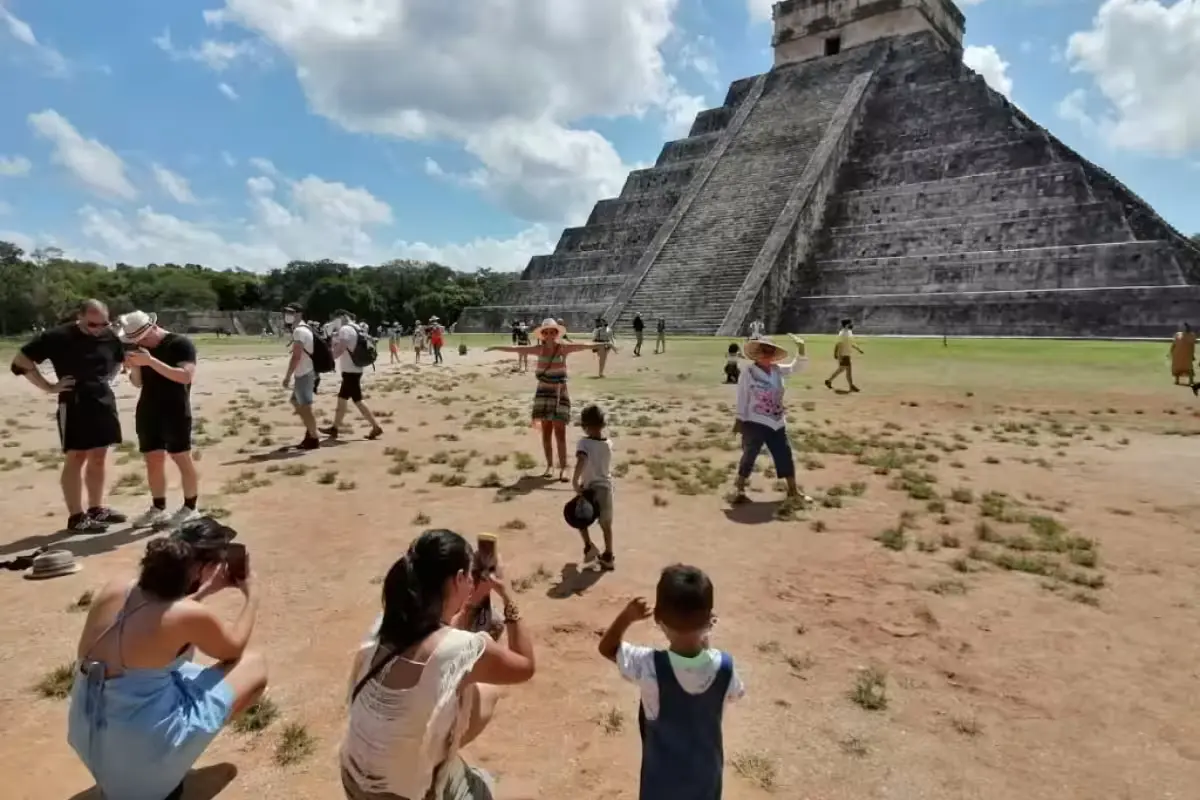
Chichén Itzá, Yucatán — Chichén Itzá remains closed to visitors after a second round of negotiations between artisans, tour guides, and state and federal authorities ended without an agreement, officials said Friday. As of the latest available reports, no reopening date had been confirmed, although INAH’s general site page still lists the archaeological zone’s regular hours. Travelers should verify directly with INAH or CULTUR Yucatán before making the trip.
The immediate conflict centers on the new Centro de Atención a Visitantes, known as the CATVI, which replaced the old tourist stop, or parador turístico, that was shut down the night of May 18. The new facility sits next to the Gran Museo de Chichén Itzá and was built as part of the infrastructure connected to the Tren Maya project. INAH describes the CATVI as the link between the Chichén Itzá Tren Maya station, the site museum, the archaeological zone, and the new museum, creating what officials call a safer, more organized visitor experience.
For authorities, the CATVI is part of a larger plan to modernize access to Mexico’s most famous Maya archaeological site. For many artisans and service providers in nearby Pisté and Tinum, however, the change feels like a threat to the local economy that has grown around Chichén Itzá for generations.
The project is not minor. Fonatur Tren Maya previously reported that the Chichén Itzá CATVI would represent an investment of 794.2 million pesos and occupy about 13.5 hectares. It is one of several visitor centers planned or built along the Tren Maya route, including sites such as Palenque, Calakmul, Uxmal, Ek Balam, Dzibilchaltún, and Cobá. The goal, according to officials, is to connect archaeological sites more directly with the train system and reorganize tourism services around new federal infrastructure.
That reorganization is exactly where the dispute begins.
During the latest meeting, community representatives presented assembly minutes backed by more than 3,900 signatures to demonstrate local opposition to the new operating model. Protesters accused authorities of trying to impose the CATVI without giving them formal written documentation about how the new system will work, who will control the spaces, and what guarantees exist for local workers.
After talks failed, the Indigenous Council of Pisté clarified that the community is not blocking access to the archaeological zone or the federal highway. According to the council, the protest camp remains only at the entrance to the CATVI, meaning the suspension of operations is a decision by INAH and the state government, not a full community blockade.
Among the artisans’ demands are a written commitment that vendors and traditional service providers will not be displaced from the archaeological zone, support for production credits, financial assistance to equip stalls inside the CATVI, and adequate telephone and internet service so vendors can accept electronic payments. State officials say they have maintained dialogue with artisan groups, guides, and ejidos since last year and will continue seeking an agreement.
The situation has also taken a legal turn. The federal government is reportedly preparing criminal complaints against alleged leaders of the movement and a lawyer accused of helping lead the takeover of facilities and allowing free entry to the site during the protests. Possible charges could involve damage to federal property and financial losses tied to unauthorized access without ticket payments.
The tensions are not new. In 2023, hundreds of Maya artisans and vendors blocked access roads near Chichén Itzá, accusing site authorities of discrimination and demanding better access to sell their goods. At the time, INAH officials described some vendor activity as “invasive,” while protesters argued that modern Maya communities were being pushed aside while tourism profited from the legacy of their ancestors.
The CATVI revived those concerns. In March, ahead of its opening, artisan groups warned they would not leave the old parador or the archaeological zone voluntarily, even as officials said relocation to the new artisan market would be voluntary, rent-free, and prioritized for existing Chichén Itzá vendors.
The dispute now sits at the intersection of heritage protection, mass tourism, local livelihoods, and the federal government’s Tren Maya vision. Chichén Itzá is a UNESCO World Heritage site and one of Mexico’s most visited archaeological zones, drawing millions of people in a normal year. It is also a lifeline for eastern Yucatán, where guides, artisans, transport operators, restaurants, and families depend heavily on daily visitor traffic.
For now, the key practical point is simple: Chichén Itzá should be considered closed until authorities formally announce normal operations have resumed. The larger question is whether the new CATVI can modernize the visitor experience without cutting local Maya communities out of the economy that surrounds one of the world’s most recognizable archaeological sites.
Note: As of May 24, Chichén Itzá remains closed to visitors while negotiations continue between artisans, tour guides, state officials and federal authorities over the new CATVI visitor center and changes to the site’s operating model.
More Business
- Imports Hit Record, US Trade Deficit Widens Despite Tariffs
- MarAlliance Launches Free MARAP App to Track Marine Wildlife in the Mexican Caribbean
- Playa del Carmen Seeks Million-Dollar Investment for Sargassum Processing Plants
- Cancún Restaurant Sector Welcomes Extended Hours in Hotel Zone
- Yucatan Debuts Southeast Mexico’s First Cyclotron for Precision Oncology