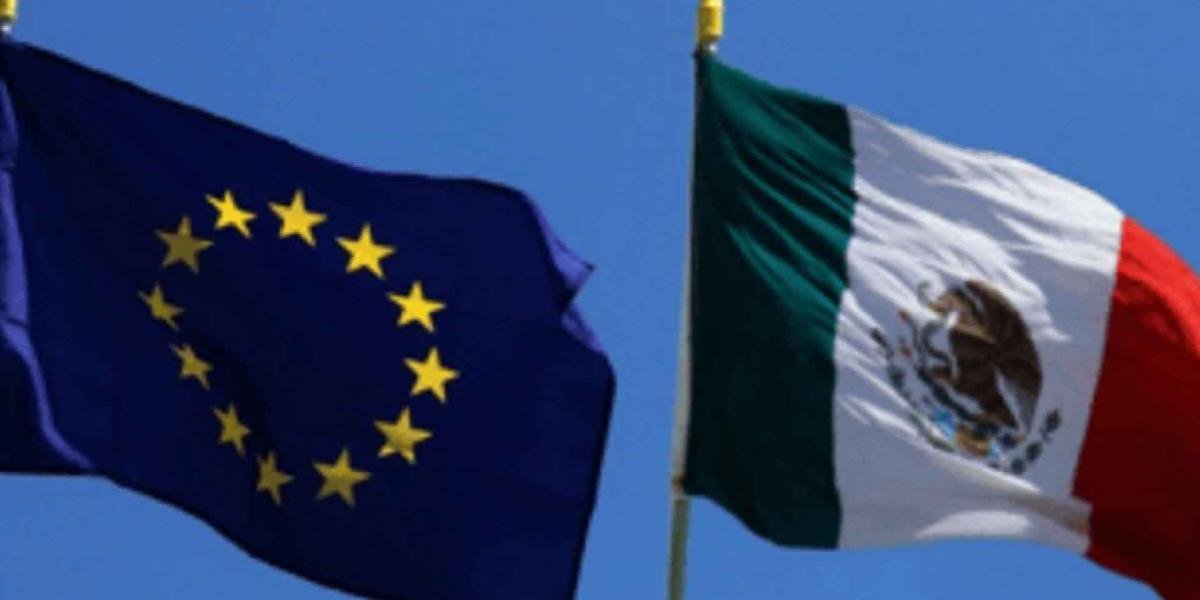
Mexico City — The European Union will immediately eliminate tariffs on Mexican agri-food products, opening opportunities for Mexican businesses and farmers in a market of 450 million consumers, the Economy Ministry announced Wednesday.
With additional openings in the manufacturing sector, the ministry projects a 50% increase in Mexican exports to the EU by 2030.
The announcement comes ahead of two key agreements to be signed next week. President Claudia Sheinbaum and European Commission President Ursula von der Leyen will sign the modernized Global Agreement on May 22, pending ratification by the European Parliament, the legislatures of all 27 member states, and the Mexican Senate. Economy Secretary Marcelo Ebrard will sign the Interim Trade Agreement (ITA) with EU Trade Commissioner Maros Sefcovic, which will take effect immediately.
“The global agreement will take longer — maybe two years, perhaps a bit less. Translation alone will take a year. The interim agreement must enter into force next year, in 2027,” Ebrard said at a forum.
The ministry aims to focus on 12 products with high market share (six manufactured, six agricultural) and 17 with growth potential (seven manufactured, 10 agri-food) to boost exports from $23.8 billion to $36.1 billion by 2030.
“We will virtually eliminate all tariffs to access the European market. Exports of cars and auto parts will be tariff-free. We are currently paying an average of 10%,” Ebrard highlighted.
“The signing of the Interim Trade Agreement is great news for Mexico. It will allow Mexican companies and farmers — from large enterprises to SMEs — to access a market of 450 million people in the 27 EU countries on preferential terms, virtually tariff-free,” the Economy Ministry said in a statement.
For example, a Mexican artisanal chocolate SME can compete in Germany without paying tariffs that its Asian competitors face.
Mexican agriculture and agribusiness are the big winners from the ITA, the ministry said, predicting a boom in agricultural exports. Key products such as bananas from Chiapas, Tabasco, and Oaxaca; honey from Yucatán, Chiapas, and Jalisco; sugar and piloncillo from Veracruz, Jalisco, San Luis Potosí, and Morelos; asparagus from Sonora, Baja California Sur, and Guanajuato; canned tomatoes from Sinaloa, San Luis Potosí, and Michoacán; and limes from Michoacán, Veracruz, Colima, and Oaxaca will enter Europe tariff-free or under improved conditions, meeting the highest sanitary and phytosanitary standards.
Iconic products such as Café Chiapas, Yucatán Habanero Chile, Celaya Cajeta, Soconusco Ataulfo Mango, and Papantla Vanilla will receive legal protection across the EU to prevent imitations.
Mexican manufactured goods, including auto parts and vehicles, will continue to enter the 27 EU countries tariff-free. Updated rules of origin will boost exports in key industrial sectors such as chemicals, pharmaceuticals, electrical equipment, cosmetics, and plastics.
The agreement includes provisions on digital trade and customs facilitation, simplifying administrative procedures through information and communication technologies. Mexican exporters will be able to complete customs procedures digitally, reducing logistics costs and clearance times, and conduct transactions electronically using e-contracts and e-authentication services.
“In an era where tariffs are being imposed rather than removed, the agreement with the EU allows us to diversify our exports, which are currently concentrated in the North American market,” the ministry said.
The Mexican automotive industry will be able to place components in Stuttgart or Turin even if tariffs rise elsewhere.
“The agreement with the EU will allow us, thanks to certainty, to increase European investment to strengthen Plan Mexico,” the ministry projected.
Europe is already the second-largest source of foreign investment in Mexico, with more than 13,500 companies operating in the country. The agreement aims to attract more investment in strategic sectors such as automotive and manufacturing.
“We will have preferential access to critical raw materials for the green and digital transition. Clear and modern rules for exporting,” the ministry said.
The agreement includes a new dispute resolution mechanism, simplifies customs procedures, and reduces paperwork so Mexican companies can export with greater security, speed, and legal certainty.
More Business
- Riviera Maya to Host Aquaponics Congress With Experts From More Than 10 Countries
- Mexico Tourism Boom Accelerates Digital Shift, Raising Security Stakes
- Playa del Carmen Residents Demand Action After Molotov Attack on Taxi Union
- Cancún Bus Route 26 Users Report Long Waits as Fewer Buses Run
- Quintana Roo Artisans Win Dedicated Law to Protect and Promote Their Craft