
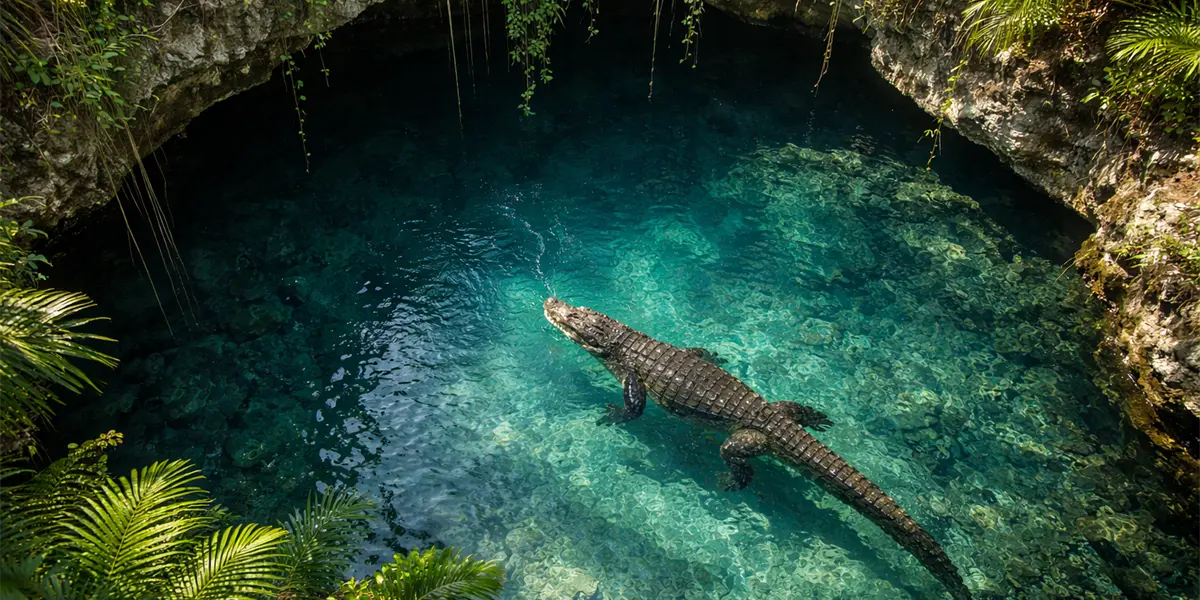
Yucatan Peninsula, Mexico — Visitors to the cenotes of Mexico’s Yucatan Peninsula often wonder if they might encounter a crocodile while swimming. The answer is yes, but such sightings are rare, according to local reports and documented cases.
Cenotes are living ecosystems home to various species, most of which are harmless to humans. Common inhabitants include small fish like guppies, turtles, and bats in cave-type cenotes. These animals are generally accustomed to human presence or keep their distance when their space is respected.
How Common Are Crocodiles in Cenotes?
Crocodiles primarily inhabit mangroves, lagoons, swamps, and coastal areas where they find better living conditions. Their presence in cenotes is not impossible but infrequent. Documented cases have generated surprise and curiosity among tourists in Yucatan and Quintana Roo.
How Do Crocodiles Reach Cenotes?
Several factors could explain a crocodile’s appearance in a cenote, even though it’s not their typical habitat:
- Connection with underground rivers or nearby bodies of water
- Flooding during the rainy season
- Search for food or shelter
- Human intervention, such as relocation or abandonment
Their adaptability allows them to move between different ecosystems more than commonly believed.
Famous Case: “Panchito” in Tulum
One of the best-known instances involves “Panchito,” a Morelet’s crocodile (Crocodylus moreletii) that inhabits Cenote Manatí, also known as Casa Cenote, in Tulum. His story went viral because he coexists in the same space with tourists without any recorded attacks. Authorities have stated the animal is in its habitat and poses no risk if people maintain distance and avoid disturbing it.
Other Documented Sightings
While uncommon, other sightings have been recorded in the Yucatan Peninsula. For example, a crocodile was reported in a cenote in Santa Elena, and there are records near mangrove areas in Quintana Roo where connections with other water bodies facilitate their presence.
Safety Recommendations
The vast majority of cenotes are safe for swimming and lack crocodiles. If you do encounter one, experts recommend:
- Maintaining distance
- Exiting the water without sudden movements
- Alerting site staff or authorities
- Avoiding any attempt to touch or interact with the animal
Cenotes remain one of the region’s top natural attractions. Enjoying them involves understanding they are living spaces where respect for wildlife is key to avoiding risks.
More Environment
- Maya Frog and Toad Shell Pendants May Reveal Ancient Trade Routes
- Heavy Rains to Soak Quintana Roo as Unstable Weather Moves In
- Brain-Eating Amoeba Found in Six Artificial Lakes in Mérida; Water Contact Restricted
- Semarnat Approves Artificial Reefs and Sand Relocation for Akumal Hotel
- Chetumal Plans 836 Million Pesos in Stormwater Works to Curb Flooding
More Quintana Roo
- Mexican Caribbean Courts Convention Business at Las Vegas Trade Show
- Ten Rural Communities in Quintana Roo Form Community Conservation Territories
- Study Finds Cancún’s Laguna Manatí Mangrove Could Qualify for Carbon Credits
- Lawmakers Seek to Make Mexican Sign Language Mandatory in Quintana Roo Schools
- Quintana Roo Signs Deal for First Formal Sargassum Fishery, Involving Up to 840 Boats
