Mahahual, Mexico — In southern Quintana Roo, the organization Proyecto Áak Mahahual actively works on conservation and mitigating conflicts between human activity and wildlife.
Victor Rosales, leader of the group, highlighted that their work ranges from the protection of iconic species to environmental education and community infrastructure, so the project maintains a comprehensive approach that begins on the coasts and extends into the jungle.
The organization began its work with the conservation, monitoring and protection of sea turtles during the nesting season; however, one of its most significant challenges is the management of terrestrial fauna, specifically felines.
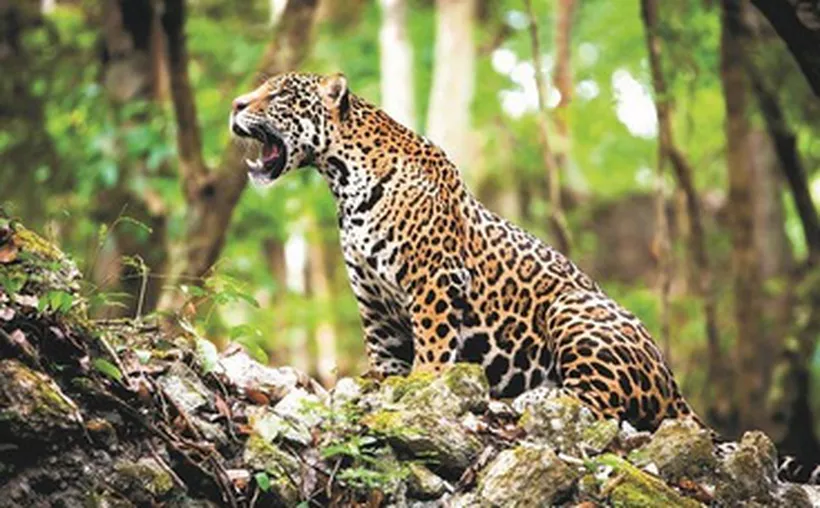
"We do the same work of coexistence with the felines, especially with the jaguar. We have five felines from the Yucatan Peninsula in Mahahual: the jaguar, the ocelot, the jaguarundi, the margay, and the puma," Rosales explained.
To reduce incidents with the community, the association builds "reinforced chicken coops to avoid human-small feline conflict" and "reinforced houses for dogs," since the jaguar sometimes feeds on these domestic animals.
In an environment of high biological richness, Rosales emphasized the geographical importance of the area, noting that Mahahual and Xcalak are among the last refuges of great biodiversity in the south, surrounded by protected natural areas such as Sian Ka'an, the Xcalak Reefs National Park, the Manatee Sanctuary and Banco Chinchorro.
Regarding the organization's stance on the region's growth, Rosales was emphatic in stating: "We are not against development, we are against development that does not put conservation first."
Regarding the recent intervention of environmental authorities in projects in the area, he added that their role is informative: "We simply share the information we have so that the right measures and decisions can be taken."
The funding for their monitoring and conservation programs comes from resources from the National Commission of Natural Protected Areas (Conanp), donations, and the association's own work. They also collaborate with the International Fund for Animal Welfare (IFAW) for sterilizations and reinforced housing, and receive support from the ocelot working group for chicken coop infrastructure.
The activist called on society and authorities to recognize the urgency of protecting the ecosystem, linking current problems such as sargassum directly to human actions.
"It's important for people to understand that conservation isn't a fad, it's a necessity… It's time to act," concluded the winner in the opinion leader category at the Los+Ecoístas 2026 awards.
More Environment
- Quintana Roo’s Beaches Are Disappearing Up to 14 Meters a Year
- Rabies Found in Fox That Scratched Baby in Cancún
- Cozumel’s Reefs Get a 3D Map Divers Can Explore Before Entering the Water
- Documentary Exposes 30 Years of Pollution in Cancún’s Chacmuchuch Lagoon
- Crocodile Surprises Tourists Swimming at Cozumel’s El Cielo Sandbar
More Zona Maya
- Quintana Roo Opens 2026 Poetry Contest for Indigenous and Afro-Mexican Girls
- Drought Damages Farmland in Felipe Carrillo Puerto as Quintana Roo Assesses Losses
- Aluxes Endure in the Beliefs of Maya Communities in Quintana Roo
- Search Operation for Missing People Deployed in Felipe Carrillo Puerto
- Mothers of Missing Children Ask Quintana Roo to Display Their Faces on Public Transport