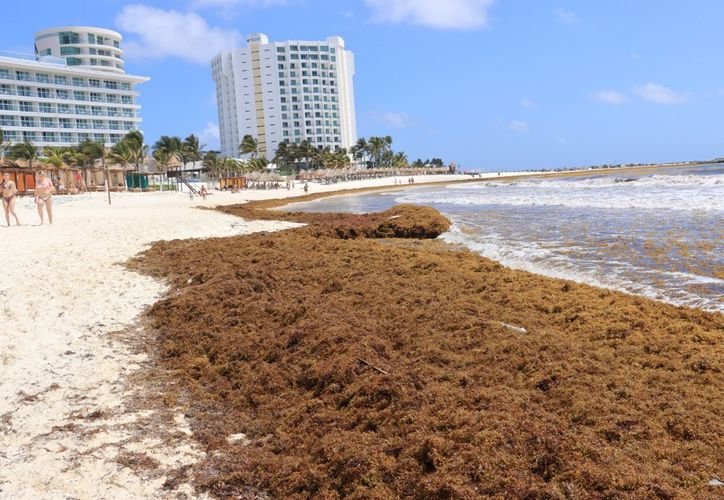
Cancún, Quintana Roo — Environmental authorities report that 8,700 tons of sargassum have been collected from Quintana Roo beaches in the first five months of 2026, but local entrepreneurs are using less than 0.5% of it.
The massive influx of the macroalgae far exceeds the capacity of small businesses that turn it into products, according to specialists.
Jossy Zamora, director of the environmental group Eco Caribe, said no project can handle such volumes for industrialization, and the problem remains unsolved. At least 11 commercial ventures in the state produce goods from sargassum, along with several pilot projects, but they are too small to make a dent.
Most are small enterprises that can process at most 5 tons of seaweed, Zamora noted. She cited the example of “sargablock” eco-bricks, which contain about 40% dehydrated and crushed sargassum mixed with pruning waste and limestone. One venture has made 150 such bricks, but that uses only a fraction of the available algae.
Other products include pens made from sargassum, as well as shoes and sandals whose soles contain about 100 grams of processed seaweed blended with thermoplastics. While the circular economy and biotechnology sector transforms the algae into more than 150 useful items — including compost, fertilizer, biofuels, vehicle biogas, paper products, and plant pots — the total volume consumed remains minimal.
The sargassum arrived earlier this year, prompting constant cleanup efforts by municipal authorities and the Mexican Navy. Statewide, more than 39,000 tons have washed ashore at key points along the coast.
More Business
More Cancun
- Man, 25, Killed Outside Cancun Home; Dog Shot, Suspect Caught
- Cancún Opens Registration for Janal Pixan 2026 Catrina and Altar Contests
- Cancún Launches 2026 Ocular Prosthetics Program With Free Evaluations
- Cancún Council Approves Programs for Caregivers, Students and People With Disabilities
- Study Finds Cancún’s Laguna Manatí Mangrove Could Qualify for Carbon Credits