
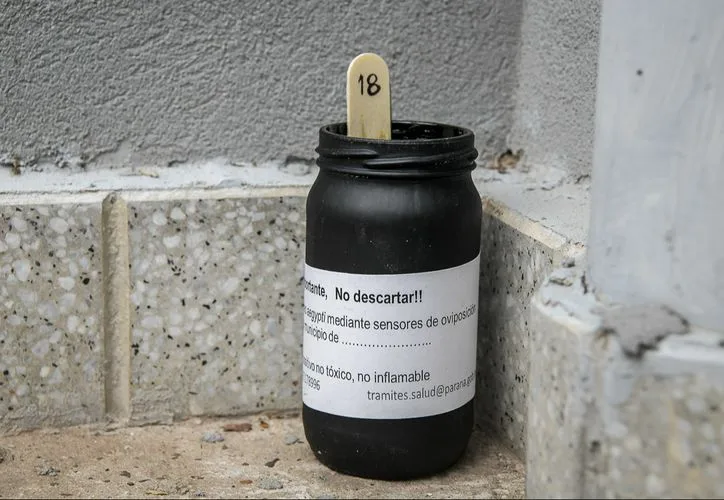
Cancún, Quintana Roo — Health authorities have placed 2,014 ovitraps across Cancún as part of efforts to prevent the spread of mosquito-borne diseases such as dengue, zika, and chikungunya.
Francisco Montejo Avendaño, a vector control specialist with the state Health Department’s Jurisdiction 2, said the traps are dark plastic containers — often buckets or bottles — used to monitor, detect, and control populations of the Aedes aegypti mosquito.
The devices contain water and a rough surface where female mosquitoes lay their eggs. The dark color and water attract pregnant females, allowing specialists to measure mosquito density in an area and identify hotspots of infestation.
Many traps include ecological larvicides or use hot water methods to eliminate eggs and larvae before they develop into adults.
Montejo also noted that authorities conduct early morning or evening fogging operations using two methods: thermal fogging, which uses heat to turn insecticides into a fine mist that penetrates hard-to-reach areas, and standard fogging, which kills adult mosquitoes when they emerge to feed at night or after rainfall.
He urged residents to open their windows when the fogging truck passes and to check patios and rooftops after rain to ensure no standing water accumulates, noting that mosquitoes can breed even in bottle caps. He also warned about flower vases with aquatic plants inside homes.
More Environment
- Mexican Navy Opens Youth Photography Contest on Ocean Conservation
- WHO Warns El Niño Poses Major Global Health Threat
- Hurricane Polo Hits Category 5; Five Mexican States Brace for Heavy Rain
- Isla Mujeres Fishermen Face Grouper Shortage as Catch Barely Covers Local Demand
- Cancún Officials Urge Residents to Protect Pets After Reported Puma Sighting in Cuna Maya
More Cancun
- Cancún Evicts Homeless From Old General Hospital to Make Way for New Maternal and Child Facility
- Cancún Airport ‘Pirate’ Transporters Accused of Intimidating Tourists Over Uber and Didi
- Cancún’s Second Government Report Cites 995.9 Million Pesos in Public Works as Residents Question Results
- Activist Searching for Missing Brother Sentenced to 80 Years for Cancún Kidnapping
- Fraud Suspect Captured in Miami Returned to Quintana Roo After Two Escapes