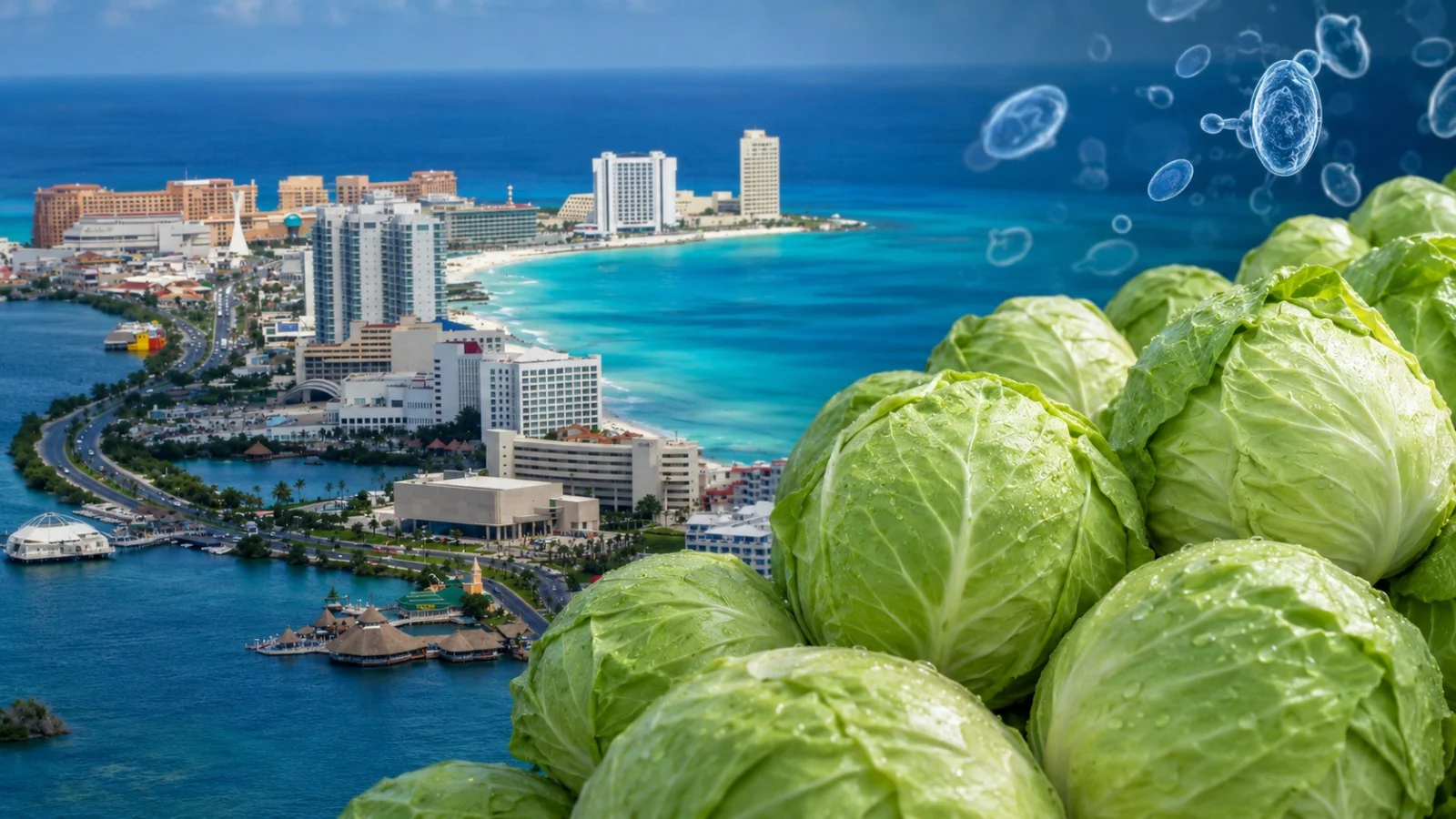
Mexico City — Mexico’s health authorities have confirmed 39 cases of cyclosporiasis as of July 31, but say the country is not facing an active outbreak because there is no epidemiological link between the patients.
During the federal government’s morning press conference on August 7, Health Secretary David Kershenobich said the infection appears recurrently in Mexico and that all confirmed cases remain under epidemiological surveillance.
Cyclosporiasis is caused by the parasite Cyclospora cayetanensis and typically appears two to 14 days after consuming contaminated water or food. The most common symptom is intense diarrhea, which usually resolves within 48 to 72 hours. Some patients require hospitalization for hydration, especially if they develop nausea or vomiting.
Kershenobich stressed that the situation in Mexico is different from the severe outbreak currently affecting the United States, particularly Michigan, where health authorities have reported more than 12,400 infections and two deaths.
“We want to send a message of calm: we do not have an active outbreak of cyclosporiasis in our country,” he said.
Víctor Hugo Borja Aburto, head of the Federal Commission for the Protection against Sanitary Risks (Cofepris), explained that an outbreak requires a common link between cases. “An outbreak consists of two or more cases that are related to each other or share a common origin,” he said.
Investigators are interviewing patients about what they ate and where, then using that information to build hypotheses that must be confirmed through tracing and sanitary inspections. Borja Aburto emphasized that these initial leads “are hypotheses, not confirmed findings.”
Investigations into food and hotels
Mexico is conducting its own traceback along the food supply chain, working with Cofepris and the National Service for Agri-Food Health, Safety and Quality (Senasica) to review primary agricultural production, packaging facilities, distribution centers, and fresh or minimally processed products.
One investigation was launched after U.S. authorities flagged a possible link to lettuce from the Taylor Farms plant in Guanajuato, which was exported to U.S. restaurants including Taco Bell. Mexican officials inspected the facility and reviewed the process from production to packaging, collecting five whole lettuces, five samples of chopped product, and water samples for molecular biology testing. “We found that all were negative,” Borja Aburto said, meaning the results did not confirm the hypothesis and a Mexican origin for the contamination remains unproven.
Another alert came from the United Kingdom regarding travelers who had visited several countries. In Quintana Roo, authorities visited 16 hotels and collected 32 food samples and 11 water samples, all still being analyzed.
Borja Aburto noted that since 2020, Mexico has received about 17 outbreak notifications requiring joint follow-up by Cofepris, Senasica and, in some cases, the U.S. Food and Drug Administration. “We visit companies to make sure these export processes are carried out with adequate quality, and what we do is preventive,” he said.
Symptoms and prevention
Health officials said symptoms can appear between two and 14 days after exposure to contaminated food or water. They recommended washing fruits and vegetables with clean drinking water, peeling or cooking foods when appropriate, washing hands with soap and water for at least 20 seconds before preparing food, before eating and after using the bathroom, and drinking potable or boiled water to reduce the risk of exposure.
More Government
More Cancun
- Cancún Evicts Homeless From Old General Hospital to Make Way for New Maternal and Child Facility
- Cancún Airport ‘Pirate’ Transporters Accused of Intimidating Tourists Over Uber and Didi
- Cancún’s Second Government Report Cites 995.9 Million Pesos in Public Works as Residents Question Results
- Activist Searching for Missing Brother Sentenced to 80 Years for Cancún Kidnapping
- Cancún Officials Urge Residents to Protect Pets After Reported Puma Sighting in Cuna Maya