Merida, Yucatán — The Maya language remains one of the strongest Indigenous languages in Mexico, but new warnings from researchers and government officials show that its future in Yucatán is far from secure.
At the Southeast-Gulf Node Meeting of the National Network for Research on Indigenous Languages, held at the Gran Museo del Mundo Maya in Mérida, specialists warned that the intergenerational transmission of Maya is weakening sharply. Violeta Vázquez-Rojas Maldonado, undersecretary of Science, Humanities, Technology and Innovation, said Yucatán is one of the clearest cases of language displacement in Mexico.
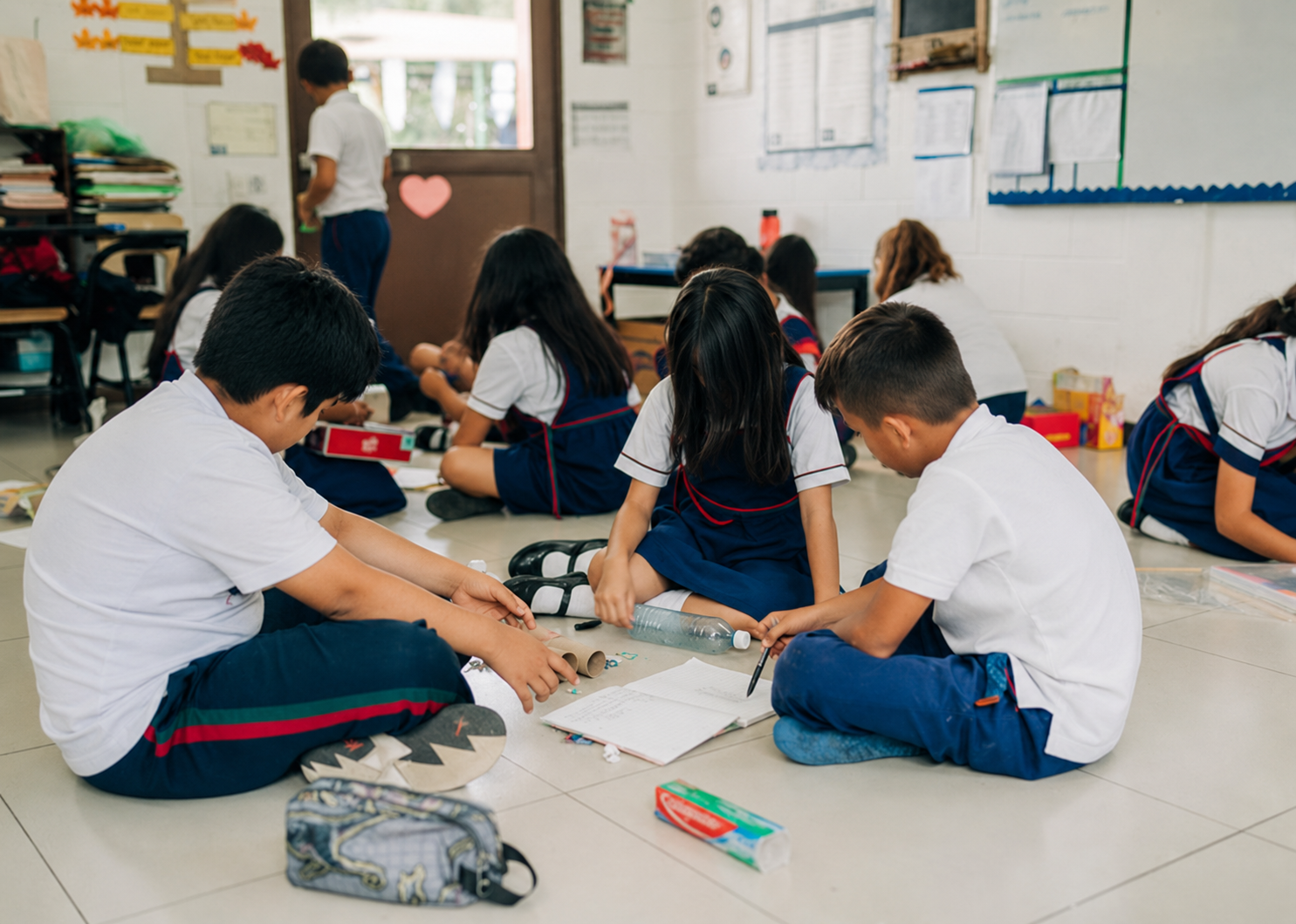
According to the data presented, six out of every 10 children born to Maya-speaking mothers in Yucatán no longer learn Maya as their first language. That means the language is not disappearing only because older speakers are passing away. It is weakening because it is no longer being passed naturally from parent to child in many families.
That shift is one of the most serious warning signs for any language.
INEGI figures show the decline clearly. In 2010, Yucatán had 537,618 Maya speakers. By 2020, that number had fallen to 519,167, a loss of 18,451 speakers in a decade. Some broader estimates place the number of people with some level of Maya-language ability in the state closer to 800,000, but the official census count of speakers is just over half a million.
The concern is not only how many people speak Maya, but who speaks it. Researchers say the language is increasingly concentrated among adults and older generations. In many rural communities, children hear Maya from grandparents or older relatives, but answer in Spanish or do not use the language in daily life.
This pattern is known as language displacement. It happens when a community gradually shifts from one language to another, often because the dominant language is seen as more useful for school, work, government services, and social mobility.
In Yucatán, specialists say discrimination remains one of the main reasons families stop transmitting Maya. For generations, many Maya speakers faced ridicule, punishment in schools, exclusion, or the assumption that speaking Maya marked a person as poor, rural, or less educated. As a result, some parents made the difficult decision not to teach the language to their children, believing Spanish would protect them from the same treatment.
That choice is often misunderstood. Experts say it is not necessarily a rejection of identity. In many cases, it reflects fear, survival, and a desire to give children better opportunities in a society that has not always respected Indigenous languages.
Migration has also accelerated the decline. As more families move to Mérida and other urban areas, Spanish dominates school, work, public services, media, and social life. Even children who understand Maya may have few places where they are encouraged to speak it.
Yucatán has tried to respond. In 2019, the state approved reforms making Maya-language instruction mandatory in basic education. But implementation remains incomplete. Recent education data show that only 651 of 1,612 schools in the state teach Maya, about 40% of the total. That leaves most schools still outside the mandate.
Literacy is another challenge. Many people speak Maya orally but never learned to read or write it. Specialists estimate that only about 30,000 people can read and write Maya properly, limiting its use in academic, administrative, legal, and digital spaces.
The state has promoted programs such as Ko’ox Kanik Maaya T’aan, which means “Let’s Learn the Maya Language,” offering free in-person and online courses through schools and public spaces. Cultural initiatives such as Alas y Raíces Yucatán and Indigenous literature and oral tradition projects also help keep the language visible.
But researchers warn that cultural promotion alone will not reverse the trend. Maya must be heard at home, taught in schools, used in public institutions, respected in workplaces, and valued in cities as well as villages.
The Maya language is not only a means of communication. It carries history, memory, humor, place names, medicinal knowledge, stories, identity, and a way of understanding the world.
The challenge now is not only to honor the people who still speak it. It is to make sure the next generation has a reason, and a safe space, to speak it too.
More Culture
- Bacalar Aims to Show the World Its Appeal Goes Beyond the Lagoon
- Valladolid Hosts Second Edition of La Vid y la Ceiba Wine Festival
- Community Tourism Brings Income to Sacalaca With Small Groups and Cenote Protection
- Tulum Adds Artisan Market and Caribbean Culture Festival to Its Tourism Lineup
- Culture Ministry to Inspect Ceremonial Pole Ahead of Voladores de Papantla Return to Tulum