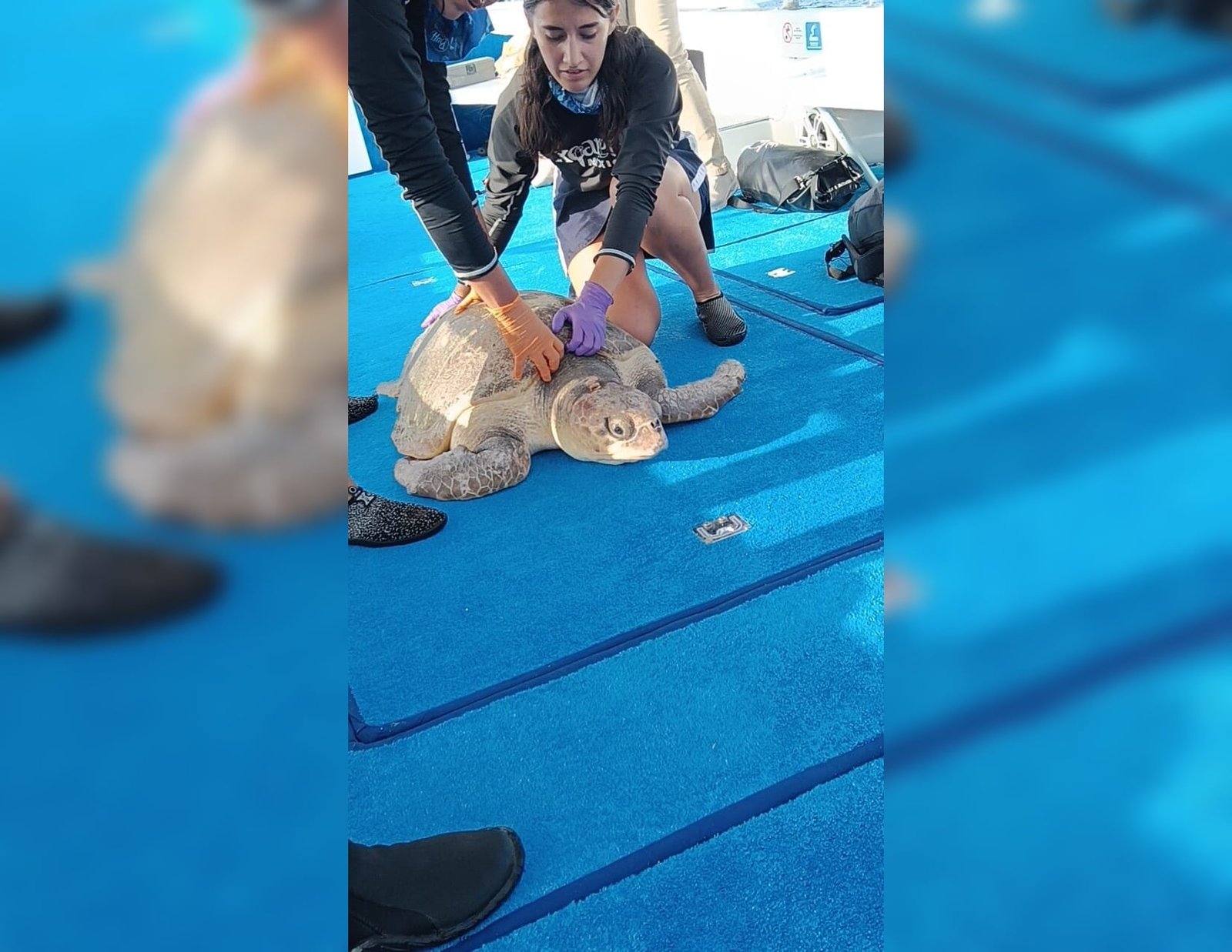
Cancún, Quintana Roo — A veterinary hospital tucked inside the Xcaret park has become a lifeline for injured marine animals along Mexico’s Caribbean coast, treating hundreds of sea turtles over more than a quarter century.
The Marine Fauna Veterinary Hospital operates as a Wildlife Conservation Management Unit, known in Mexico as a UMA, and is the only facility of its kind in the region. For more than 25 years it has given a second chance to hundreds of animals that otherwise would have fallen victim to human activity and the hazards of their natural environment.
“We have been working with the sea turtle rescue and rehabilitation program for more than 25 years now… obviously there is a need, and sadly it is the need to be able to care for these specimens that are affected in the wild by many different causes,” said Gabriela Lara Martínez, who heads the organization’s corporate conservation management.
Lara said the hospital is more than a medical facility — it is a technical and human response to a growing problem in the oceans.
Sea turtles make up the bulk of its patients, arriving with highly complex clinical conditions. Specialists at the center treat each one under a strict diagnostic and treatment protocol, with the goal of returning the animal to its natural habitat once it has recovered.
Lara acknowledged that running a center of this kind poses a considerable logistical and financial challenge, which the organization fully assumes. Unlike other institutions, the hospital operates on its own resources, driven by a genuine interest in species conservation. As a UMA, its main objective is not profit but the protection of wildlife, which requires constant investment in medical technology, specialized food and qualified staff working around the clock for animal welfare.
Beyond the flagship sea turtle program, the conservation team has implemented successful efforts for the scarlet macaw and for coral restoration. The work is carried out in close coordination with environmental authorities such as PROFEPA, the federal environmental enforcement agency, and SEMARNAT, the environment ministry, ensuring that every rehabilitation process complies with national law and technical guidelines.
“I believe that if all of us, each one of us, do our part for conservation — not only of wild species, of wildlife and fauna, but also of flora — if each of us contributes our grain of sand, we can do much more than isolated efforts… add a little to this conservation issue, and surely we will achieve it together,” Lara said.
More Environment
- Cancún’s Benito Juárez Recycling Drive Recovers 6.8 Tons of Waste
- US Releases 1 Billion Sterile Flies to Stop Screwworm’s Return
- Delphinus Blue Planet Pulls Out of Deal to Buy The Dolphin Company, Leaving 101 Marine Animals in Limbo
- New Pemex Oil Spill in Gulf Won’t Reach Campeche Beaches, Company Says
- Cozumel Beach Club Kuzá Targets 4,000 Daily Visitors in Protected Area With CONANP Backing
More Playa del Carmen
- Mexico’s Supreme Court Denies Calica Amparo, Upholds Navy’s Coast Guard Role
- Constituyentes Residents Demand Electricity and Drinking Water in Lázaro Cárdenas
- Mexico’s Semarnat Approves Three-Breakwater Project to Restore Playa del Carmen Beach
- Quintana Roo Removes More Than 124,000 Tons of Sargassum as Season Nears End
- Playa del Carmen Activists Blast Urban Sprawl in the Jungle