
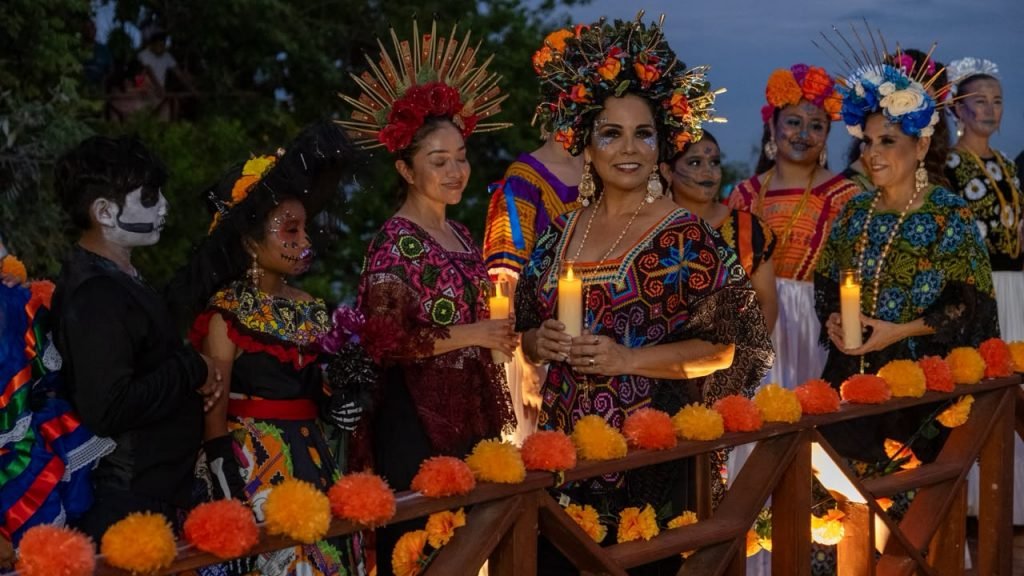
Calderitas, Quintana Roo — The seaside walkway and lookout point in Calderitas filled with color, tradition and Maya cultural expression over the weekend as the town hosted its first Janal Pixán festival, drawing more than 7,000 people.
Governor Mara Lezama Espinosa and Verónica Lezama, honorary president of the Quintana Roo DIF family services system, led the celebration, which officials described as an effort to preserve Day of the Dead traditions, strengthen cultural identity and create new spaces for families to gather.
The event paired Janal Pixán — the Yucatecan Maya observance of the dead — with the catrina figures popularized during Día de Muertos, part of what organizers called the diversity of Mexican culture. Officials said they hope the celebration takes root in the community and is passed down through generations.
Three days of free cultural events
Activities began on Oct. 30 and run through Nov. 1 on Calle Oaxaca, between 24 de Febrero and Tabasco streets. Events start each day at 5 p.m. and are free to families, visitors and tourists.
The program includes a parade of catrinas and charanga bands, altars for the dead, tapetes laid in honor of the holiday, a Camino de las Ánimas, live music, a mobile cinema, an exhibition of literary calaveritas, handicrafts and stalls for local entrepreneurs.
The tour led by Mara Lezama and Verónica Lezama started at Avenida Yucatán at the corner of Calle México, where attendees found offerings titled “La Luz de las Ánimas.” It continued to the lookout point, where catrinas arrived aboard boats decorated for the occasion and sailed across Chetumal Bay to take part in the inaugural edition.
Calderitas aims to become a Janal Pixán reference point
“We want everyone in Quintana Roo, all of Mexico and the whole world to know about this celebration,” Governor Lezama said.
She said the goal, beyond the rehabilitation of Calderitas and its promotion as a tourism draw, is to strengthen the destinations that make up the southern part of the state. She also cited the Barrio Mágico project and the promotion of tourist sites in Othón P. Blanco to attract visitors and revitalize public spaces in Chetumal and the surrounding area.
The program featured a nighttime videomapping projection and altars representing different regions of Mexico, giving families a look at some of the ways the dead are honored across the country.
Activities for children
A space called “Aluxitos” offered children recreational and cultural activities, including puppet theater, face painting and screenings of films such as Coco and The Little Prince. Organizers also held workshops on making piñatas to encourage creativity, learning and family time.
An entrepreneurs’ area offered seasonal foods, other culinary offerings and crafts made by Maya artisans.
Music and tradition
Musical performances featured Diana Rossel and the Caribbean music group TLC (El legado continúa).
The state government and DIF Quintana Roo organized the event in coordination with the Institute of Culture and the Arts and the Secretariat of Finance and Planning.
Among those attending were Yensunni Martínez Hernández, mayor of Othón P. Blanco; Sergio Tomás Uh Tejero, the delegate for Calderitas; federal deputy Saulo Aguilar Bernés; local deputies Diana Gutiérrez and Elda Xix Euán; and other guests. Maya prayer leader Florentina Can Chí led the opening ceremony.
More Culture
- Janal Pixan 2026 Brings Day of the Dead Traditions to Puerto Juárez in Cancún
- Playa del Carmen to Celebrate Janal Pixán With Processions and Monumental Altars
- Cozumel’s Almas con Tradición Festival Returns With Four Days of Day of the Dead Events
- Tulum Archaeological Site Loses Nearly 291,000 Visitors as Quintana Roo Attendance Falls
- Cancún’s Catrinas Parade Set for Friday Night at Puerto Juárez
More Chetumal
- Expofer Chetumal 2026 Closes With K-Paz de la Sierra and Edén Muñoz on Oct. 30 and 31
- Families in Chetumal Mark One Year of Casa Xibalbá Pet Crematorium Fraud With Collective Altar
- Quintana Roo’s 150-Meter Day of the Dead Mural Eyes Guinness Bid
- Free Film Festival to Bring 40+ Movies to Southern Quintana Roo
- Belize Plans 160-Km Railway to Mexico Border, With Feasibility Study Due in Two Weeks