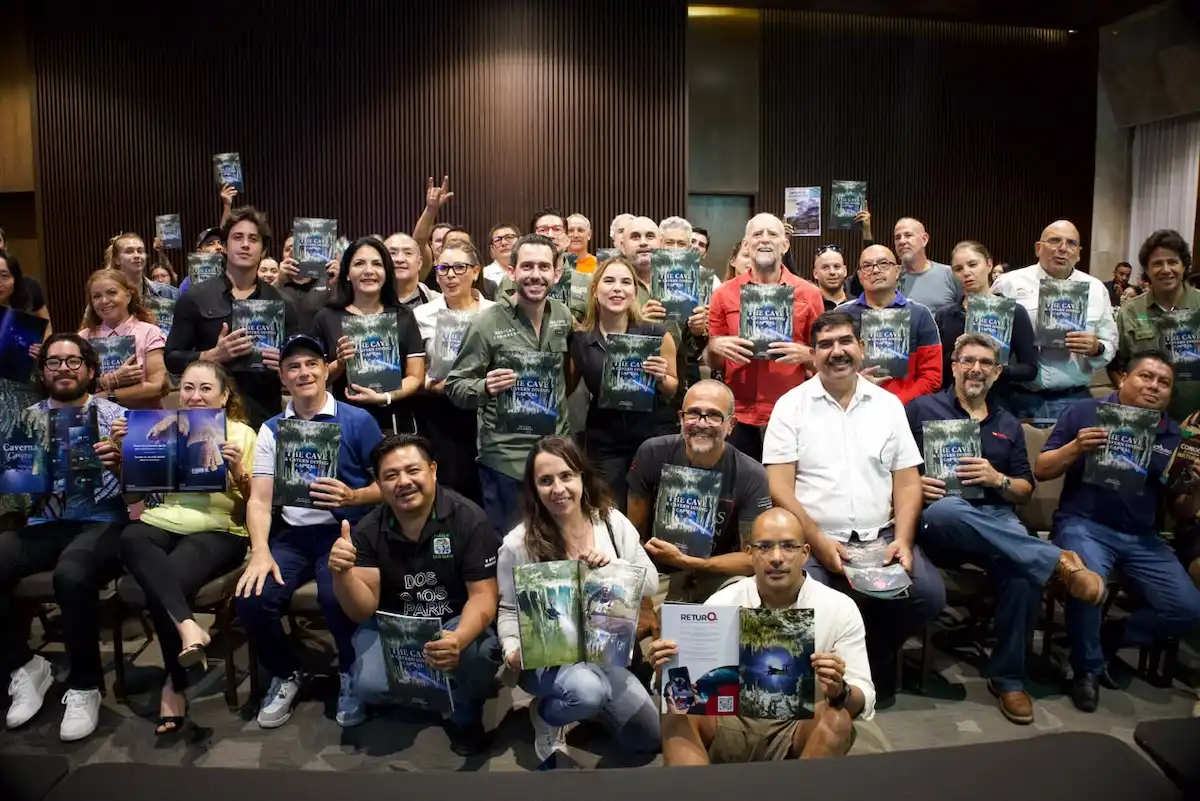
Playa del Carmen — The Secretary of Tourism of Quintana Roo, Bernardo Cueto Riestra, led the presentation of the Guide to Caves and Caverns of the Mexican Caribbean, a second publication that continues the effort begun last year with the first Diving Guide of the destination. The presentation was made during a press conference before representatives of the tourism sector, specialists, diving centers, and media.
The head of the Ministry of Tourism highlighted the importance of showing the world the natural wealth that distinguishes Quintana Roo beyond its beaches and its sun-and-sea attractions. The new publication expands the promotional strategy for a tourism segment that represents significant economic opportunities for guides, instructors, diving centers, and local businesses, while also helping to position the state as the World Capital of Cave and Cavern Diving.
Tourism Data and Market Potential
During 2025, more than 587,000 tourists practiced diving activities in the Mexican Caribbean, representing 2.9 percent of the total visitors to the destination, compared with 2.4 percent registered in 2024. Of these visitors, 55.8 percent were foreigners and 44.2 percent were domestic. Their average stay increased from 7.1 to 7.6 days, reflecting the potential of this segment to attract tourists interested in specialized experiences and longer stays.
In this context, Bernardo Cueto highlighted that continuing these types of initiatives strengthens the destination’s competitiveness and diversifies its tourism offerings.
“With this second guide, we continue an effort we began last year to show the world that the Mexican Caribbean has much more to discover. We will begin promoting this guide at the New Orleans World’s Fair, and as part of the strategy, we will create a diving promotion committee,” he said.
Heritage, Safety, and Responsible Diving
The guide also represents a tool to recognize and value the geological, archaeological, and paleontological heritage safeguarded by the underground systems of Quintana Roo, whose richness makes them unique spaces internationally and whose protection requires the commitment of all sectors involved.
Therefore, the publication promotes the responsible practice of diving in underwater environments, emphasizing preparation, safety, respect for ecosystems, and best practices. It also aligns with efforts to professionalize and formalize the sector through the Quintana Roo State Tourism Registry, known as RETUR-Q, encouraging the participation of accredited tourism service providers.
Recognition and State Strategy
During the presentation, recognition was also given to the collaboration of photographers, explorers, researchers, instructors, diving centers, and specialists who contributed their knowledge and experience to make this second publication possible. Present at the press conference were Alberto Friscione, Luis Leal, and Jerónimo Aviles, who participated in the creation of the guide; Pablo Casas, Undersecretary of Tourism; Miguel Cámara, Director of Sustainable Development Planning at SEDETUR; and Andrés Martínez, Director of the CPTQ.
Under the leadership of Governor Mara Lezama, the State Government is promoting a tourism model that focuses on diversifying experiences, conserving natural heritage, and generating shared prosperity, ensuring that the benefits of tourism reach more communities and families in Quintana Roo.
More Environment
- Flamingo Named Víctor Flies 262 Kilometers Across Yucatán’s Coastal Wetlands
- Dried Starfish Still Sold in Isla Mujeres Despite Permanent Ban
- Quintana Roo Launches No-Investment Solar Fund to Cut Business Power Bills by 30%
- Playa del Carmen Mayor Under Pressure Over Removal of Two 80-Year-Old Trees in Zazil-Há
- Maya Chicle Still Lacks International Registration Two Years After Geographic Indication
More Playa del Carmen
- Armed Robbers Hold Up Super Willys in Playa del Carmen and Flee With 7,000 Pesos
- Kenia Os Free Concert Cost Playa del Carmen 20 Million Pesos
- Playa del Carmen Deploys Security Operation at Cemeteries for Day of the Dead
- Pinta o Muere Fills Playa del Carmen Cemetery With Day of the Dead Mural
- Xcaret Withdraws Injunction Bid Over Use of Maya Symbols at Supreme Court