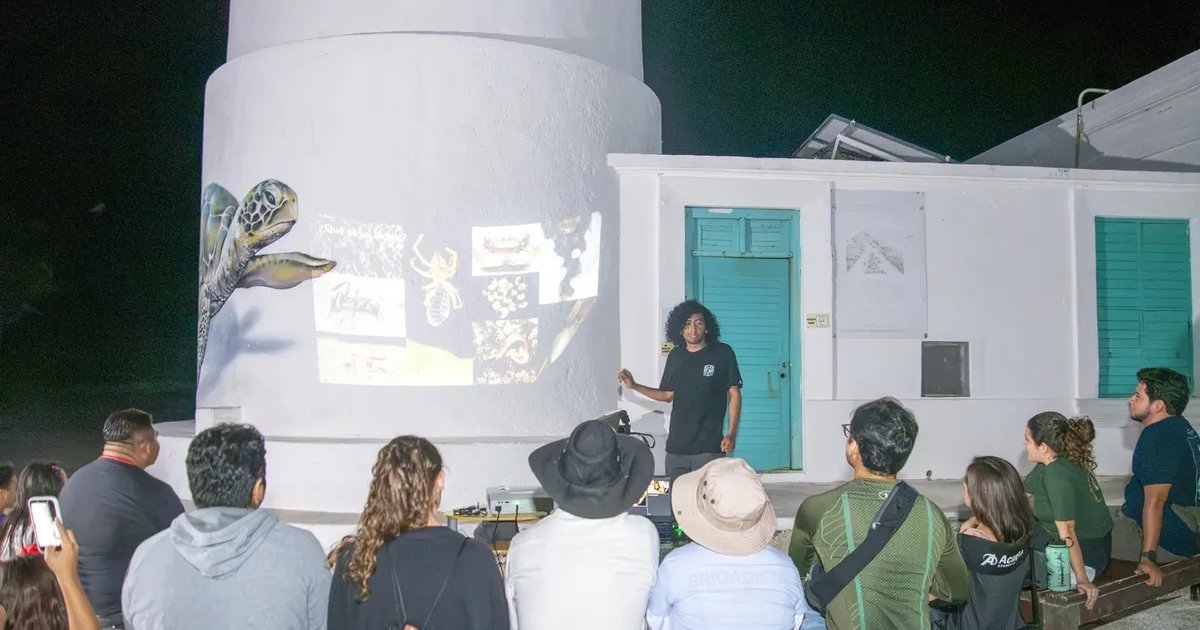
Cozumel, Quintana Roo — The Foundation of Parks and Museums of Cozumel (FPMC) is deepening its collaboration with scientific institutions by opening the Punta Sur Ecotourism Park to studies of insects of medical and ecological importance, and by sharing that work with the public through events such as “Bichos Night.”
The science outreach evening brought together Eduardo Dávalos Becerril, an entomologist and biologist at the National Center for Preventive Programs and Disease Control (CENAPRECE), part of the federal Health Ministry; Ángel Gómez Rivera, of the Entomological Research and Bioassay Unit at the Quintana Roo Health Department; and León Ibarra Garibay, a doctoral student in biological sciences.
The session opened with a welcome from Jesús Benavides Andrade, director of Punta Sur, who thanked the audience for its strong turnout.
Ibarra Garibay spoke first, explaining the role ants play in ecosystems and their contribution to pest control. He also highlighted the ecological and cultural importance of melipona bees, known as Maya bees and considered sacred by the Maya, stressing the need to understand and protect them.
Dávalos then presented his research on the kissing bug associated with Chagas disease on the island. He said the work aims to determine what these insects feed on and to gather data that can establish whether local conditions might pose a risk to human health. So far, he said, the insects have been found mainly in jungle areas.
Gómez Rivera addressed the study of mosquitoes and the importance of entomological surveillance to identify which species are present in the territory. Together, the talks showed how insect research serves both biodiversity knowledge and public health prevention.
All three researchers agreed that Punta Sur is a valuable site for studying Cozumel’s wildlife, and they thanked the FPMC for the access and support that allows their work to continue. They also praised the foundation’s close ties to the community and the public’s interest in learning more about insects and their place in the environment.
As part of the program, attendees learned about the different types of traps and monitoring methods used in scientific fieldwork, then joined a guided walk through the park’s natural areas. Organizers said the format linked the specialists’ explanations to direct observation while encouraging respect for the animals and discouraging handling them without proper guidance.
More Environment
- Semarnat Approves New Beach Club Inside Puerto Morelos Reef Park
- Navy Crews Clear 3.5 Tons of Trash From Isla Mujeres Road to Laguna Makax
- Neighbors Form Human Wall to Block Removal of Century-Old Tree in Playa del Carmen
- Fortaleza Energy Proposes 170 Million Peso Solar Park in Yucatán
- ECB Desarrollos Sells NATIVA Lots in Playa del Carmen While Environmental Permit Pending
More Cozumel
- Cozumel Cruise Arrivals Rise 13.24% as September Passengers Jump 18.82%
- Cozumel’s Almas con Tradición Festival Returns With Four Days of Day of the Dead Events
- Mexico’s Conanp Deems Royal Caribbean’s Cozumel Beach Club Unviable
- IMSS Approves Land for New 90-Bed Hospital in Cozumel
- Cozumel’s Punta Sur to Host ‘Bichos Night’ Insect Event on Oct. 29