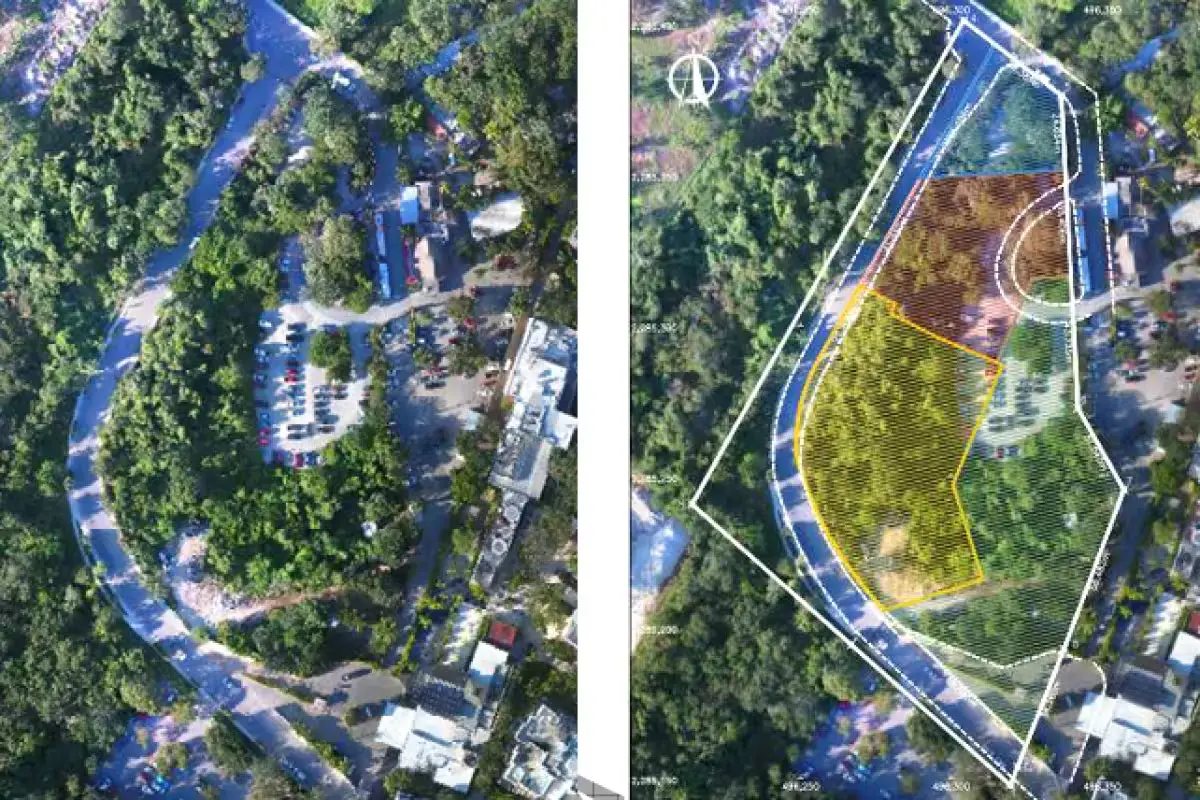
Playa del Carmen, Quintana Roo — Mexico’s Secretariat of Environment and Natural Resources (Semarnat) has authorized the environmental impact statement for a third phase of the Hotel The Fives complex, even though construction had already begun without the required federal permits.
The project, promoted by Sierra de Bernia, S.A. de C.V., includes two hotels with 429 rooms, a beach club, roadways and additional facilities on a property in the El Limonar development, near kilometer 295+100 of federal highway 307. The total investment is estimated at $40 million, with $1.8 million earmarked for mitigation measures. The works are scheduled to take two years, with a projected operational lifespan of 50 years.
The expansion has sparked controversy because public access to Xcalacoco beach was swapped for an alternative road, a move approved by the municipal government. Residents say they now have to walk nearly two kilometers along a road without sidewalks to reach the shore. The access point was originally opened by the municipality in 2015 to guarantee free passage to public beaches.
“The intended use of the land is the construction and operation of a hotel on lot 3, including a building, lobby, pools, walkways, service areas and green spaces, according to the master plan, considering areas of native vegetation that offer tourists the enjoyment of the valuable ecosystems and natural resources of the area,” the approved environmental impact document states.
Locals allege that the hotel consortium has gradually restricted community access to the coast over more than 17 years. In early December 2023, the company acquired additional land, and residents say its representatives have attempted to block the path to the sea. Protests have been led by activist Antonio Saldívar, who locals claim has received intimidation from hoteliers. Supporters have organized a solidarity fund to help cover his legal defense costs.
“The hotel intends to move its guests between its existing facilities and those recently acquired, hence the well-founded suspicion that they want to close the road and public beach access,” Saldívar said.
The Xcalacoco access conflict is part of a broader pattern of beach privatization that has persisted for two decades across the Mexican Caribbean.
More Development
- Quintana Roo Urges Homebuyers to Verify Property Records Before Buying
- Cancún Weighs Legal Action Against Owners of Abandoned Properties as Census Finds 20 Downtown
- Playa del Carmen New Urban Development Plan Approval Slated for Early 2027
- Fitch Assigns AA+ Credit Rating to Cozumel’s Banobras Debt
- Hyatt Zilara Cancún Reopens After $80 Million Renovation
More Playa del Carmen
- Félix the Dog Rescued from Seized Villamar Home
- Two Women Arrested on Drug Dealing Charges in Playa del Carmen
- Prosecutors Seek Public’s Help to Find 24-Year-Old Missing Man in Playa del Carmen
- Facade Chunks Fall Onto Playa del Carmen’s Quinta Avenida, Prompting Closure
- Quintana Roo Hands Two Artisan Carts to 33 Craftspeople in Playa del Carmen