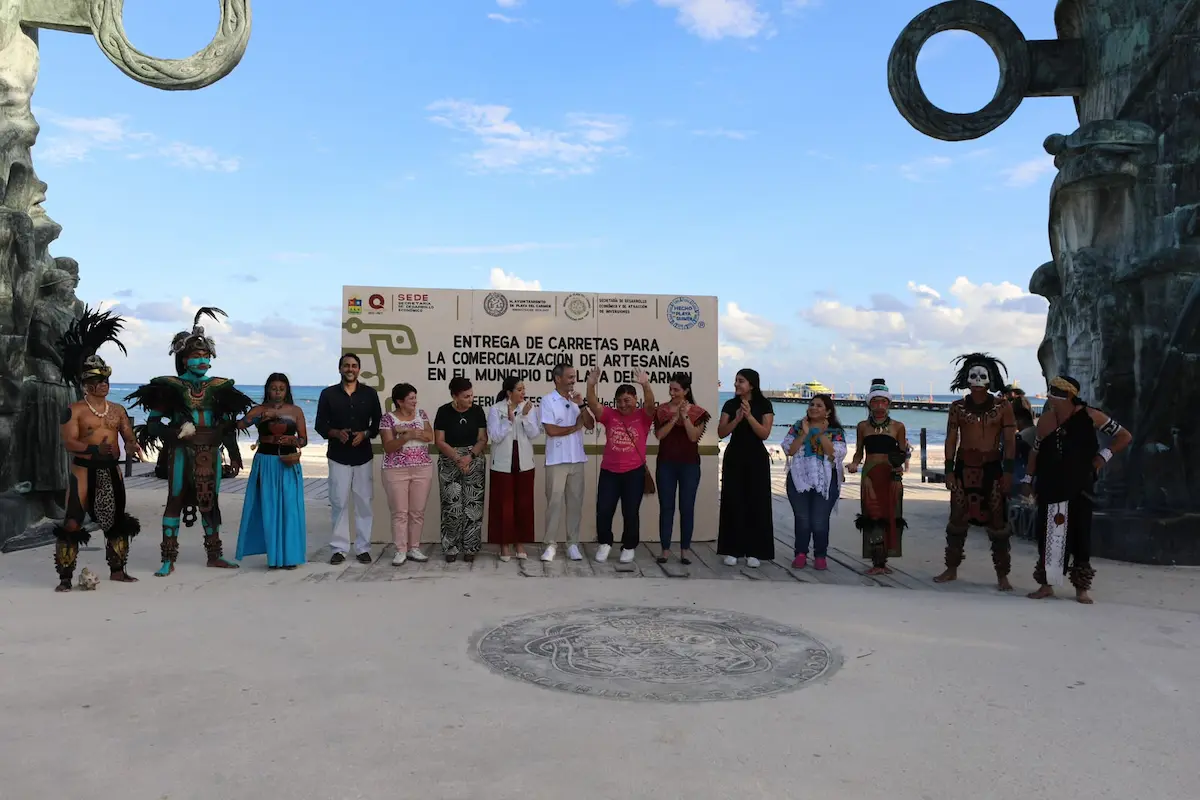
Playa del Carmen, Quintana Roo — The Quintana Roo state government delivered two new artisan carts to 33 craftspeople from five municipalities during the Hecho en Playa Artisan Fair at Parque Fundadores in Playa del Carmen.
The handover is intended to strengthen the incomes of artisan families and create new outlets for locally made goods. The beneficiaries come from Playa del Carmen, Tulum, Bacalar, Cozumel and Felipe Carrillo Puerto.
The initiative forms part of the Nuevo Acuerdo por el Bienestar y Desarrollo de Quintana Roo, a development program promoted by Governor Mara Lezama Espinosa that centers on shared prosperity and social justice.
Paul Carrillo de Cáceres, head of the state Secretariat of Economic Development (SEDE), said the carts help diversify the state economy by opening promotion and sales spaces that reinforce the Hecho en Quintana Roo brand, recognize artisans’ skills and bring their products to new markets, drawing on the state’s tourism appeal.
Diana Estefanía Hernández Flores, Playa del Carmen’s secretary of economic development and investment attraction, said the carts offer a chance to boost artisan families’ earnings and preserve local traditions. She credited Lezama and municipal president Estefanía Mercado Asencio with creating more opportunities for economic growth.
Sales Points Spread Across Tourist Destinations
As part of the same strategy, SEDE has set up sales points in tourist destinations and municipal seats including Bacalar, Chetumal, Puerto Morelos and now Playa del Carmen. The aim is to widen marketing opportunities, strengthen local consumption and connect Quintana Roo-made products with new buyers.
During the event, artisans and producers displayed a range of goods representing the state’s cultural and productive diversity, including jewelry, wooden utensils and decorative pieces, hammocks, blouses and embroidered huipiles, bejuco vine crafts, honey and sauces.
More Business
- Playa del Carmen Business Chamber Warns of Fake Discounts Ahead of El Buen Fin
- Yucatán Poultry Farmers to Cull 225,000 Birds After Avian Flu Outbreak in Umán
- Cancún Plans Cuban Cultural Corridor on Avenida Yaxchilán to Turn Migration Into Tourism
- End of Electricity Subsidies Pushes Up Prices in Tabasco, Yucatán and Quintana Roo
- Viva Aerobus Trims Frequencies as New Pratt & Whitney Engine Inspections Cut Aircraft Availability
More Playa del Carmen
- Japan to Back Mexico With Technology and Funding to Fight Sargassum and Clean Up the Caribbean Coast
- Playa del Carmen Weighs Early Payments on 500 Million Peso Debt
- Residents of Playa del Carmen’s Las Torres de Paz Demand School, Land Titles and Relocated Power Lines
- Playa del Carmen Aims to Approve New Urban Development Plan by Early 2027
- Playa del Carmen Reviews Playaparq Parking Meter Concession After Complaints