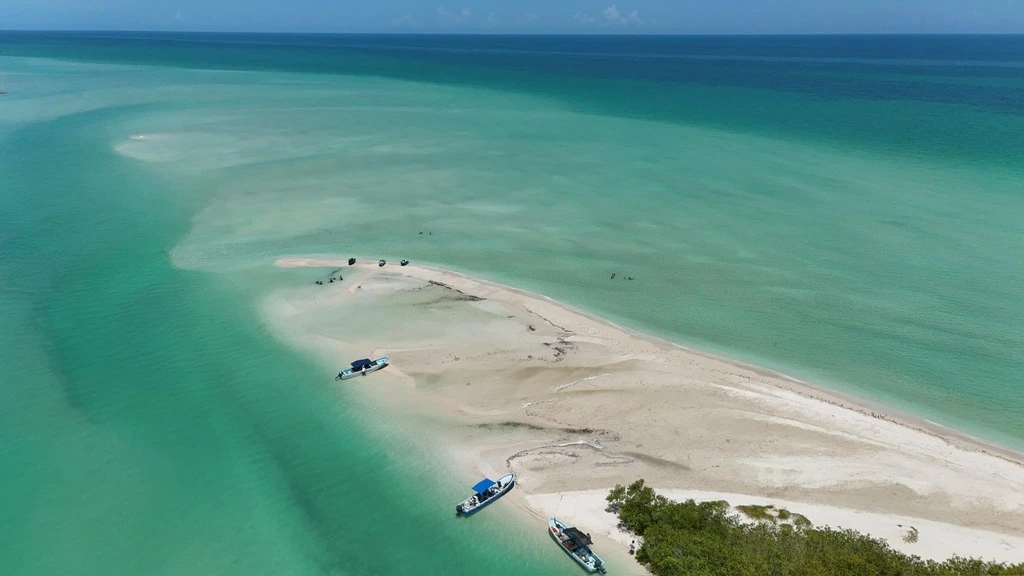
Chuburná Puerto, Yucatán — The Yucatán government has asked federal environmental authorities to inspect a large residential development in Chuburná Puerto following complaints that construction work is damaging coastal dunes, wildlife habitat and a natural barrier against storms.
The controversy centers on the Las Dunas tourism complex, a beachfront development in the municipality of Progreso. Real estate listings describe the project as six towers containing 74 two- and three-bedroom apartments, along with parking, swimming pools, a gym, paddle court and other amenities. The development is being marketed through several property agencies, with units advertised in the multimillion-peso range.
Residents and the environmental group Salvemos las Dunas say heavy machinery has been clearing coastal vegetation from the site in recent weeks. The group has called for the work to be suspended while authorities determine whether construction is following its environmental permits.
News reports based on the group’s complaint say the overall property covers more than 92,000 square meters and includes coastal dunes, wetlands and mangrove habitat. The project plans also include roads, commercial areas and parking facilities.
Activists have requested information from the federal Secretariat of Environment and Natural Resources, known as Semarnat, about the project’s environmental-impact authorization, its wildlife-management requirements and the government offices that approved the work. They are also collecting signatures in support of suspending construction and conducting an environmental audit.
The Yucatán government responded Saturday by formally requesting that Semarnat and the Federal Environmental Protection Agency, or Profepa, inspect the property and verify compliance with federal authorizations.
State officials said the project has environmental documentation at the federal level, but stressed that federal agencies are responsible for confirming that the work remains within the conditions established by those permits.
The state’s urban and environmental feasibility rulings require more than half of the property to remain under conservation, according to an official government statement.
Those restrictions cover 45,728 square meters of coastal wetland and 2,880 square meters of federal maritime-terrestrial land. The protected portions may not be occupied or modified. Mangroves and their habitat must also remain intact under the conditions imposed by the state and Mexico’s NOM-022 environmental standard.
“The state government will maintain permanent oversight of compliance with state conditions and will not permit any impact on the mangrove or coastal dune,” the government said.
The statement stops short of ordering construction halted. Because environmental reviews involving coastal wetlands, mangroves and the federal shoreline fall under federal jurisdiction, any inspection, suspension or sanction would generally have to come from Semarnat or Profepa.
As of Sunday, neither federal agency had publicly released the results of an inspection or announced that the project had been suspended.
Why The Dunes Matter
Coastal dunes are ridges of wind-deposited sand held together by grasses, shrubs and other salt-tolerant vegetation. Their appearance can make them seem empty or undeveloped, but the vegetation traps moving sand and helps stabilize the shoreline.
During hurricanes, tropical storms and periods of high surf, dunes can absorb part of the force of waves and storm surge. Removing their vegetation or changing their shape can increase erosion and leave inland areas more exposed to flooding and wave action.
The Chuburná dune system also provides habitat for wildlife found along the northern Yucatán coast. Salvemos las Dunas identified the Mexican sheartail hummingbird (Doricha eliza) and the Yucatán wren (Campylorhynchus yucatanicus) among the species associated with the area. The hummingbird is listed as endangered and the wren as threatened under Mexico’s NOM-059 protected-species standard, according to Líneas Emergentes.
Residents also say sea turtles use the adjoining beach for nesting. Mexico’s sea turtles are protected under federal wildlife law, and construction near nesting areas can face restrictions involving artificial lighting, vehicle access and disturbance of nests. However, authorities have not released a survey establishing how many nests are found within or immediately beside the development property.
Environmental advocates are seeking a broader assessment of how the project could affect dune vegetation, wildlife, groundwater filtration and the surrounding coastal system. They also want any damaged areas restored if inspectors determine that clearing occurred outside the authorized construction zone.
The dispute comes amid rapid residential development along the Yucatán coast, where beachfront communities near Progreso have attracted growing demand for vacation homes and investment properties. Conservation groups argue that reviewing each project separately can overlook the cumulative effects of roads, condominium complexes and vegetation removal across the coastline.
For now, Las Dunas appears to retain its state and federal documentation, but its construction is facing increased government scrutiny. The next step rests with Semarnat and Profepa, which must determine whether the work underway matches the approved plans and respects the conservation areas covering more than half of the property.
More Development
- Quintana Roo Urges Homebuyers to Verify Property Records Before Buying
- Cancún Weighs Legal Action Against Owners of Abandoned Properties as Census Finds 20 Downtown
- Playa del Carmen New Urban Development Plan Approval Slated for Early 2027
- Fitch Assigns AA+ Credit Rating to Cozumel’s Banobras Debt
- Hyatt Zilara Cancún Reopens After $80 Million Renovation