
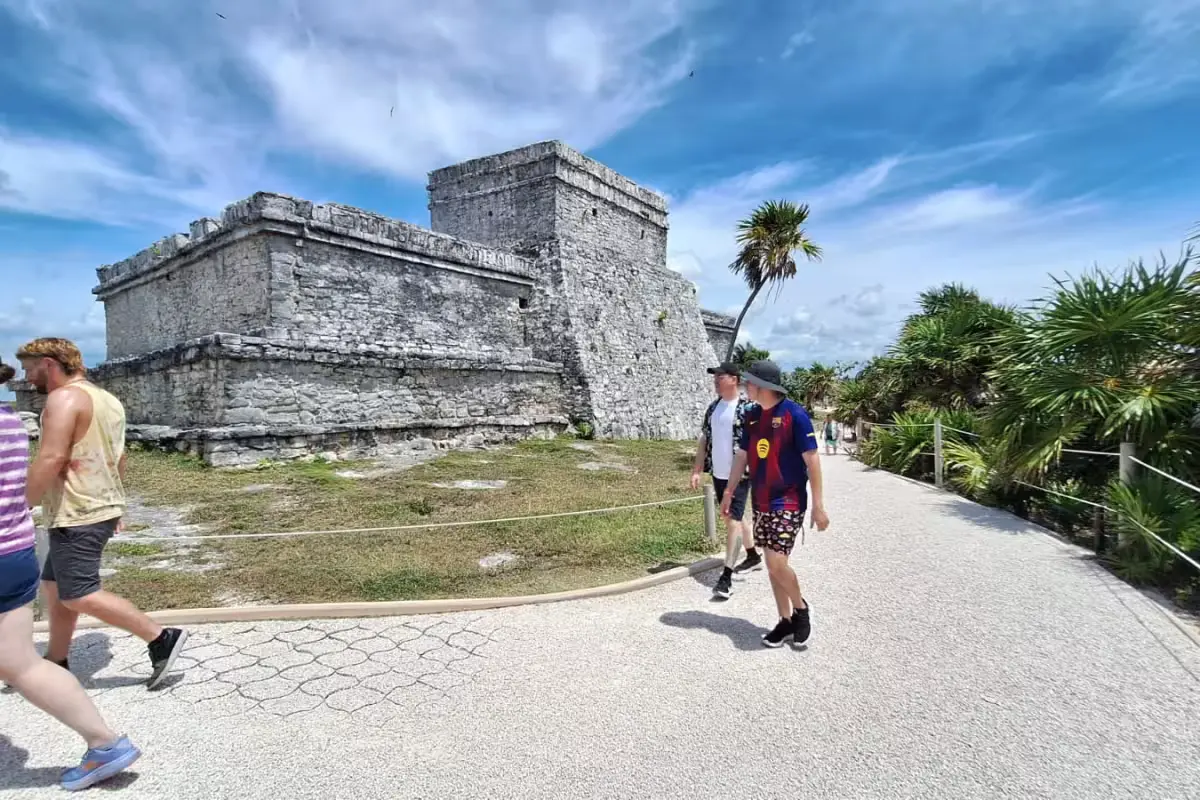
Cancún, Quintana Roo — Quintana Roo has placed among the top five states nationwide for interventions on historical heritage sites through the federal Archaeological Zones Improvement Program (Promeza), according to Margarito Molina, director of the National Institute of Anthropology and History (INAH) in the state.
“Quintana Roo was among the five states where Promeza was applied and the one that intervened in the most sites,” Molina said.
The official announced that new dissemination strategies will be promoted to highlight the state’s historical wealth, including a specialized magazine and video programs to be distributed nationally. These will focus on the 14 sites open to the public: Tulum, Cobá, San Gervasio, San Miguelito, El Rey, Muyil, Xel-Há, El Meco, Oxtankah, Kohunlich, Dzibanché-Kinichná, Chacchoben, Ichkabal and Chakanbakán.
Under the Federal Law on Monuments and Archaeological, Artistic and Historic Zones, all archaeological monuments — movable and immovable property from pre-Hispanic cultures, as well as associated human remains, flora and fauna — are owned by the nation. The law grants INAH the authority to authorize commercial use of these sites, meaning indigenous communities do not have that right.
In January 2025, then-INAH Director General Diego Prieto Hernández highlighted an investment of 1 billion pesos (about $50 million) for 10 sites in Quintana Roo, as part of actions linked to the construction of the Maya Train.
The Promeza program aimed not only to improve access and conservation conditions but also to strengthen cultural and educational tourism in the state, according to the agency.
Molina said the now-completed program included research, creation of new service units and equipment, among other work. He also noted that two museums were built: the Museo de la Costa Oriental in Tulum and the Museo Histórico in Felipe Carrillo Puerto, achieving 15 goals in the state through Promeza.
Notable sites include Cobá, home to Nohoch Mul, the tallest pyramid on the Yucatan Peninsula, set among lagoons and jungle; San Gervasio on Cozumel island, an important pilgrimage center dedicated to the goddess Ixchel; Kohunlich, known for the Temple of the Masks, which preserves large stucco faces honoring the sun god; and Muyil, located in the Sian Ka’an Biosphere Reserve and connected by crystal-clear water channels.
More Business
- Cancún Airport Transporters Blame ASUR for Steep Fees
- Akumal Halts Turtle Swim Tours Through September
- Mexico’s Treasury Seeks Power to Ban Cash Payments Sector by Sector
- Quintana Roo Civil Protection Warns Against Fireworks Ahead of Independence Day
- Business Leaders Urge Playa del Carmen to Diversify Economy as Tourism Slumps
More Quintana Roo
- Mexico Assigns $110 Million Navy Budget to Fight Sargassum in Quintana Roo
- Quintana Roo to Pilot Child Protection Protocol for Tourism Sector in October
- Sheinbaum Announces 187 Primary Care Clinics and Major Projects in Quintana Roo
- Quintana Roo Records 29,413 Sea Turtle Nests at Season’s Midpoint
- Quintana Roo Reports 1,200 Screwworm Cases as Officials Await Sterile Fly Release
