
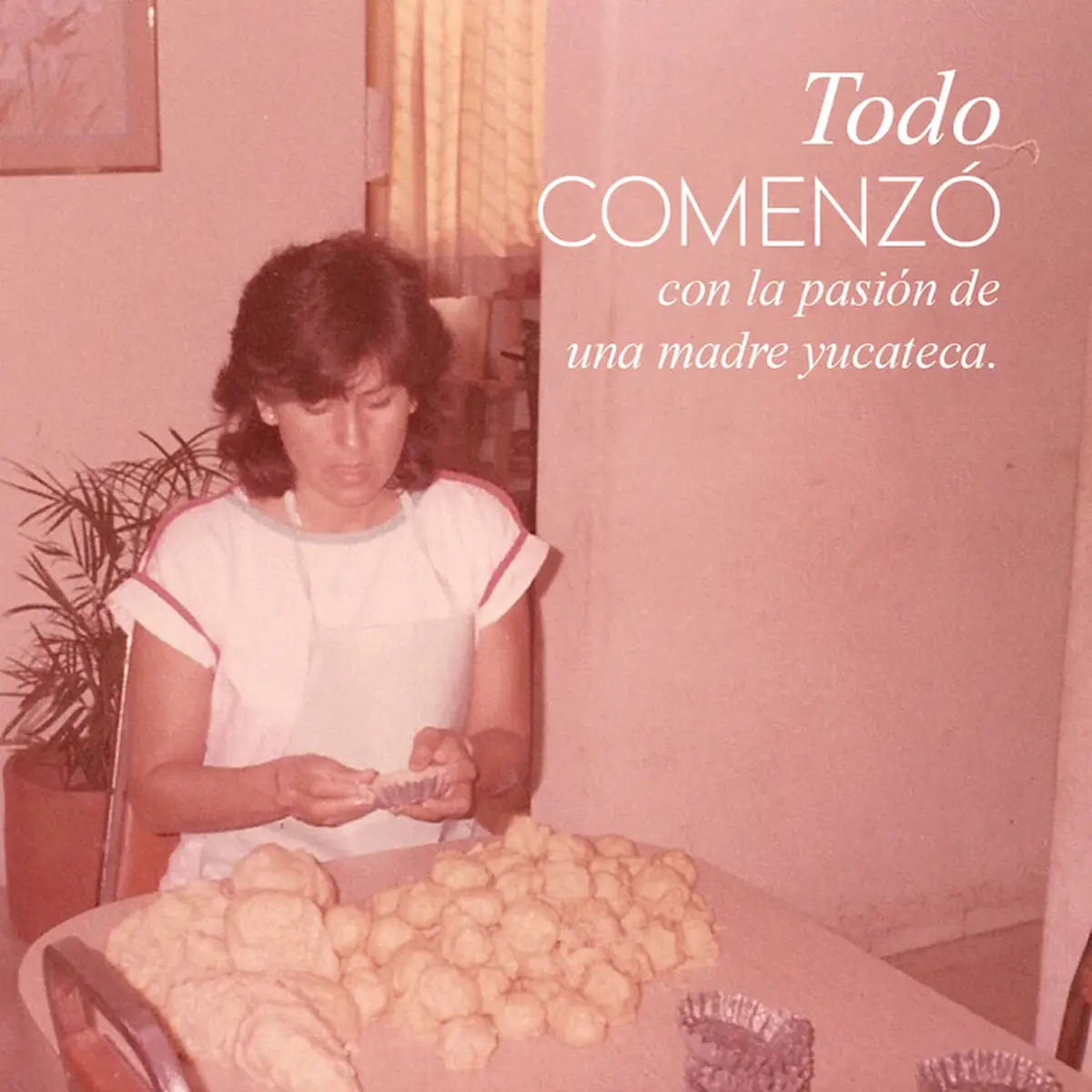
Merida, Yucatan — Before becoming one of the most recognized businesswomen in southeastern Mexico, Tere Cazola was a young mother living day to day, raising four children on a teacher’s salary.
Her story begins not in an industrial kitchen or with a business plan, but in a modest home. Her mother was a seamstress who treated every stitch like haute couture; her father drove a taxi and understood work as a daily responsibility. In that environment of discipline, order, and scarcity, the character that would later sustain a company was forged.
There were no luxuries, no toys, no margin for error. She walked to school under the sun with only the essentials, knowing no other reality. But in that setting she learned something that would define everything: do things right, even when no one is watching.
At 16 she married; at 17 she had her first child. Any personal project seemed to take a back seat. Yet she continued studying, working, and building a life amid responsibilities that came too early. She finished middle school with her baby in her arms. Later, with three children, she attended high school at the Technological Institute of Merida and trained as a tourism technician.
Without formal training, she became a middle school teacher, a job she held for eight years while supporting her household. But stability was not enough. Expenses grew, especially with four children in private school — a decision she never wavered on.
The turning point came on March 6, 1985. There was no consulting, no strategy, no financial backing — just a conversation between neighbors and an urgent need for income. That day, Tere took the money set aside for her family’s food — 250 pesos — and invested it in ingredients to make pies.
She did not know how to sell, did not know what to charge, had no business experience. But she understood something more important: the product had to be good. That same night she baked her first pies. She was not looking for immediate profit; she was looking for an answer — to know if people actually liked them.
They bought them all. But what made the difference was not that first sale, but the orders that came the next day.
From there began a process that for years rested on a simple and demanding dynamic: work, sell, reinvest, improve. She would leave teaching, buy supplies, tend to her children, handle household chores, and at night bake without rest — no formal structure, no backup but her own discipline.
She never turned down an order. If she did not know how to make something, she learned. If someone asked for a new product, she developed it. Her growth did not respond to market studies but to direct demand from those who tasted her work.
Along the way there were mistakes, improvisations, and exhausting days — burns, failed attempts, long hours in the kitchen. It was a period of entirely empirical learning. But there was also something rarely mentioned in success stories: financial discipline.
From the start, every peso that came in was reinvested. There were no loans, no investors, no partners. All growth was financed by what the business itself generated. That decision set the course.
Over the years, the project ceased to be a side activity and became the center of her life. The company grew steadily, expanding its product catalog and building a structure that today includes more than 100 branches and over 90 varieties of desserts.
But business growth was not without personal blows. The hardest was the loss of one of her children, murdered — an event that marked a before and after in her life. Far from stopping her, that episode redefined how she faced life. The company continued, not as an escape, but as a way to stay standing.
Today, the Tere Cazola brand is part of celebrations, family gatherings, and everyday moments in thousands of homes. But behind that recognition is a story built not on ease, but on difficult decisions, daily perseverance, and a clear vision: move forward without depending on anyone.
In an environment where many businesses grow leveraged by debt or outside investment, her case stands out for a different logic: grow only with what you have, without compromising the future.
Tere Cazola has scaled her operation to consolidate a network of 100 strategic branches in Yucatan, Campeche, Quintana Roo, Tabasco, Mexico City, and the State of Mexico. This expansion is supported by a workforce of more than 1,000 employees and a mass production infrastructure covering over 3 hectares in the Uman industrial corridor.
The plant has the technical capacity to process and distribute more than 35 tons of pastries weekly, ensuring standardization of a catalog that includes over 90 high-end product varieties. On the corporate side, the firm stands out for a self-funded growth model, avoiding the brand dilution that comes with mass franchising.
Its economic relevance has been certified by global accelerator Endeavor, which classifies it as a high-impact company with logistics dominating the main airport retail points in the southeast. Although its valuation remains private, its unit volume and regional market dominance position it as the most solid fine pastry corporation with the greatest scaling capacity in the country.
More Business
- Cancún Airport Transporters Blame ASUR for Steep Fees
- Akumal Halts Turtle Swim Tours Through September
- Mexico’s Treasury Seeks Power to Ban Cash Payments Sector by Sector
- Quintana Roo Civil Protection Warns Against Fireworks Ahead of Independence Day
- Business Leaders Urge Playa del Carmen to Diversify Economy as Tourism Slumps
