
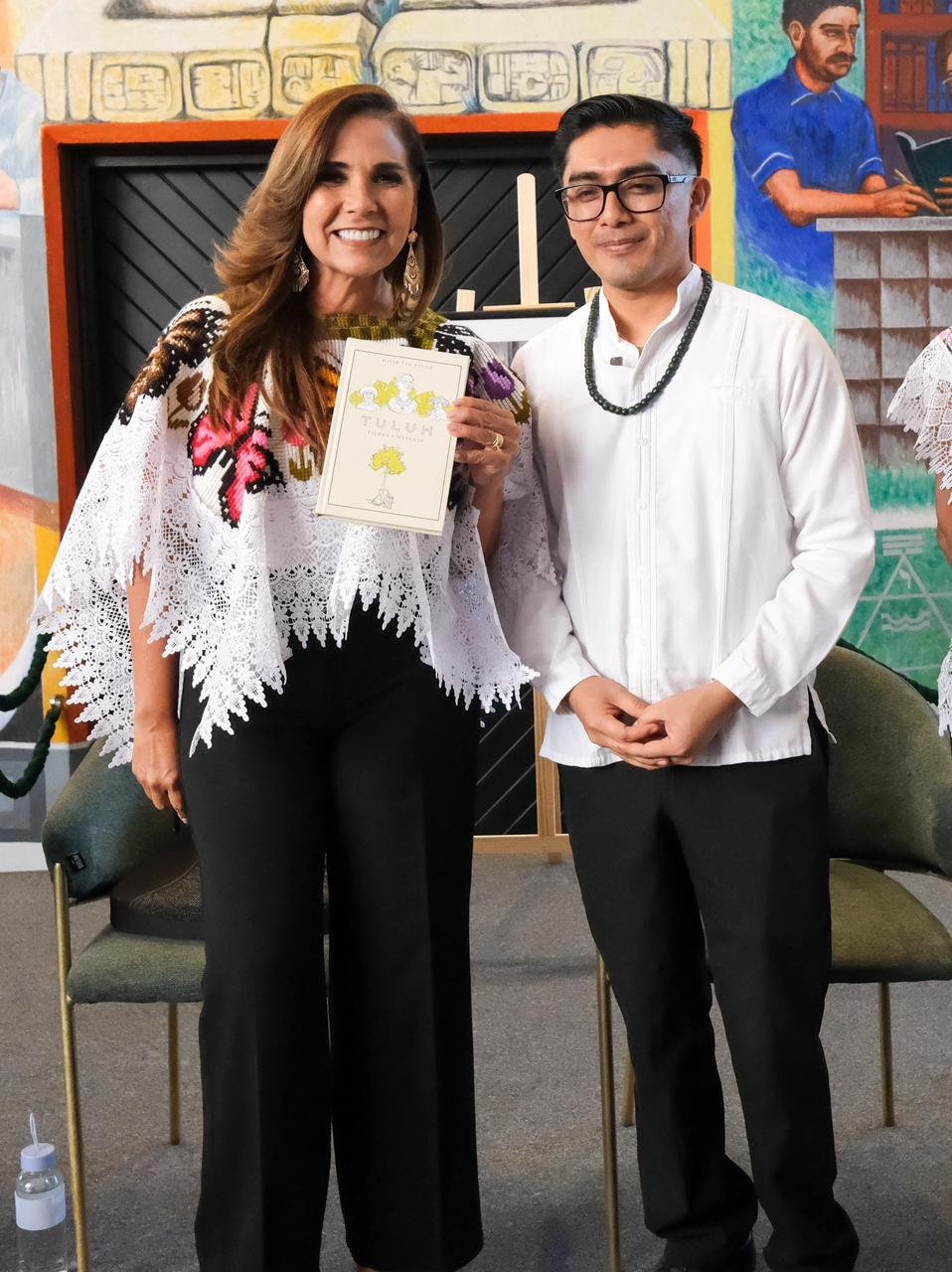
Chetumal, Quintana Roo — Governor Mara Lezama presented the book “Tulum, tierra y manglar” by author David Manances Tah Balam, a work that reconstructs the history of the Tulum region through the voices of its own communities.
The event took place in the lobby of the state congress, where Lezama emphasized that the book offers a different perspective on history by going beyond documentary records to explore daily life, oral traditions, and knowledge passed down through generations.
She highlighted the recovery of historical figures like María Uicab, a Maya leader and priestess during the social war, whose role she said had been overlooked for years. “This not only rescues history, it corrects a painful omission,” Lezama stated.
The governor noted that the work also helps make visible the role of women in history, aligning with a current era where women hold leadership positions, as seen nationally with President Claudia Sheinbaum, female legislators, mayors, and magistrates.
Lezama recognized the author’s work, which began with research in his own community in 2014, giving authenticity and roots to the narrative.
She stressed that while Tulum is now one of the world’s most important tourist destinations, it’s crucial not to lose sight of its historical and cultural origins. In this sense, the book serves as a bridge between past and present and as a tool to strengthen collective identity.
“Today Tulum, that tourist destination, in this book reminds us that before tourism there was history, there was community, there was living culture, origin, that remains present and that it’s up to all of us to keep it present, because no one, absolutely no one, knows where they’re going if they don’t recognize and know where they come from, because development must respect identity, must recognize where we come from and must include those who have been part of this history from the beginning,” Lezama said.
Deputy Renán Sánchez Tajonar, president of the Board of Government and Political Coordination of the XVIII Legislature, highlighted the book’s importance for Tulum’s history, calling it living history that didn’t begin in books but in people’s memory, in grandparents’ words, and in community daily life.
Deputy Silvia Dzul Sánchez, president of the Indigenous Development Commission, read the author’s biography and invited him to formally present his work to the audience, which included the honorary president of DIF Quintana Roo, Verónica Lezama Espinosa; magistrate Heyden Cebada Rivas, president of the Superior Court of Justice; Othón P. Blanco municipal president Yensunni Martínez Hernández; Gran Consejo Maya president Simón Caamal Coh; legislators; and municipal presidents.
More Lifestyle
- Félix the Dog Rescued from Seized Villamar Home
- Mexican Caribbean Has Lost More Than 70% of Its Corals, UNAM Scientist Warns
- Sargassum Barrier Installation Begins in Puerto Aventuras
- Checo Pérez to Reach 300 Formula 1 Grands Prix in Mexico City
- What Salt, Water, Candles and Flowers Really Mean on a Day of the Dead Altar
More Tulum
- Tulum Guarantees Pay, Benefits Amid Protests
- Cave Divers Push to Revive Jacinto Pat Museum in Tulum to Showcase Caves and Underground Rivers
- Gunmen Fire on Hotel Facade in Tulum’s La Veleta, No Injuries Reported
- Cancún Named World’s Most Active City in World Wellness Weekend 2026
- Tulum Drivers Push to Overhaul Traffic Rules Over Costly Towing
