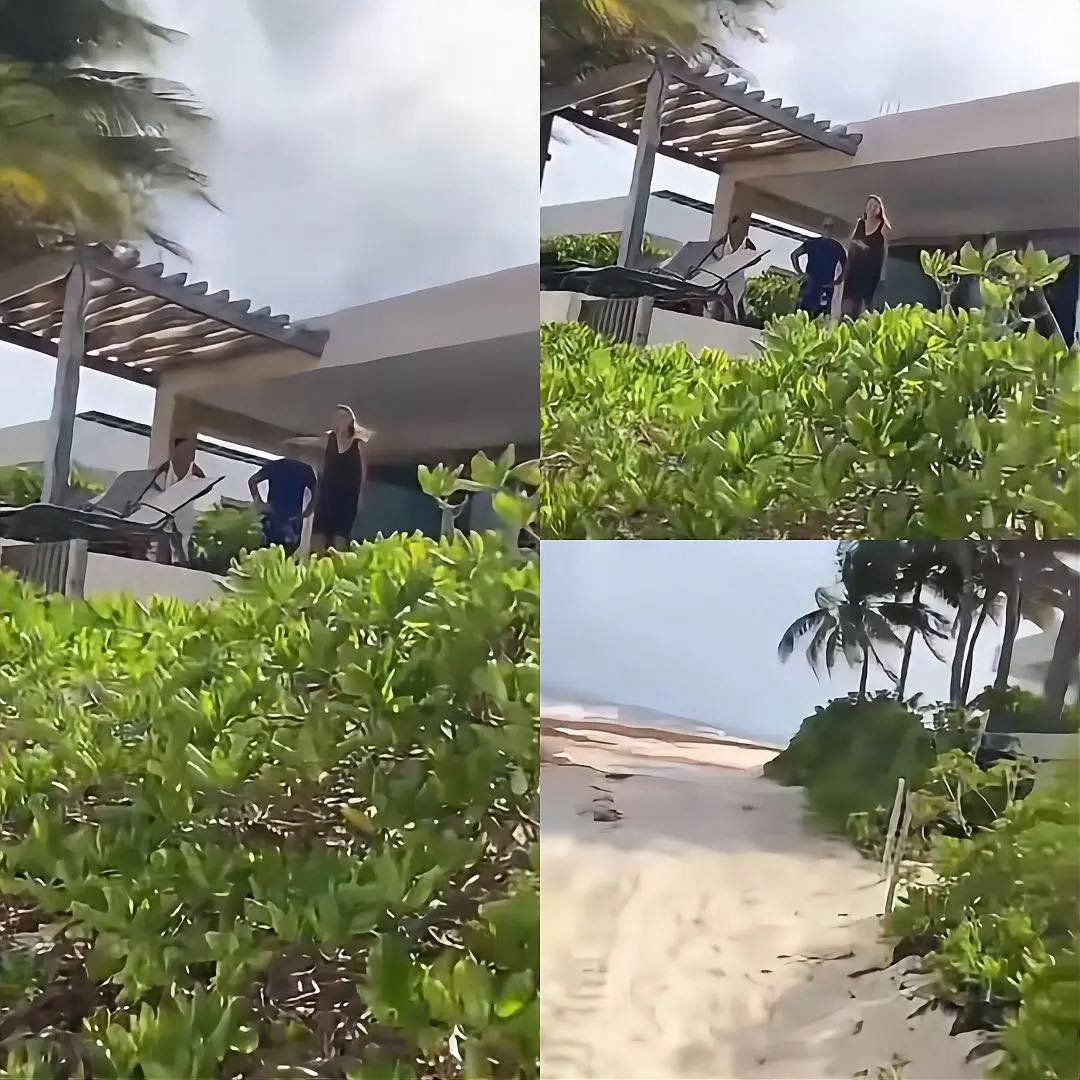
Playa del Carmen, Quintana Roo — A video circulating widely on social media has reignited frustration over beach access in the Riviera Maya after a foreign woman in Playacar allegedly tried to remove people from the beach in front of her home, claiming the sand and sea belonged to her.
The incident was reported by several social media news pages and even picked up by TV Azteca Michoacán, which described the woman as a foreign resident who allegedly insulted people on the beach and told them the area in front of her property was private. The video has circulated heavily in local Facebook and Instagram groups, where it has generated anger and renewed discussion about foreign residents, beachfront development and the public’s right to use Mexico’s beaches.
As of publication, no official statement from the Municipality of Playa del Carmen, ZOFEMAT authorities, PROFEPA or Playacar’s homeowners association had been found confirming whether a formal complaint has been filed or whether any enforcement action has been taken. The identity and nationality of the woman in the video have also not been independently confirmed.
What is clear is the law. In Mexico, beaches are not private property. The General Law of National Assets establishes that access to maritime beaches and the adjoining Federal Maritime Terrestrial Zone cannot be restricted, blocked, conditioned or inhibited except in specific cases established by regulation. The law also provides sanctions for people who obstruct public access, with fines ranging from 3,000 to 12,000 times the current UMA, Mexico’s unit used to calculate fines and penalties.
The Federal Maritime Terrestrial Zone, commonly known as ZOFEMAT, is the strip of land 20 meters wide along the beach, measured from the high-tide line where the land is flat enough to be transitible. It is federal property. Private homes, hotels, beach clubs or residential developments may border that zone, and some may hold concessions for certain uses, but that does not make the beach itself private. (Gob.mx)
That distinction is often misunderstood in coastal destinations like Playa del Carmen. A beachfront homeowner may own land up to a legal boundary, and a hotel may have a federal concession for chairs, palapas or services, but the sand and access along the coast remain public under Mexican law. A concession is permission to use or manage part of the federal zone under certain conditions. It is not ownership of the beach.
The Playacar video struck a nerve because it fits into a broader pattern of disputes along Mexico’s coastline, where hotels, gated communities, beach clubs and private developments are often accused of making public beaches feel effectively private. In some cases, access is restricted through gates, security checkpoints, restaurant minimums, parking controls or claims that only guests or residents may pass through. The federal government has repeatedly stated that Mexico does not have private beaches, though enforcement remains uneven in practice.
Playacar is a particularly sensitive setting for this kind of dispute. The development sits just south of central Playa del Carmen and includes hotels, private residences, gated streets and beachfront properties. While the beach can be reached by walking along the shoreline from central Playa del Carmen, inland access is more complicated because Playacar itself has controlled entrances. That makes the difference between access to the beach and movement through private or controlled residential streets especially important.
This is where many beach disputes become messy. Mexican law protects free transit on the beach and ZOFEMAT, but it does not automatically give the public the right to cross through someone’s private home, hotel lobby or condominium property to get there. Where there is no public access route, authorities may need to negotiate or establish access points. The 2020 reforms to the General Law of National Assets strengthened the principle that beaches must be accessible, but the practical reality still depends on enforcement and clearly marked public routes.
PROFEPA, the federal environmental enforcement agency, says complaints involving beaches, ZOFEMAT and land reclaimed from the sea can be filed through its public reporting system. The agency also conducts inspections related to the use of the federal maritime zone and the protection of free transit on beaches.
The anger around the Playacar video also reflects a growing local sensitivity around how foreigners behave in Mexico’s coastal communities. The phrase “otra de extranjeros,” used in the viral posts, captures the frustration some residents feel when visitors or foreign homeowners are seen as ignoring local laws, public rights or basic respect. Still, the legal issue is not nationality. A Mexican homeowner, foreign resident, hotel or business would be equally unable to claim ownership of the beach or sea.
For now, the Playacar case remains a viral incident rather than a fully documented legal complaint. But the public response shows how quickly beach-access conflicts can become flashpoints in the Riviera Maya, especially in areas where luxury development and public coastline sit side by side.
The bottom line is simple: in Mexico, the beach is public. No homeowner owns the sand in front of their house, and no one owns the sea.
More Community
- Five Ejidos Seek Alliance to Protect Chichankanab Lagoon in José María Morelos
- Mental Health and Addiction Top Concerns Among Playa del Carmen Youth, Survey Finds
- Structures Collapse at Abandoned Hotel in Playa del Carmen Tourist Zone
- Quintana Roo Ejido Landholders Lift Highway Blockade After Securing New Land Appraisal
- Quintana Roo Adds 35,000 Formal Jobs, Outpacing National Growth Fourfold
More Playa del Carmen
- Playa del Carmen Health Center in Villas del Sol to Close Two Days for Maintenance
- Mara Lezama Delivers 288 Infonavit Homes in Puerto Aventuras as Quintana Roo Targets 76,000
- Playa del Carmen Bars New Developments Without Electrical Investment, Mayor Says
- Student Hospitalized After Alleged Drug Intoxication at Playa del Carmen Middle School
- Selvame MX Calls HAZUL Project With Artificial Beach a ‘Fantasy’ in Playa del Carmen