Playa del Carmen, Quintana Roo — The heart of the Riviera Maya is experiencing one of its darkest chapters. What should be a prosperous summer season in 2026 has turned into a scene of economic uncertainty, urban decay, and social discontent. Playa del Carmen is not only battling the forces of nature and global tourism market fluctuations, but also a acute crisis exacerbated by negligence, lack of vision, and wasteful spending by the municipal administration led by Mayor Estefanía Mercado.
Hotel occupancy in the Mexican Caribbean stalled below 60% at the start of summer, alarming the entire sector. Expectations that Quintana Roo would serve as a strategic hub for 2026 World Cup fans have evaporated. Rodrigo de la Peña, president of the Cancun, Puerto Morelos, and Isla Mujeres Hotel Association, acknowledged that this “romantic” vision crashed into reality: tourists preferred domestic travel in the United States, and rising flight costs due to jet fuel prices reduced international arrivals.
On the ground in Playa del Carmen, the impact is devastating. The National Chamber of the Restaurant and Seasoned Food Industry (Canirac) reports a bleak outlook. Manuel García Maldonado, director of the Playa del Carmen delegation, revealed the harsh situation: some establishments have workers sit at tables to simulate activity and attract customers. The crisis has already led to permanent layoffs, business closures, and mandatory “solidarity vacations,” directly affecting more than 1,000 food service workers who now face losing their livelihoods.
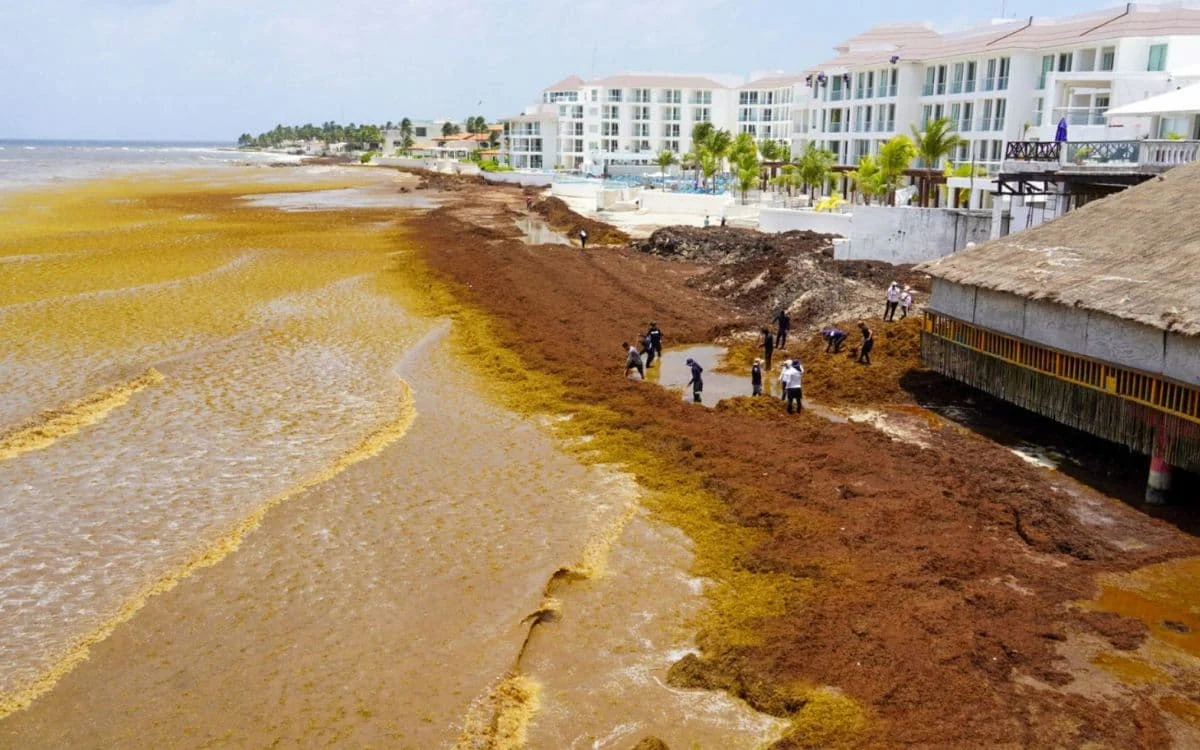
Adding to the tourism shortfall is an environmental and infrastructure crisis that the city council has been unable to manage. So far this year, more than 83,137 tons of sargasso seaweed have been collected on Quintana Roo’s coasts, with 30,021 tons concentrated solely in Playa del Carmen. The brown waters and foul odors from decomposing macroalgae are destroying the destination’s image, while local authorities remain passive.
Neglect extends beyond the beaches. Inland, working-class neighborhoods and commercial areas suffer from a collapse in basic public services. Residents daily report lack of street lighting, inefficient sewage and storm drainage systems threatening public health, drinking water shortages, unpaved roads, and a climate of insecurity that suffocates both residents and business owners.
Faced with this emergency, the response from the MORENA-led government of Estefanía Mercado has sparked collective outrage. With an annual budget of over 4.5 billion pesos already exhausted, the administration has taken on short-term debt of 154 million pesos. Instead of investing in pothole repair, security, garbage collection, or support for the tourism and labor sectors, public money is being squandered on shows and hiring artists for the 2026 Feria del Carmen.
Residents such as José Antonio González and Joel Martínez have voiced widespread regret for the trust they placed in the ballot box. The community describes the current administration as a complete failure, accusing the mayor of using public funds to finance artistic “distractions” of dubious popularity while urgent needs are ignored.
President Claudia Sheinbaum Pardo’s visit to Playa del Carmen, Tulum, and Cancun served as a wake-up call about the negligent municipal administration of these important tourist centers. Her agenda focused on issues affecting the tourism and urban sectors, including the sargasso environmental contingency, regularization of historic properties, and regional infrastructure.
In response to one of the Mexican Caribbean’s biggest concerns, the president announced from Tulum a Comprehensive Plan to clean sargasso from the state’s beaches. The strategy, coordinated with the Ministry of Environment and Natural Resources (SEMARNAT), the Navy, and the hotel sector, includes acquiring more sargasso-collecting vessels to gather the macroalgae offshore before it reaches the coast, installing more containment barriers, and processing and recycling sargasso into construction materials and energy.
More Economy
- Cozumel Triathlon Draws 350 Athletes and 13 Million Pesos in Tourism Spending
- Tourist Boat Traffic Slumps Across Quintana Roo Ports in September
- Senate to Review Legality of IMSS Changes to Modality 40 Pension Scheme
- Mexico Tourism Secretary Acknowledges Tulum Crisis but Warns Alarmist Posts Deepen the Damage
- IMSS Raises Wage Increase to 8% After Workers Reject Initial Offer
More Playa del Carmen
- Judge Orders Five to Stand Trial for Drug Dealing in Playa del Carmen
- Quintana Roo Prosecutor’s Office Releases Seized Playa del Carmen Property, Leaving Two Dogs Locked Inside for Three Days
- Playa del Carmen Prepares Third Janal Pixán Festival With 300 Artists and Two Parades
- Playa del Carmen Parking Meter Operator Playaparq Ignores City Notices Over Broken Machines
- Playa del Carmen Cuts Administrative Offenses 8.5% as Peace and Civic Justice Council Convenes