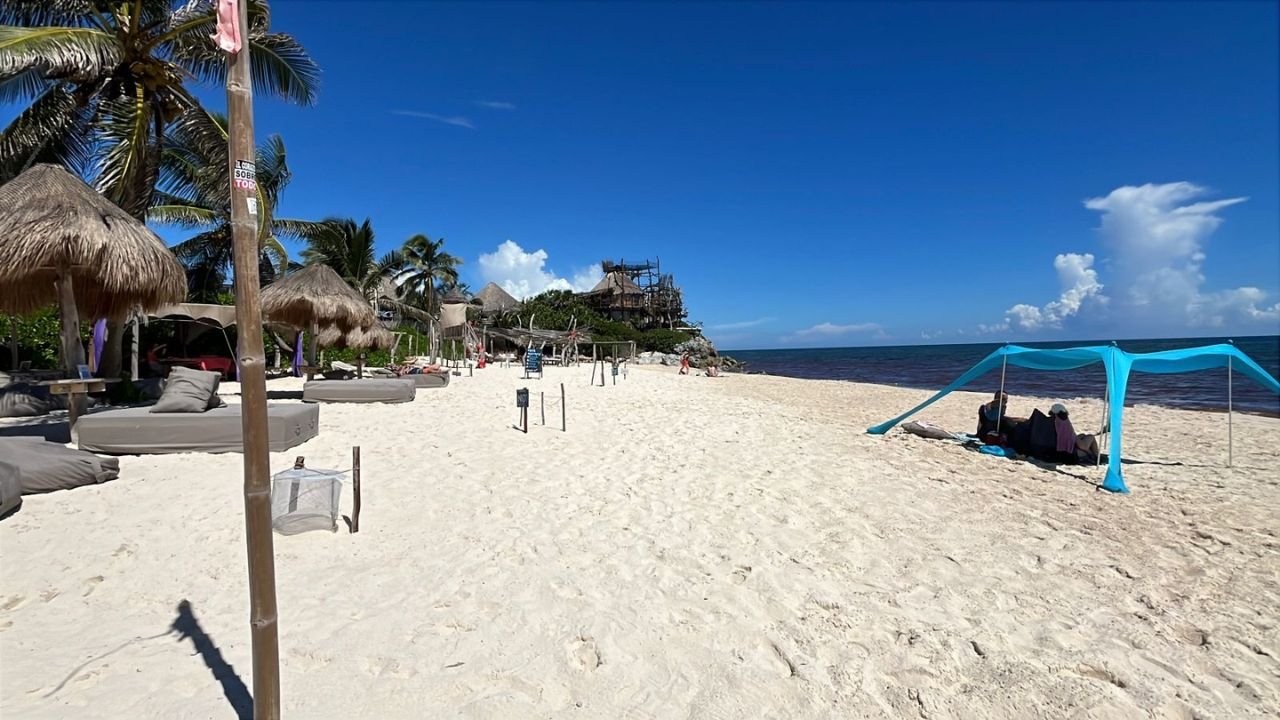
Tulum, Quintana Roo — Federal Tourism Secretary Josefina Rodríguez Zamora has acknowledged that Tulum is facing a tourism crisis, but warned that the spread of alarmist information is also damaging the destination’s image and the livelihoods of people who depend on visitors.
In an interview with Reporte Índigo, Rodríguez Zamora said the Mexican Caribbean is going through a difficult period marked by sargassum, air connectivity problems and other factors that have reduced arrivals. She pushed back, however, on social media posts that portray Tulum as a town in complete ruin.
Hotel Occupancy Falls From 73.2% to 42.3%
Data from the Quintana Roo Tourism Department show average hotel occupancy dropped from 73.2% in January to 42.3% in September. Although the figures cover months with different seasonal demand, they reflect the difficulties facing the hotel sector.
The decline coincides with reports of closed businesses, premises up for rent and reduced commercial activity in several tourist areas.
The situation had already prompted criticism of the tourism secretary. On October 16, business owners and service providers contrasted national statistics with conditions at their own businesses. Rodríguez Zamora now concedes that the destination has particular problems, while insisting that efforts are under way to bring visitors back.
Sargassum and Lost Flights
Among the factors behind the crisis, the secretary highlighted the extraordinary behavior of sargassum during 2026. She said seaweed landings have extended beyond the usual periods, hurting the visitor experience and perceptions of the Mexican Caribbean’s beaches, but questioned claims that the algae is present on every beach every day.
Rodríguez Zamora also pointed to air connectivity. She said difficulties at international airlines, operating costs and weaker demand in certain markets are hitting Quintana Roo’s destinations, and mentioned the impact of Spirit Airlines’ situation on traveler flows to Cancún. High prices and the need to upgrade Tulum’s tourism infrastructure add to the pressure.
Official Questions Alarmist Coverage
The secretary argued that negative images and posts, even when they document real problems, can influence travelers’ decisions. She urged a distinction between documented difficulties and accounts that present a blanket crisis without accounting for differences between areas and seasons.
The Tourism Department’s position does not erase the problems reported by business owners and tourism workers. Low occupancy, business closures and connectivity troubles require concrete responses regardless of the image circulating on social media, though Rodríguez Zamora argues that promotion must also be part of the economic recovery.
Tulum Renace Program
Among the measures authorities have rolled out is the Tulum Renace program, which covers tourism management, promotion and improvements to the visitor experience. The strategy also includes work linked to the Parque del Jaguar and coordination with service providers.
The federal government has reported issuing 195 QR-coded credentials to identify authorized tourism service providers. The secretary added that officials are working with airlines to restore international connections during the winter season, and that in environmental matters barriers have been installed while boats and navy personnel collect sargassum.
Those efforts aim to improve conditions at the destination, though their results will have to be measured through occupancy, connectivity and economic activity indicators.
Business Leaders Pin Hopes on 2027
Business representatives interviewed for the report expressed confidence that Tulum will recover in 2027. Alejandro Arvizu, president of the Caribbean Business Coordinating Council, said investment and private-sector efforts continue. David Ortiz Mena, president of the Tulum Hotel Association, stressed the importance of funding efforts to contain sargassum before it reaches the beaches.
That recovery remains an expectation rather than a confirmed result. While authorities bet on better promotion and infrastructure, the tourism crisis in Tulum continues to challenge hotels, restaurants, shops and workers who depend on visitors arriving.
More Economy
- IMSS Raises Wage Increase to 8% After Workers Reject Initial Offer
- Cancún Waives 100% of Fines and Surcharges to Help Businesses Get Licensed
- Tulum Shops Pin Hopes on Halloween and Day of the Dead for 70% Sales Boost
- Tulum Municipal Workers Protest Alleged Pay Deductions of Up to 1,500 Pesos
- Playa del Carmen Taps HR Directors to Boost Local Hiring
More Tulum
- Tulum to Host Xibalba MTB Challenge 2026 on November 1
- Uber Begins Operating in Playa del Carmen and Tulum With First-Ride Discounts and Taxi Driver Recruitment
- Tulum Records Over 6,000 Sea Turtle Nests as Beach Furniture Threatens Hatchlings
- Free Mammograms Offered in Three Quintana Roo Municipalities
- Anyma Brings ÆDEN to Zamna Tulum for 10th Anniversary Show on January 4