
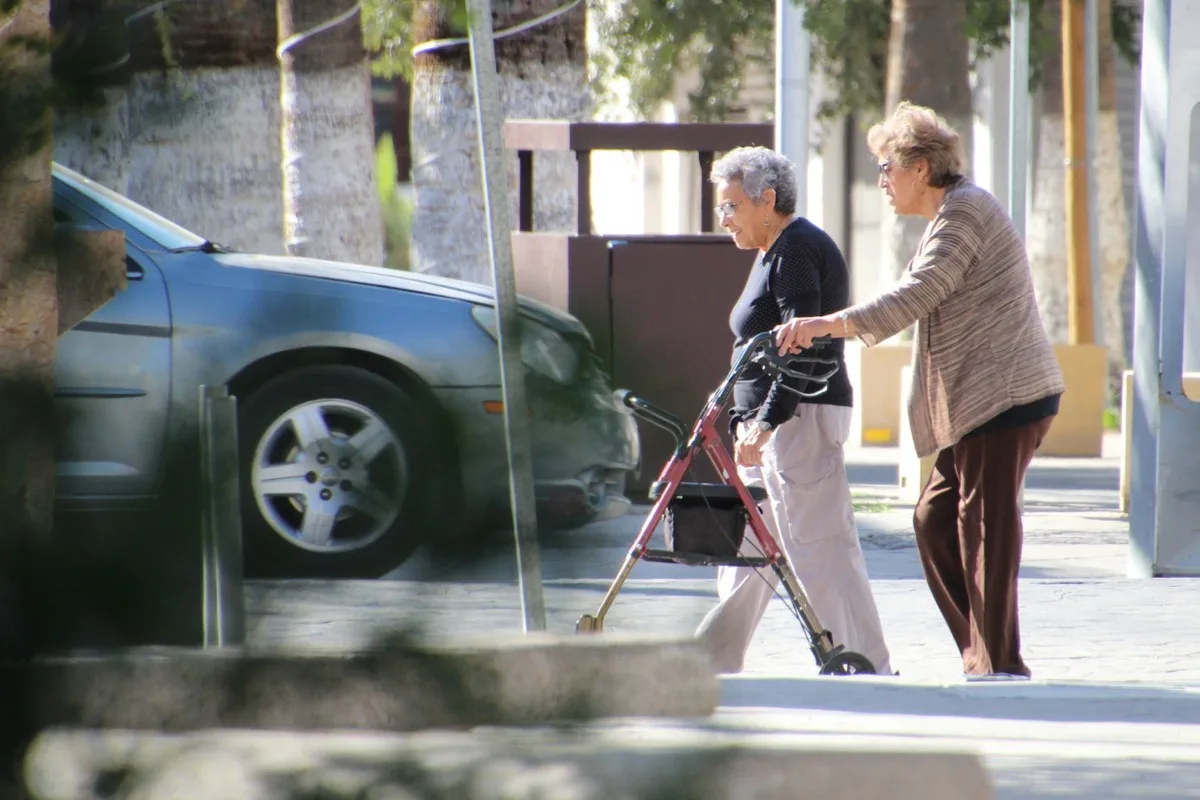
Mexico City — Mexico is facing an accelerated demographic aging process that will see a quarter of its population over 60 within 25 years, according to the government’s National Population Program 2026-2030, which warns that the country must urgently adapt its social and economic infrastructure.
The program, published in the Official Gazette of the Federation, highlights a sharp decline in fertility rates — from 2.21 children per woman in 2014 to 2.07 in 2018 and just 1.60 in 2023, well below the replacement level of 2.1. The drop is driven largely by young women increasingly choosing not to have children.
Between 2018 and 2023, the proportion of Mexican women aged 15 to 29 who were not trying to have children rose from 30% to 41.3%, according to data from INEGI, the national statistics agency. Among women aged 25 to 29, the share jumped from 43% to 52.9% in just five years.
“The desire to have children continues to decline, just as it did decades ago in high-income countries,” the program states. “From 2018 to 2023, the percentage of women without children and without the desire to have them increased from 31.3% to 50.1%.”
The document attributes the trend to women’s empowerment and changing gender roles, but also acknowledges that economic pressures — precarious employment, lack of affordable housing, inadequate childcare, and inequality in access to services — heavily influence reproductive decisions.
The greatest demographic pressure will arrive in 2034, when Mexico is projected to have more people aged 60 and over (16.8% of the population) than children under 12 (16.2%).
Incentives and Support for Families
The government’s strategy, described as “demographic resilience,” aims to leverage the current working-age population while preparing for an older society. Key measures include expanding educational coverage, reducing dropout rates, strengthening digital and technical skills, and promoting formal employment in manufacturing, services, health, caregiving, infrastructure, and green technologies.
To encourage childbearing, the plan proposes social support, subsidies, housing assistance, workplace flexibility, a national care system, extended maternity and paternity leave, and assisted reproduction services.
“Reproductive decisions are also conditioned by the socioeconomic context, including lack of job opportunities, inadequate income, difficulties reconciling work with childcare, lack of access to affordable housing, fear of not being able to guarantee quality education, and lack of social protection, among other reasons,” the document states.
The program also targets adolescent pregnancy. The adolescent fertility rate fell 30% over the past five years but still stands at 50.6 births per 1,000 adolescents. The goal is to reduce it to 32.6 per 1,000 by 2030. For girls aged 12 to 14, the aim is to lower forced fertility from 2.39 births per 1,000 girls in 2025 to 1.84 in 2030.
Additionally, the government plans to expand access to modern contraceptives, comprehensive counseling, sexual and reproductive health services without discrimination, comprehensive sexuality education, and differentiated care for adolescents, indigenous women, people with disabilities, and migrants.
Public campaigns, accessible materials, textbook content, and strategies for communities without internet access are also part of the effort to inform the population about reproduction, health, migration, education, caregiving, and aging.
More Lifestyle
- Gasoline in Cancún Hits 25.39 Pesos a Liter, Topping Profeco’s Priciest Fuel List
- Aluxes Endure in the Beliefs of Maya Communities in Quintana Roo
- Federal Youth Program Enrolls 100 in Cancún and Playa del Carmen
- Mexico’s Cofepris Issues Health Alerts Over Counterfeit Granulox, Buscapina, Bedoyecta and Saizen
- Navy Transfers Injured Woman as Isla Mujeres Hospital Maxes Out